[pageLogInLogOut]

#Spinning

Interview with Dr. K.V.Srinivasan - CEO Premier Group India

Interview with Dr. K.V.Srinivasan, CEO Premier Group India © 2021 Loepfe
Over the last 60 years, the Premier Group has built an international reputation for quality and innovation in the textile industry. Premier Mills, part of Premier Group, was first established in 1949 and from its headquarters in Coimbatore, India, manufactures and exports fine combed cotton yarn, producing over 18 million kilograms each year.

With a workforce of around 5,000 people, the company is focused on providing excellent customer service using latest technology, investing in eco-friendly processes and drawing on their own deep technical experience.

Interview

Loepfe: How important is the Testmode feature to Premier and how do you use it?

Dr. KVS: The Testmode feature is very useful because it’s really important to optimize the cuts-to-faults ratio in order to maintain optimum productivity. In fact, we constantly monitor the number of cuts in the yarn. While we know the type of fault we need to remove, depending on whether we are working on yarn for knitted fabrics or woven fabrics, Testmode enables us to fine-tune our approach.

Loepfe: Which problems can be solved with the help of Testmode?

Dr. KVS: There are two issues here. Firstly, you want to remove the faults - but secondly the more cuts you make mean that more splicing is necessary. The splices need to be perfect – and today this is a critical factor when producing high quality single compact yarns with finer counts. So, there’s a balance to be achieved and Testmode supports our decision-making process. Then, there’s also the issue of waste – Testmode has a role to play in reducing waste. We are also looking at still further optimization with the help of Testmode.


Loepfe: What is your opinion on Loepfe yarn clearers?

Dr. KVS: We have been happy with Loepfe yarn clearers and also the service and support received. Four or five years ago, we also invested in the Loepfe MillMaster product and this has particularly impressed us. From a management perspective, the various MillMaster reports help us to evaluate the performance of the spinning mill. It shows the maintenance and efficiency of the clearers, which is crucial in ensuring productivity.

Loepfe: What do you rate most positively?

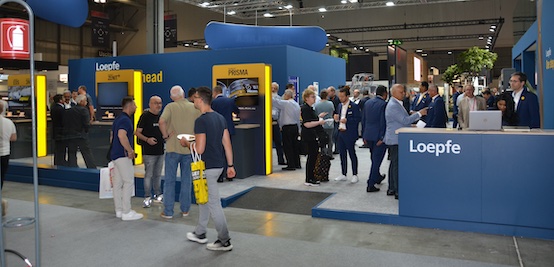
Dr. KVS: Currently, we are very excited about Loepfe’s YarnMaster Prisma. We are in the process of buying a new wet-splicing winding machine and after seeing Prisma at the ITMA exhibition, we have taken the clear view that while we are buying new machinery, we should invest in the very latest sensing technology as well.

More News from LOEPFE BROTHERS LTD.

More News on Spinning

#Spinning

Object Carpet tests production of rPET BCF yarn on Neumag BCF line

In a joint project with Object Carpet GmbH, Denkendorf; the Institute for Textile Technology (ITA), Augsburg; and Next Generation Recyclingmaschinen GmbH (NGR), Feldkirchen, Austria, Barmag investigated the processing of recycled polyester for BCF yarn. The goal was to evaluate the fundamental suitability of 100% recycled carpet material for reuse in carpet yarn production to create a closed-loop system in carpet manufacturing. To date, commercial rPET BCF processes have been based solely on rPET from bottle pellets.

#Spinning

New spinning package with two-step filtration for recycled yarns and more

At the ITM in Istanbul, BB Engineering unveiled its new, patented ValuePack spinning package for the first time, which features a two-stage filtration system. This is particularly beneficial for re-cycling processes. Until now, spinning packs have used either metal powder (“sand”) or filter candles as filter media. Both options are suitable for differ-ent applications, and each has its own specific advantages and dis-advantages.

#Research & Development

GenuTrace client advisory: Is your cotton supply chain UFLPA ready?

U.S. Customs and Border Protection has released updated operational guidance (CBP Publication No. 5560-0526) expanding its forced labor enforcement framework. The guidance supersedes the original 2022 UFLPA Operational Guidance and now covers all forced labor enforcement authorities — UFLPA, CAATSA, and WROs/Findings — in a single unified document. For cotton importers, the enforcement posture has not softened. It has become more structured, more documented, and more demanding. Learn more about UFLPA.

Latest News

#Nonwovens

EDANA announces five new board members following 2026 Annual General Meeting

The EDANA Board of Governors is elected or re-elected at the Annual General Meeting by the member companies. The Governors are senior executives (business leaders) from member companies, based in different countries and representing different sectors of the nonwovens industry. The Board has central responsibility for guiding EDANA's overall strategy and approving its policies and priorities. It meets three times a year.

#Nonwoven machines

DiloGroup - Complete nonwoven needling line for hygiene materials in the United States

DiloGroup has received an order for a complete needling line designed for the production of hygiene materials in the United States. This project further strengthens our position in the American hygiene sector and reflects the continued demand for reliable, high-performance nonwoven equipment.

#Natural Fibers

Cotton made in Africa partners receive top marks in independent verifications

Cotton made in Africa® (CmiA) and CmiA Organic are two internationally recognised standards that aim to promote sustainable development in the African cotton sector south of the Sahara. To ensure the standards’ credibility among brands, retailers, and consumers, independent verifiers evaluate compliance on the ground. The verification results for 2025, now published in the Aggregated Verification & Implementation Report, were very strong: The verifiers awarded consistently very good remarks regarding management, people, prosperity, and the environment.

#Associations

Bangladesh: Italian textile machinery mission stops in Dhaka and Chittagong

Technological upgrading and the transition toward higher value-added production are driving the new Italian industrial mission to Bangladesh. This year, the mission will split between the country’s two main manufacturing hubs, where Italian manufacturers will meet the leaders of the local textile supply chain in two strategic stages: July 7th in Dhaka and July 9th in Chittagong.

TOP