[pageLogInLogOut]

#Spinning

Wiping robots increase production efficiency
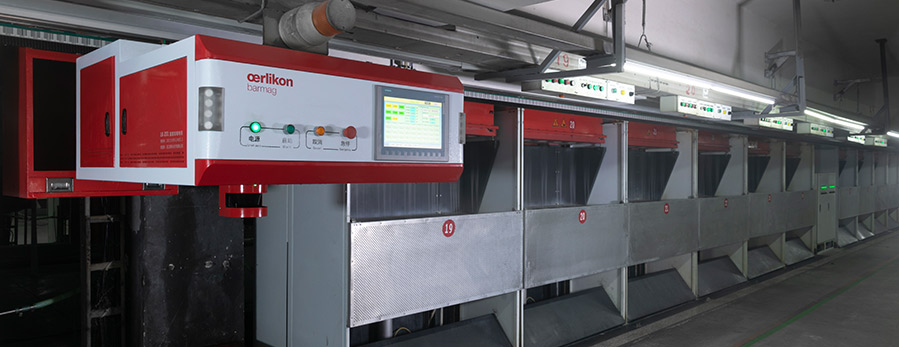
Automating the wiping process can reduce the yarn break rate by up to 30%. © 2020 Oerlikon
Retrofitting a wiping robot to spinning systems is well worthwhile. This is confirmed by the experiences of those customers who have already installed the wiping robot. Oerlikon Barmag wiping robots have been cleaning spin packs at filament yarn manufacturing facilities in China and India for several months now, increasing efficiency considerably.

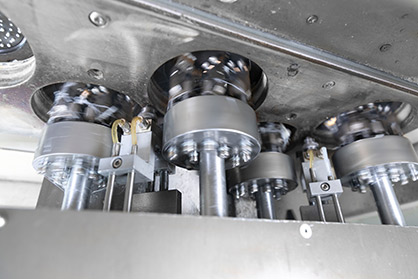
Regular wiping of the spin packs is important for process stability and yarn quality. These can be positively influenced using wiping robots, because – as confirmed by data acquisition and analysis at the respective manufacturing facilities – the yarn break rate can be reduced by up to 30% by automating the wiping process. And the yarn break rate has a direct impact on the key production figures; to this end, a considerable reduction translates into pure profit for yarn manufacturers.

Can also be retrofitted to existing systems

The Oerlikon Barmag wiping robot can be retrofitted to numerous spinning plants. Suspended from a track system mounted on the ceiling, the system automatically and autonomously targets the individual positions in accordance with the scheduled wiping cycles. In addition to the scheduled wiping processes, there are also events that cannot be planned or that are not immediately visible. Depending on the degree of integration into Oerlikon Manmade Fibers Smart Factory solutions, the wiping robot is able to identify issues such as yarn breaks or parallel wiping processes and to independently offer solutions.


The wiping robot operates in a crossline manner. Here, the wiping quality remains constant 24/7. The high wiping quality has a positive influence on both the stability of the overall process and on the yarn quality. The time saved between cleaning cycles is a further advantage: using the robots, the interval between two wiping processes can be extended by up to 25%. The considerable increase in the spinning process efficiency achieved by the wiping robot also has a positive impact on margins. For example, one customer deploying the wiping robot was able to reduce its production costs for the same yarn by more than 3%.
© 2020 Oerlikon
© 2020 Oerlikon


More News from Barmag GmbH & Co. KG

#Spinning

Barmag showcases pump solutions for demanding PU applications at PU China 2026

At PU China, taking place November 3–5, 2026, at the Shanghai World Expo Exhibition Center in Shanghai, Barmag’s Pumps Division will present high-performance metering solutions for the processing of polyurethane systems (Hall 1, Booth 135). The focus is on high-precision gear metering pumps that enable the exact delivery of PUR components as well as other high-viscosity and reactive media. With their high metering accuracy, they help reduce material consumption, stabilize processes, and ensure consistently high product quality.

#Spinning

Barmag presents metering pump solutions at ASE China

From September 15 to 17, 2026, Barmag’s Pumps Division will present its solutions for the precise delivery and metering of adhesives, sealants, and other high-viscosity media at ASE China at the Shanghai New International Expo Centre. The focus of the exhibition will be on high-precision gear metering pumps that help plant managers sustainably optimize material usage, process stability, and product quality. (Booth E4235).

#Spinning

Barmag expands its portfolio for PA6/PA6.6 applications — also available as a retrofit solution

With the new type 6020 ceramic oiler, Barmag is introducing a powerful addition to its product portfolio for processing PA6 and PA6.6 yarns. The solution is specifically designed for low-titer applications in the range of 5 to 100 denier.

#Nonwovens / Technical Textiles

Crimper repair workshop begins operations

Since the beginning of the year, Oerlikon Textile Inc. has been offering a crimper repair service, making it the company's first location worldwide to do so. The workshop in Charlotte specializes primarily in Fleissner and Neumag crimpers.

More News on Spinning

#ITMA Asia + CITME 2026

ITMA Asia 2026: How Barmag is reshaping the future of man-made fiber production

The textile industry is entering a groundbreaking era. Manufacturers face rising energy prices, growing sustainability demands, increasing labor shortages, and an unprecedented need for flexibility. For a globally active textile industry, where competitiveness is closely linked to production efficiency and cost leadership, this means that technology is no longer merely a means of improving operational processes – it is increasingly becoming a strategic differentiator.

#Spinning

Eltex takes the tension out of heat-setting

The ACT-MULTI system developed by Eltex – a member of TMAS, the Swedish textile machinery association – is bringing individual yarn tension monitoring and automatic control to the heat-setting process, helping manufacturers maintain consistent processing conditions across every yarn position.

#Spinning

Heberlein reinforces its commitment to the Chinese market

Heberlein, globally recognised as a leading provider of air interlacing and air texturing jets for synthetic filament yarns, is consolidating its success in the Chinese market with its APh- and APe-series for DTY applications. Particularly in the field of Air Covering, Heberlein technologies combine excellent quality with significant savings in compressed-air consumption. A new service hub in Shengze City underlines the company’s long-term commitment in the Chinese market.

#Recycled Fibers

Driving circularity with Uster Recycled Fiber Matrix

The textile industry’s commitment to circularity continues to accelerate, and mechanical recycling is viewed as a targeted approach to cutting textile waste and its environmental impact. At the forefront of this drive, Uster has developed the Recycled Fiber Matrix, a two-dimensional assessment of mechanically recycled fibers to guide optimum processing and end-uses.

Latest News

#Sustainability

Jeanologia Sustainability Report highlights environmental impact of textile technologies

Jeanologia has published its Sustainability Report 2025, reporting a 13.64% reduction in its own carbon footprint and quantifying the environmental impact associated with the use of its technologies across the global textile industry. According to the company’s calculations, their use avoided the pollution of 21.52 million m³ of water and emissions of approximately 103,530 tonnes of CO₂ compared with conventional textile finishing processes.

#Sustainability

Global Standards announce launch of a new textile processing standard

The 14th September 2026 marks the public launch of the Global Responsible Textile Standard (GRTS), a new standard for the processing of textiles made from fibres certified to third-party standards recognised by GRTS and covering a broad range of plant, animal, synthetic, man-made cellulosic and recycled fibres.

#Industry 4.0 / Digitalization

Orient Rongheng connects production planning across China and Bangladesh with FastReactPlan

Chinese apparel manufacturer Orient Rongheng is implementing Coats Digital’s FastReactPlan to digitalize production planning across its manufacturing operations in China and Bangladesh. The project aims to connect capacity, materials and order planning across multiple factories while integrating these processes with the company’s existing ERP and Manufacturing Execution System (MES).

#Raw Materials

ALLIED expands down traceability with lot-level carbon footprint data

ALLIED Feather + Down has expanded its TrackMyDown traceability platform to include validated cradle-to-gate carbon footprint data linked to individual down lots. The initiative is designed to provide brands and consumers with more detailed environmental information on the materials used in finished products and could also support future data requirements associated with Digital Product Passports.

TOP