[pageLogInLogOut]

#Software

Coats Digital launches GSDCostV5 with fair wage tool and digital feedback loop

Coats Digital, the software business of Coats, the world’s leading industrial thread company, has launched GSDCostV5, the latest, highly intuitive, browser-based version of the only globally recognised, time-cost manufacturing standard for apparel brands and manufacturers.

Gary Thompson, Senior Director, Strategic Partnerships and Alliances, Coats Digital commented, “As our industry begins to emerge from the COVID-19 crisis, businesses face unprecedented demand volatility and cost pressure, while consumers are increasingly holding brands to account over sustainability. Responding to these challenges will require greater levels of collaboration between brands and manufacturers, more accurate and transparent costings with a fair allowance for a living wage, and optimised manufacturing methods and costs. I am delighted that the launch of GSDCostV5 will play a key role in helping to support brands and manufacturers address these challenges, while also driving sustainable cost-efficiency and speed to market.”

The stand-out enhanced feature of GSDCostV5, is the introduction of a globalised fair wage tool, which combines the international standard time for any given style, with detailed factory efficiencies, contracted hours and the fair living wage for the country. This allows brands and retailers to quickly agree the fair living wage allowance for any given garment, in any factory in the world. The GSDCostV5 fair wage tool brings a new level of visibility and transparency to market-leading brands and manufacturers in discussions on time, cost and compliance. This supports and demonstrates a commitment to fair, sustainable wages and the ethical treatment of garment workers around the world.


GSDCostV5 launches with a native integration into the Res.Q shop floor suite of solutions providing a real-time, digital feedback loop of actual versus standard minute value at the operation level, highlighting variances and opportunities for proactive, continuous improvement. Further integrations with Res.Q will leverage the power of digitised machine inventory and line planning. This will provide the basis for a new level of line balancing, method optimisation and faster, more detailed and accurate capacity planning.

GSDCostV5 supports a more collaborative, transparent, efficient and sustainable apparel supply chain, taking time-cost benchmarking, costing optimisation and method improvement to a new level. By doing this, it places people and fair wages at the heart of the recovery from the global pandemic.

For more than 40 years, GSDCost (previously GSD) has been used by brands and manufacturers to establish and optimise time-cost benchmarks for garment costing and manufacturing excellence. Recognised by the International Labour Organisation (ILO) and trusted by more than 5,000 customers in 65 countries, GSDCost is proven to optimise costs, increase productivity and speed to market.

GSDCostV5 builds on this market-leading heritage, leveraging the latest software architecture to deliver a highly intuitive SaaS solution, hosted in Microsoft Azure. It is easily integrated with other applications and provides customers of all sizes with fast access from any location to a high performance, cost effective and scalable solution, with no requirement for IT expertise or infrastructure.


More News from TEXDATA International

#Digital Printing

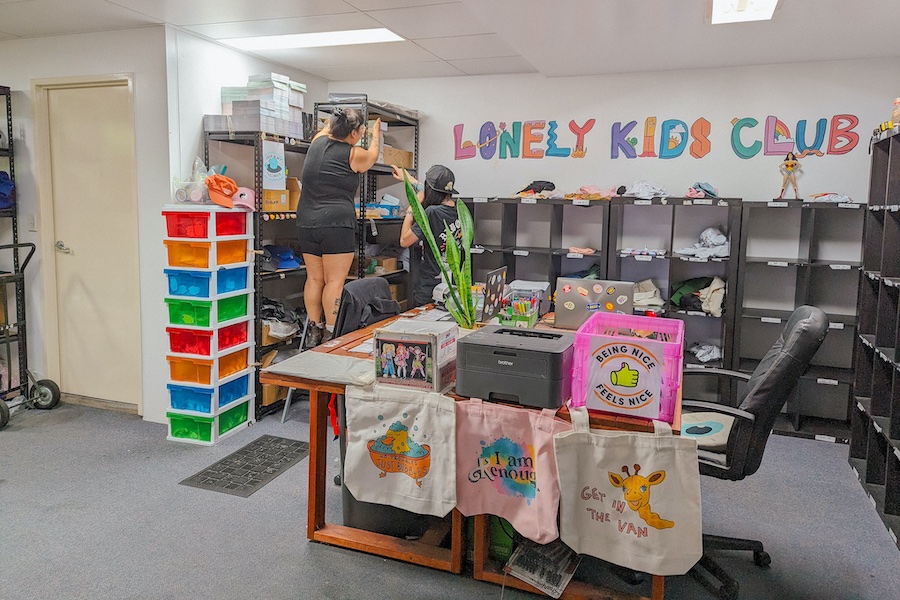
From a bedroom startup to 3,000 designs: How Lonely Kids Club built its business with DTG printing

Founded in Sydney in 2011, independent clothing label Lonely Kids Club has grown from a bedroom startup into a business offering around 3,000 graphic T-shirt designs. With its own production studio, direct-to-garment printing and a demand-driven manufacturing model, the company demonstrates how smaller apparel brands can combine creative independence with flexible production – while navigating the everyday challenges of quality control, workflow efficiency and sustainability.

#India ITME 2026

India’s textile industry: Current position, growth targets and industrial development

With ambitious export targets, major investments in manufacturing infrastructure and new international trade agreements, India is pursuing a comprehensive development strategy for its textile and apparel industry. An overview of the industry’s current position, government initiatives, progress achieved and challenges ahead.

#Weaving

“A complex design is only useful if the machine can reproduce it consistently”

Andreas Schnabel, Head of R&D for Technical Weaving Systems at Stäubli, discusses how 3D weaving can create textile reinforcements tailored to the loads within a composite component, where near-net-shape weaving can reduce processing steps and material waste, and what it takes to produce complex structures reliably and economically. He also explains how manufacturers can adapt Stäubli’s modular TF weaving platforms to new applications and how the company’s centre of excellence in Bayreuth supports the transition from research to industrial production.

#India ITME 2026

India ITME 2026: Textile technology meets India's investment ambitions

With ambitious growth targets, government incentive programmes and industrial development initiatives already underway, India is preparing for the next stage of its textile transformation. Against this backdrop, the 12th India ITME, taking place in Greater Noida from 4 to 9 December 2026, arrives at a particularly important moment for machinery manufacturers and textile producers alike.

More News on Software

#Industry 4.0 / Digitalization

Coats Digital wins SaaS award for AI in apparel manufacturing

Coats Digital has been named Best Company in AI-Powered Fashion Technology at the 2026 Best in SaaS Awards. The company’s AI applications cover garment costing, the analysis of operational data and the use of computer vision to study how tasks are performed on the factory floor.

#Industry 4.0 / Digitalization

White House reduces production planning time by up to 80% with Coats Digital’s FastReactPlan

Indian garment manufacturer White House has reduced its production planning cycle by 60–80% following the implementation of Coats Digital’s FastReactPlan software. The integrated planning solution provides greater visibility across production, capacity and material requirements while supporting faster decision-making and improved delivery performance.

#Software

UNIFEQ Europe adopts Coats Digital’s GSDCost and AI-powered GSDQuest to support rapid growth

Coats Digital is pleased to announce that rapidly growing Polish defence and uniform manufacturer UNIFEQ Europe Sp. z o.o. has invested in its award-winning GSDCost solution together with its AI-powered GSDQuest platform to establish a consistent approach to garment costing, improve sewing-floor productivity and accelerate labour costing for tenders and new products.

#Industry 4.0 / Digitalization

Orient Rongheng connects production planning across China and Bangladesh with FastReactPlan

Chinese apparel manufacturer Orient Rongheng is implementing Coats Digital’s FastReactPlan to digitalize production planning across its manufacturing operations in China and Bangladesh. The project aims to connect capacity, materials and order planning across multiple factories while integrating these processes with the company’s existing ERP and Manufacturing Execution System (MES).

Latest News

#Associations

Christoph René Holler to succeed Uwe Mazura as managing director of textil+mode

Christoph René Holler will take over as managing director of textil+mode, the German textile and fashion industry confederation, on 1 January 2027. He succeeds Uwe Mazura, who has led the association for 13 years and will remain in charge of collective bargaining policy through the next round of negotiations before retiring.

#Heimtextil 2027

Heimtextil and The Florentin showcase the role of textiles in hotel design

Heimtextil has partnered with Frankfurt hotel The Florentin by Althoff Collection for its new Interior.Architecture.Hospitality campaign. The collaboration will give architects, interior designers and other contract-sector professionals a closer look at how textiles were used in the hotel. The two studios behind the project will discuss their work at Heimtextil on 14 January 2027 in Hall 4.1.

#EU Textile Strategy

EU Commission proposes advanced materials agenda with targets for 2035

The European Commission has proposed an Advanced Materials for Europe agenda to accelerate the development, production and adoption of safer and more sustainable advanced materials. The proposal sets three benchmarks for 2035 and calls for closer coordination among EU member states to help move new materials from the laboratory into industrial production.

#Research & Development

Empa develops liquid-core fibre for insecticide-treated mosquito nets

Empa researchers have developed a liquid-core fibre for mosquito nets that can incorporate insecticides unsuitable for conventional melt spinning. The fibre gradually releases the active ingredient through a polymer sheath. The team developed and tested the yarn over three years in the Innosuisse project MalCoFil with Swiss industry partners Vestergaard and Monosuisse.

TOP