[pageLogInLogOut]

#Software

3D needs avatars! Sizing & fitting as a success factor
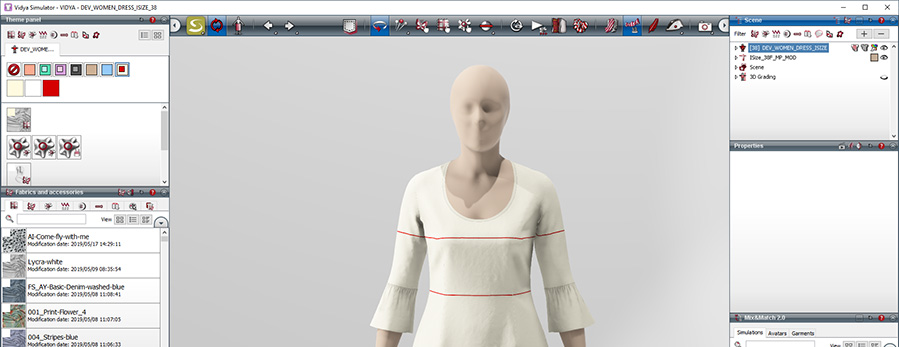
(c) 2019 Human Solutions
The fashion industry today is undergoing a technological revolution, because more and more garments are being designed with 3D software. Working with 3D, however, requires a suitable avatar with up-to-date body dimension data. At the PI Apparel on Lake Maggiore on October 8 and 9, 2019, Assyst will use the Size NorthAmerica measurement survey as an example to show how important up- to-date knowledge of the target group’s body dimensions is for market success.

The average body circumference of the US population has increased significantly. This is one of the truly significant findings of the Size NorthAmerica measurement survey, during which around 18,000 people in the USA and Canada were measured with 3D body scanners. This is crucial information for any fashion company that also produces for the US market – because if that company is to be successful in America, its individual sizes classification system must be accurately adapted to the sizes that are prevalent in the country today.

“The average Body Mass Index (BMI) determined by the Size NorthAmerica measurement survey is the highest value to date,” says Andreas Seidl, CEO of Assyst. “This means that the proportion of overweight people in the USA is much higher than in other nations. These results are tremendously important for the apparel industry – and by integrating them into your brand strategy, you not only ensure better sizing & fitting, you also increase your chances of generating more sales.”

Size NorthAmerica provides brand-new and detailed information on specific target groups and market potential that has never been available in the past. For the first time, this data is now available on the iSize online portal, so companies can first filter and evaluate it to match their individual target groups, then integrate it into their sizes table, or use it to create an avatar for 3D product development.

At the PI Apparel on Lake Maggiore, Assyst will be presenting the results of the measurement survey carried out by its sister companies Avalution and Human Solutions of North America. Visitors will be able to see for themselves how Assyst’s solutions for the fashion industry enable the quick and easy integration of sizing & fitting information into the digital fashion process.

More News from Human Solutions Group

More News on Software

#Industry 4.0 / Digitalization

Coats Digital wins SaaS award for AI in apparel manufacturing

Coats Digital has been named Best Company in AI-Powered Fashion Technology at the 2026 Best in SaaS Awards. The company’s AI applications cover garment costing, the analysis of operational data and the use of computer vision to study how tasks are performed on the factory floor.

#Industry 4.0 / Digitalization

White House reduces production planning time by up to 80% with Coats Digital’s FastReactPlan

Indian garment manufacturer White House has reduced its production planning cycle by 60–80% following the implementation of Coats Digital’s FastReactPlan software. The integrated planning solution provides greater visibility across production, capacity and material requirements while supporting faster decision-making and improved delivery performance.

#Software

UNIFEQ Europe adopts Coats Digital’s GSDCost and AI-powered GSDQuest to support rapid growth

Coats Digital is pleased to announce that rapidly growing Polish defence and uniform manufacturer UNIFEQ Europe Sp. z o.o. has invested in its award-winning GSDCost solution together with its AI-powered GSDQuest platform to establish a consistent approach to garment costing, improve sewing-floor productivity and accelerate labour costing for tenders and new products.

#Industry 4.0 / Digitalization

Orient Rongheng connects production planning across China and Bangladesh with FastReactPlan

Chinese apparel manufacturer Orient Rongheng is implementing Coats Digital’s FastReactPlan to digitalize production planning across its manufacturing operations in China and Bangladesh. The project aims to connect capacity, materials and order planning across multiple factories while integrating these processes with the company’s existing ERP and Manufacturing Execution System (MES).

Latest News

#Textile processing

Jeanologia combines digitalisation, laser and ozone technology to strengthen China’s textile competitiveness

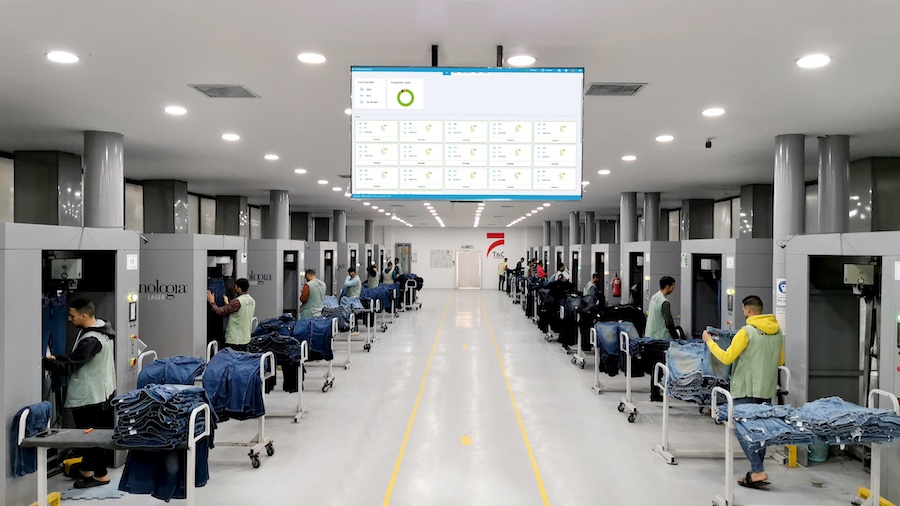
At ITMA Asia + CITME 2026 in Shanghai, Jeanologia showcased how the combination of digitalisation, laser technology and G2 Ozone can help China’s textile industry improve productivity, speed, quality and efficiency. With its Compact Super Flash laser system and integrated production concepts, the Spanish technology specialist demonstrated how connecting product development and industrial production can enable faster, more automated and sustainable manufacturing processes.

#Textile chemistry

Flame protection and OEKO-TEX® certification: Gulec Chemicals clears an important hurdle

Three halogen-free flame retardants from German specialist Gulec Chemicals have been included in the OEKO-TEX® list of accepted Active Chemical Products (ACP). The listing opens up additional opportunities for textile finishers, coaters and manufacturers of technical textiles seeking to combine demanding fire protection requirements with certification according to OEKO-TEX® STANDARD 100.

#Dyeing, Drying, Finishing

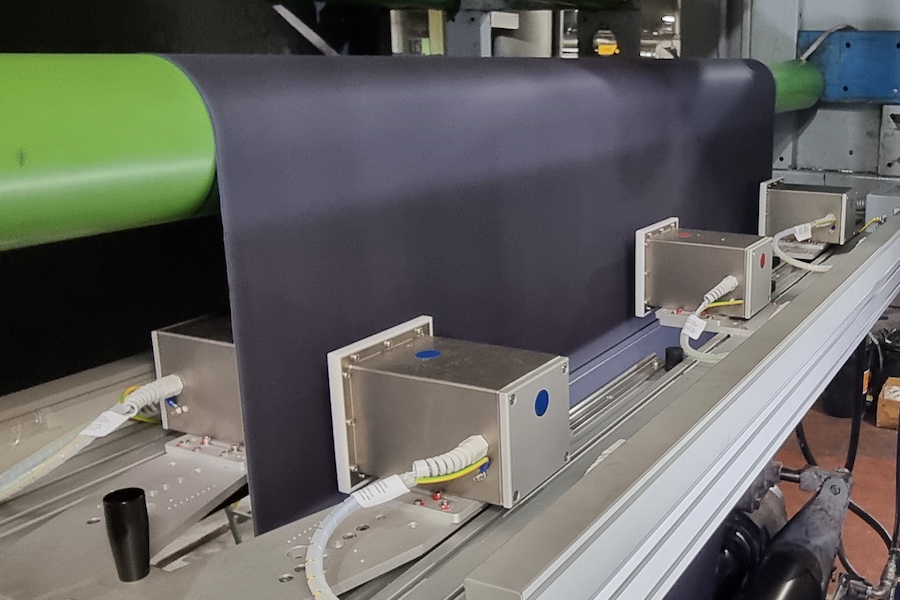
PLEVA improves dyeing consistency with inline microwave measurement of liquor pick-up

Consistent shades are essential in continuous textile dyeing. Yet variations in fabric absorbency or uneven padder pressure can go unnoticed until the end of the line. By then, hundreds of metres of fabric may already be affected and may become second-choice or rejected.

#Recycling / Circular Economy

DITF establishes CYCLOTEXUM recycling center to advance mechanical and solvent-based textile recycling

As part of the CYCLOTEXUM research project, the German Institutes of Textile and Fiber Research Denkendorf (DITF) established the CYCLOTEXUM recycling center. There, in collaboration with industry partners, the center develops application-oriented solutions for mechanical and solvent-based recycling processes. The technologies developed make a significant contribution along the textile value chain toward the efficient use of textile resources in the future and the transition of production in the German textile sector to a circular economy. The project was funded by the Ministry for the Environment, Climate and Energy Sector of the State of Baden-Württemberg.

TOP