[pageLogInLogOut]

#Retail & Brands

H&M decides to buy back own shares for SEK 3 billion

The board of directors of H & M Hennes & Mauritz AB has decided to utilise the authorisation granted by the 2022 annual general meeting to acquire the company’s own B shares in order to transfer capital to the shareholders and adjust the company’s capital structure.

The share buyback programme will be carried out in accordance with the EU Market Abuse Regulation (MAR) and Commission Delegated Regulation (EU) 2016/1052 (the so-called Safe Harbour Regulation). Acquisitions of shares will be managed by an investment firm or credit institution that makes its trading decisions regarding the timing of the acquisitions of H&M’s shares independently of H&M.

In conjunction with the full-year report for 2021 the board of H&M communicated its intention to buy back shares for a total of SEK 3 billion in the period up to the 2023 annual general meeting. The board has now decided to repurchase shares for this amount. The purpose of the purchases is to distribute surplus liquidity and thereby adjusting H&M’s capital structure by reducing its capital. Accordingly, the board of directors intends to propose to the 2023 annual general meeting that the repurchased shares are cancelled. It is intended that the reduction in share capital will be met by a corresponding bonus issue so that the level of share capital is restored.

The share buyback programme is subject to the following terms:

  • Buybacks are to take place on Nasdaq Stockholm in accordance with its Rule Book for Issuers, MAR and the Safe Harbour Regulation.
  • The shares shall be purchased at a per-share price within the price range (spread) on Nasdaq Stockholm applicable from time to time, meaning the spread between the highest purchase price and the lowest selling price prevailing and disseminated by Nasdaq Stockholm from time to time.
  • The maximum purchase amount is SEK 3 billion. In accordance with the Swedish Companies Act, H&M may not buy more shares than would bring H&M’s holding of own shares to ten percent of the shares in H&M.
  • The programme begins on 29 June 2022 and continues up to and including 30 November 2022.
  • Payment for the shares is to be made in cash.

Without in any way restricting the discretion and independence of the investment firm or credit institution in executing its mandate, the firm or institution will endeavour to carry out purchases reasonably evenly spread over the duration of its mandate.


The total number of shares in H&M is 1,655,072,000, of which 194,400,000 are A shares and 1,460,672,000 are B shares. H&M currently holds none of its own shares.



More News from TEXDATA International

#ITM 2026

ITM 2026: The new geography of textile production

New production hubs are emerging across North Africa and Central Asia, while Türkiye is accelerating its transformation toward higher-value, technology-driven and more sustainable textile manufacturing.

#Research & Development

“Production is a product”

From technical textiles and AI-driven robotics to the limitations of textile circularity: Professor Dr Thomas Gries looks back on more than two decades of development at ITA Aachen. In the interview, he explains why production technology remains a decisive success factor, discusses international collaborations and innovation ecosystems, and shares his views on the transformation of production landscapes and the challenges facing an increasingly regulated industry.

#Knitting & Hosiery

“We need to move away from the price trap and return to a value-driven mindset.”

With its new Textile Innovation Center, KARL MAYER is sending a strong signal for innovation, collaboration, and the future of textile applications. In this interview, Karl Josef Mayer discusses new opportunities in warp knitting, the processing of staple fibres, recycling, the changing role of machinery manufacturers, and why the textile industry must once again focus more strongly on the value of textiles. by Oliver Schmidt

#Associations

“Innovation, resilience and international experience remain the great strengths of the Swiss textile machinery industry”

Geopolitical uncertainty, growing competitive pressure from China, new free trade agreements and the shift towards a circular economy are currently reshaping the global textile industry. In this interview, Cornelia Buchwalder discusses the current mood within the Swiss textile machinery sector, the industry’s distinctive innovative strength, new market opportunities in India and Asia, and the technological trends that could shape the upcoming trade fair cycle leading up to ITMA 2027.

More News on Retail & Brands

#Textiles & Apparel / Garment

Global size study for brands and retailers to optimize fit and market coverage

Hohenstein Apparel Fit Solutions, a global leader in apparel fit, sizing, and product development, today announces the launch of its Global Size Study, a new initiative designed to equip brands to better understand and serve their target consumers through more accurate, market-relevant sizing.

#Recycling / Circular Economy

Recover™ secures multi-year recycled cotton agreement with H&M

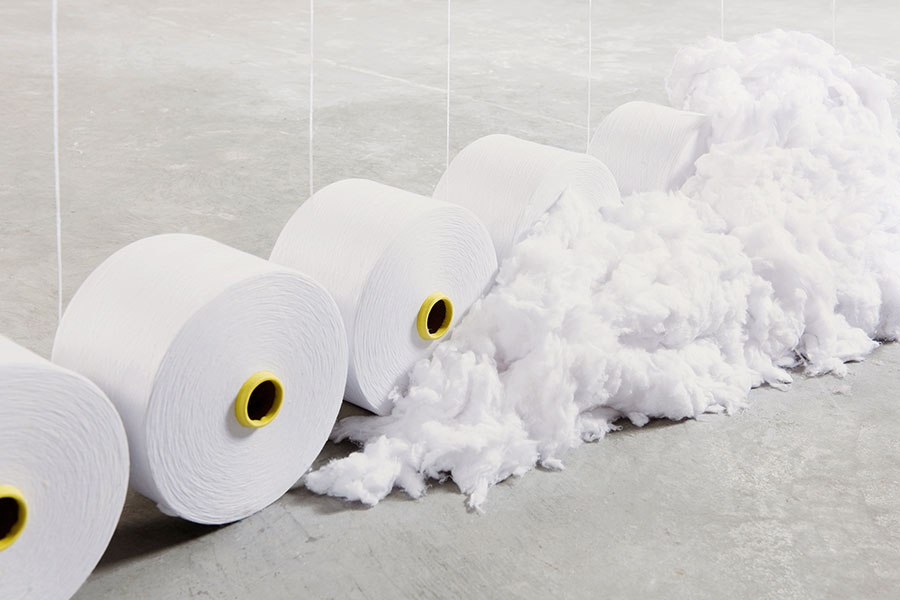
Recover™ has signed a multi-year agreement with H&M to support the integration of its recycled cotton fiber, RCotton, for use in H&M’s products. Since early 2024, H&M and Recover™ have collaborated on product development, which now enables scaled commercial introduction of Recover™ mechanically recycled cotton into H&M’s collections.

#Sustainability

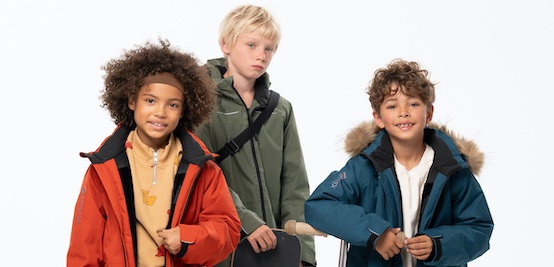
GORE-TEX® KIDSWEAR launches innovative membership scheme for kids’ jackets

With its revolutionary new membership model, GORE-TEX® Kidswear now offers families a simple, flexible and sustainable way of kitting out their children in top-quality jackets. It is aimed at the parents of children aged between five and ten and kicks off with a choice of functional winter jackets.

#Sustainability

H&M Foundation funds pioneering initiative to build the factories of the future

The H&M Foundation is committing SEK 53 million (approx. EUR 5 million) towards Future Forward Factories, a five-year initiative led by Fashion for Good, to address fashion’s most polluting stage: tier 2 textile processing.

Latest News

#Recycled Fibers

Recover™ and Ünteks Group partner to scale recycled cotton in knitwear

Recover(TM), a global producer of low‐impact, high‐quality recycled cotton fiber, announces a new partnership with Ünteks Group, a vertically integrated textile manufacturer based in Turkey. The collaboration focuses on the development of circular knit fabrics and garments, combining Recover’s recycled cotton fiber with Ünteks Group’s integrated capabilities across knitting, dyeing, printing, and garment production.

#Spinning

STEELTOP®: A new benchmark in flat tops for spinning preparation

Modern carding generations achieve higher production performance, placing significantly greater stress on flat tops. Higher cylinder speeds and increased fiber density, combined with tighter carding gaps, create more demanding operating conditions. At the same time, poorer raw material quality and the increased use of recycled materials further intensify these challenges. With STEELTOP®, Trützschler introduces a new full steel flat top series developed for these demanding modern carding processes.

#Textile processing

YKK develops concept EXCELLA® zipper tape using nonwoven fabric partially derived from used clothing

YKK Corporation has developed a concept version of its premium EXCELLA® zipper series made from nonwoven fabric sheets created by fiberizing used clothing and other textile materials. Based on a proposal by fashion designer Yuima Nakazato, this item was created as a result of collaboration between Nakazato, Seiko Epson Corporation and YKK. The concept zipper was incorporated as a material component for pieces in the newest YUIMA NAKAZATO Couture Collection, “INFERNO,” which was unveiled in Paris, France on July 8, 2026.

#Textiles & Apparel / Garment

Texworld Apparel Sourcing Paris highlights evolving global sourcing landscape

From 31 August to 2 September 2026, Texworld Apparel Sourcing Paris will bring together more than 1,000 international exhibitors at Paris-Le Bourget Exhibition Centre. This edition reflects the new global balance of textile and apparel sourcing, highlighting a strong diversity of sourcing countries — some unexpected.

TOP