#Recycling / Circular Economy
Renewcell’s CIRCULOSE® Supplier Network increases to 151 partners with a focus on regional hubs
Srimal Wickremasinghe, Managing Director, Brushes & Needles comments, “Brushes & Needles from Sri Lanka and TexComs from Indonesia have been diligently working on developing an innovative and sustainable textile solution cooperating with CIRCULOSE® technology that we believe will revolutionize the industry. In today's rapidly changing world, the demand for eco-friendly and sustainable products is higher than ever before.” Salil Dhillon, Director, TexComs Worldwide continues, "Consumers are increasingly conscious of the environmental impact of their purchases and are seeking out products that align with their values. Recognizing this shift in consumer behavior, we have invested significant time and resources into creating textile products with CIRCULOSE® that not only meet the highest standards of quality and performance but also prioritize sustainability throughout their entire lifecycle.”
Strategic partnerships were formed with suppliers across the globe with a focus on South Asia (7), Southeast Asia (7), and Turkey (14). With a successful representation of fiber producers and textile suppliers in other key manufacturing regions, Renewcell’s aim was to build CIRCULOSE® manufacturing hubs in other strategic locations. As fiber production at Birla Cellulose in India gains momentum, establishing a localized supply chain where CIRCULOSE® is readily available was paramount.
Tricia Carey, Chief Commercial Officer at Renewcell, comments on the new partners, "Our goal was to build up key geographical regions that could service the varied requirements of our current and future brand partners. Being able to offer vertical or location-specific end-to-end manufacturing is significant for our continuous development.”
As the only industrial-scale producer of pulp made from 100% recycled textiles, Renewcell’s strategy
is to replace virgin manmade cellulosic fibers (MMCF) with fibers made with CIRCULOSE® as well as offer a replacement for cotton, and to enhance the properties of mechanically recycled cotton. With Turkey’s large cotton textile market and growing cotton recycling industry, expanding mill partnerships in this country was a prime focus.
“Sustainability finds life deep within our fabric, like the branches of a tree,” states Özge Arpaz, Sales & Marketing Manager of Palmiye, based in Turkey. “We are open to every new project that has benefits for innovation, sustainability, and nature, and we are proud to make all our investments in this direction. Fibers made with CIRCULOSE® are the most important topic in the future world where resources are scarce.”
The mills and producers in the CIRCULOSE® Supplier Network are the building blocks of a circular system. As Karla Magruder, Founder and President of the non-profit Accelerating Circularity, explains, “At Accelerating Circularity, we're convinced that building circular systems is essential to make the transition to circularity. Every step in the system needs to do its part. To scale textile-to-textile recycling the market needs systems in place and commercial. Renewcell's CIRCULOSE® Supplier Network is the first example of putting together all the pieces through commercial entities. The ability to find and purchase yarns, knits and/or wovens at a variety of suppliers in a wide variety of geographic regions makes it possible for the next step, brands to do their part in building circular systems.”
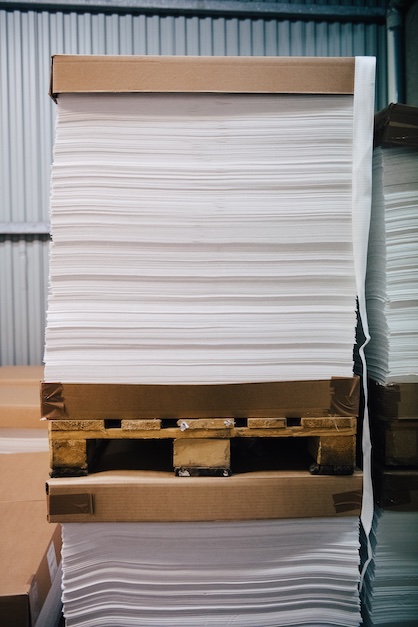
With the growth of the CIRCULOSE® Supplier Network to 151 members and the adoption of CIRCULOSE® throughout the value chain, economies of scale can be achieved. Fibers, yarns, and fabrics made with CIRCULOSE® are available now for fashion and home brands, both large and small.
The list of the newest CIRCULOSE® Supplier Network members is below:
Bangladesh: Noman Terry Towels Mills
China: Guotai International Group, HUBO, Mozartex, Saintyear Textile, Sinotex Eco, Fibertec
India: Maral Overseas, TAGC India, Usha Yarns, V.Thangavel and Sons, VP Tex
Indonesia: TexComs
Portugal: ATB
Sri Lanka: Brushes & Needles
Taiwan: Chi Her Industrial, HerMin Textile, Hua Mao Nano Tech
Turkey: Aba Tekstil, Can Tekstil, Ereks Konfeksiyon, Eroglu, Karsu, Motif Tekstil, Orimpex Tekstil, Ozen Mensucat, Pakipek Tekstil, Palmiye, Realteks, Secen Tekstil, Süzer Tekstil, Yilmazipek
Vietnam: Tai Nan Textile, Tai Nan Spinning, TCE Vina Denim
For more information about Renewcell and the CIRCULOSE® Supplier Network, please visit
circulo.se