[pageLogInLogOut]

#Recycling / Circular Economy

Introducing new swimwear fabric for circularity
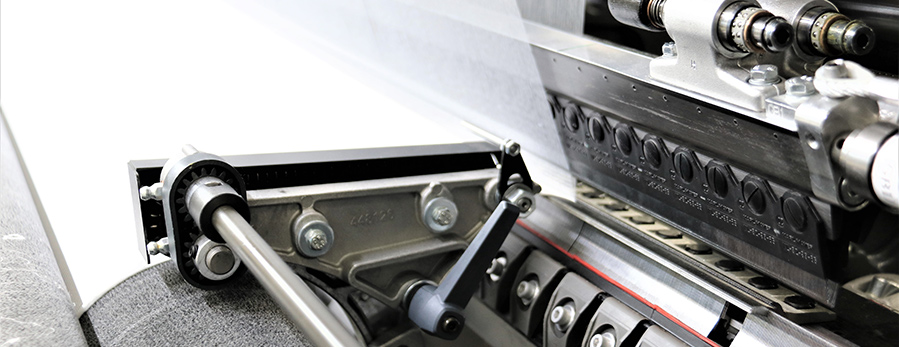
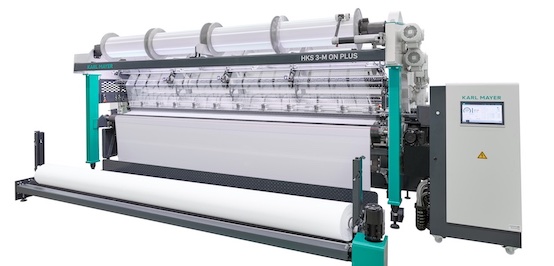
Warp knitting machine processing T400 © 2023 KARL MAYER
Decathlon, in collaboration with the KARL MAYER GROUP and The LYCRA Company, has developed a swimsuit that follows a circular process within textile recycling.


The protection of our natural environment increasingly requires new concepts to meet the demands of consumption and sustainability in equal measure.
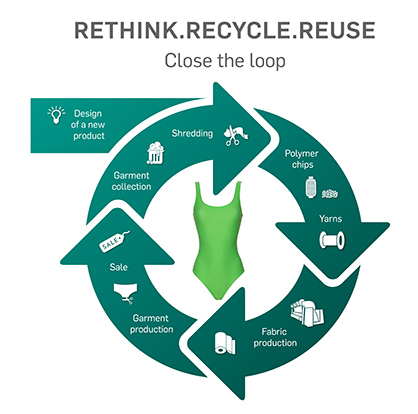
Project for textile-to-textile recycling by Decathlon, the KARL MAYER GROUP and The LYCRA Company © 2023 KARL MAYER


With the "Aqua Vision" project, sports brand manufacturer Decathlon has rethought the issue of recycling. The project focused on the development of a sportswear item that can be reused within the clothing sector, i.e., can be kept in circulation, and is also long-lasting.

"In practice, our goal was to be able to make a swimsuit from a swimsuit again," says Nathalie Bourdon, Offer Manager at Decathlon.

The challenge was to do this without using elastane in the production process. The filament with high polyurethane content ensures an excellent fit but causes problems in the recycling process. To master this challenge, Decathlon sought support from fiber manufacturer The LYCRA Company and textile machine specialist KARL MAYER GROUP.

Elasticity without elastane

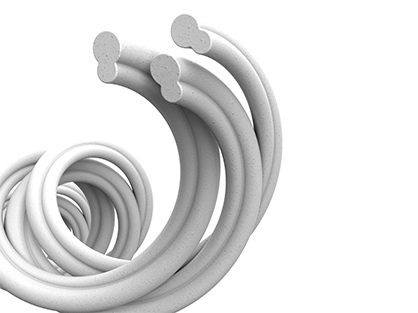
The LYCRA Company provided the LYCRA® T400® EcoMade yarn. The stretch solution consists of 68% sustainable resources, with 50% of the content coming from recycled plastic and 18% from bio-based resources. Instead of using elastane, the LYCRA® T400® EcoMade fiber, in combination with a smart construction, provides the necessary stretch. LYCRA® T400® EcoMade fiber consists of two components, each of which shrink differently under heat during finishing. The result of this differential shrinkage is durable elasticity for a long-lasting fit. In addition, the yarn innovation offers another performance feature that is essential for swimwear: LYCRA® T400® EcoMade fiber is resistant to chlorine for over 500 hours, making it much more durable than conventional variants.

“At The LYCRA Company, sustainable innovation is at the heart of our vision, and we are proud to partner with Decathlon and KARL MAYER to produce a sustainably sourced, chlorine and wear durable swimsuit with no performance compromises which can be practically recycled at end of life”, said Arnaud Ruffin, The LYCRA Company’s Vice President for brands and retail.


Processing into high-quality warp knitted fabrics

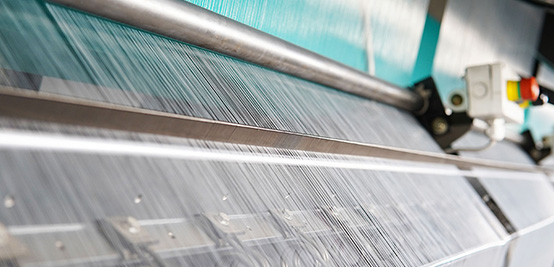
When processed into a smooth warp knit, LYCRA® T400® EcoMade fiber can fully realize its performance potentials. A two-bar warp knitting machine in gauge E 32 from KARL MAYER was used to produce the textile for the sustainable swimsuit. The renowned textile machinery manufacturer also provided support in the form of its know-how on a technical level. 
© 2023 KARL MAYER
© 2023 KARL MAYER


"We tested whether the sustainable yarn behaves differently during processing than conventional variants. The tests were consistently positive. There were no losses in quality or efficiency," explains Michael Kieren from the New Business Development team at the KARL MAYER GROUP.

Sample presentation at ITMA 2023

Decathlon produced a swimsuit from a new fabric having supple elastic properties which can be recycled back into yarns for new apparel through the stages of collection, shredding, melting, pellet production and spinning. An example, recycled from a swimwear after its first cycle of use, will be presented by the KARL MAYER Group at ITMA, from June 8 to 14, 2023, in Fiera Milano on its stand in Hall 4 B119. The exhibition under the motto "Rethink. Reduce. Reuse - Close the loop" shows how waste and resources can be saved by consistently recycling materials. Recycling within the textile sector also ensures independence from other sources of raw materials for reprocessing.

However, in textile-to-textile recycling, coloration must be taken into account as early as the design stage, says Michael Kieren. Light colours are generally easier to recycle. To compensate for colour differences, the fabric becomes darker with each recycling process, he said.

More News from Karl Mayer Textilmaschinen AG

More News on Recycling / Circular Economy

#Recycling / Circular Economy

trinamiX with new management

BASF is examining strategic options for its subsidiary trinamiX GmbH. trinamiX specializes in biometric imaging and mobile material analysis. These activities are not part of BASF’s core business, on which the company is focusing as part of the implementation of its new strategy.

#Recycling / Circular Economy

Reju announces site selection for first U.S. industrial sized facility regeneration hub in Rochester, New York

Reju, the textile-to-textile regeneration company, today announced it has selected the site for its first U.S.-based industrial facility marking a significant milestone in its efforts to scale globally. This future Regeneration Hub will be in Rochester, New York, reinforcing Reju’s commitment to the adoption of circular textile system across key regions worldwide.

#Business

Canopy introduces a first-of-its-kind $2 billion USD investment blueprint to decarbonize global materials supply chains

Today, the global, solutions-driven not-for-profit Canopy joined partners at Davos to introduce a new finance model designed to accelerate the growth of low-carbon materials and transform the paper, packaging, and textile supply chains. The event was anchored by a keynote speech from Sri A Revanth Reddy, Hon’ble Chief Minister of Telangana, with India set to host the first iteration of the new investment blueprint.

#Recycled_Fibers

Borealis invests EUR 49 million in Burghausen, Germany to accelerate design for circularity

Borealis announces a EUR 49 million strategic investment to scale up production of Borstar® Nextension polypropylene (PP) at its manufacturing site in Burghausen, Germany. This will expand commercial production of next-generation single-site polypropylene (ssPP) grades that deliver enhanced purity, processability, and performance - supporting customers in key sectors including packaging, healthcare, mobility, and fibers, to meet evolving market and regulatory demands.

Latest News

#Spinning

atmos.io paves the way to the digital factory

UNITEX is expanding its capacity by a further 36,000 tons per year with a new filament yarn production plant. Once again, the Vietnamese company is relying on solutions from Barmag.

#Exhibitions & Events

VIATT 2026 announces inaugural lifestyle Trend Forum: Unified vision for S/S 2027 across fashion, home, and tech

The Vietnam International Trade Fair for Apparel, Textiles and Textile Technologies (VIATT) is set to host its first Trend Forum, offering a forward-looking, industry-wide perspective for Spring / Summer 2027. With the show scheduled from 26 – 28 February 2026 at the Saigon Exhibition and Convention Center (SECC), VIATT’s trend curators – NellyRodi™ Agency and MUSEATIVE – will provide comprehensive insights across the interconnected realms of Apparel Fabrics & Fashion, Home & Contract Textiles, and Technical Textiles & Technologies.

#Dyeing, Drying, Finishing

Precision jet dyeing moves towards industrial scale as Alchemie partners with Acatel

BTMA member Alchemie Technology, the pioneer of precision jet dyeing solutions based in Cambridge, UK, is partnering with Acatel, the Portuguese leader in sustainable textile manufacturing. The two companies will work together to validate and optimise Alchemie’s Endeavour system for knitted cellulosic fabrics.

#Dyeing, Drying, Finishing

Monforts customers make strong showing at Heimtextil 2026

Monforts dyeing and finishing technology customers from Pakistan had a formidable presence at the Heimtextil 2026 home and contract textiles exhibition which attracted over 48,000 visitors to Frankfurt in Germany this month (January 13-16).

TOP