[pageLogInLogOut]

#Recycling / Circular Economy

Lenzing and partners launch Austria’s largest textile recycling project
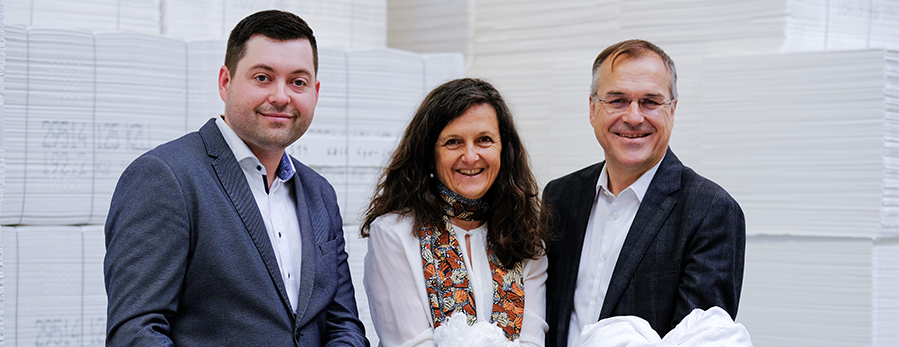
Cooperation between ARA and Lenzing AG - from left to right: Ing. Jürgen Secklehner - Managing Director ARAplus GmbH, Sonja Zak - Head of Textile Sourcing & Cooperations, DI Martin Prieler - Member of the Board of ARA (Altstoff Recycling Austria AG) © 2023 Lenzing
The Lenzing Group, a world-leading provider of specialty fibers for the textile and nonwoven industries, has taken another big step towards achieving a circular future in collaboration with several partners. Austrian companies and not-for-profit organizations, including Lenzing’s logistics and sorting partner ARA (Altstoff Recycling Austria AG), the textile service provider Salesianer Miettex and Caritas, as well as the Swedish pulp producer Södra have joined forces to collect used household and clothing textiles for reprocessing to produce pulp and, ultimately, new lyocell and viscose fibers.
  • Lenzing, ARA, Salesianer Miettex, Caritas and Södra joining forces to drive forward the transition to circularity
  • Joint project involving the collection, transport and sorting of used textiles for processing to make pulp and fibers
  • Pioneering project with a strong social component


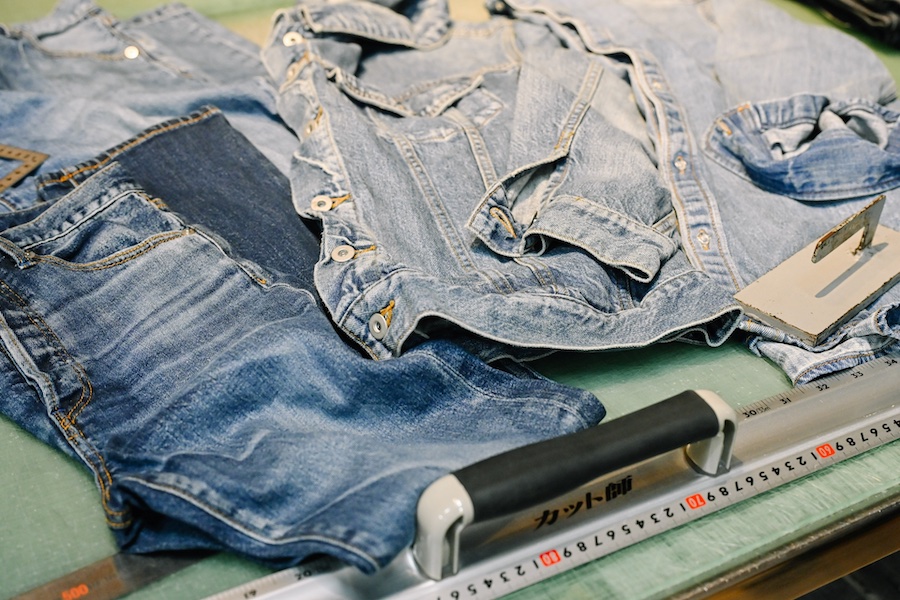
In this pilot project, used textiles collected by Salesianer Miettex that are not suitable for reuse will be passed on to ARA, before being delivered to Caritas for sorting by hand at a recycling plant. The Caritas recycling facility provides secure employment to more than 70 people with disabilities. After the sorting process, the textiles will be delivered to Södra for recycling and processing to produce OnceMore® pulp. This method is a world first in the industrial recycling of textile waste made from blended fibers. Lenzing will then apply its innovative REFIBRA™ technology to produce new lyocell and viscose fibers.
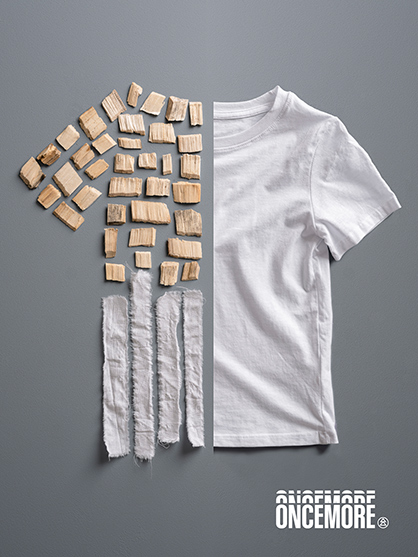
Södra OnceMore © 2023 Södra


“One company alone cannot solve the pressing problem of textile waste. Proactive partnerships such as these allow us to make progress and accomplish real systemic change,” says Sonja Zak, Head of Textile Sourcing & Cooperations at Lenzing Group. “We work hard to make our industries more sustainable and promote the transformation of the textile business model from linear to circular. Continued action across the whole sector will be necessary to facilitate this transition.”

“The EU’s action plan puts waste and secondary raw materials front and center to cement their role on the market. Thus, in the recycling business, it is vital to maintain a 360-degree view of all consumer products. ARA has been instrumental to the implementation of extended producer responsibility in Austria for 30 years. It therefore makes sense to incorporate this expertise into the textile sector. This means that in the future we will be recycling not only packaging, but as many products as possible, including textiles,” adds Martin Prieler, CEO of ARA.


Partnerships for systemic change

The transition to a truly circular economy requires collaboration between several parties. Lenzing represents only one part of the textile and nonwoven value chain and is reliant on the cooperation of partners across the whole chain. Partnerships and projects such as these help Lenzing to promote and accelerate systemic change.

Lenzing and Södra have been working together on textile recycling since 2021, making a crucial contribution to the promotion of circularity in the fashion industry. In the course of their cooperation, the companies plan to share their knowledge and jointly develop methods to facilitate the broader use of cellulose-based used textiles on an industrial scale. The further developed OnceMore® pulp will then be used for various purposes, including as a raw material for the production of Lenzing’s specialty fibers under the TENCEL™ brand fibers with REFIBRA™ technology. The aim is to reach an annual processing capacity of 50,000 tonnes of textile waste by 2027. “This collaboration is a great example of how we can join forces and connect the dots in the textile recycling value chain,” says Åsa Degerman, Manager OnceMore® of Södra.

In line with its circular economy vision, “We give waste a new life. Every day”, Lenzing is driving the industry towards achieving a fully-fledged circular economy by endeavoring to give waste a new life in all aspects of its core business. Lenzing has been developing future-proof innovations in recycling for years, including its REFIBRA™ and Eco Cycle technologies. Beside the use of pure dissolving wood pulp, these technologies enable the processing of a large proportion of recycling material that is derived from cutting scraps in cotton production and second-hand clothing.

More News from Lenzing

#Man-Made Fibers

Lenzing advances its transformation: Higher EBITDA, stronger free cash flow and more than EUR 200 million in cost savings

The business performance of the Lenzing Group in 2025 was affected particularly in the second half of the year by external factors such as international tariff measures, subdued demand and declining market prices. As a result, revenue decreased slightly by 2.3 percent to EUR 2.6 billion, primarily due to lower fiber sales volumes and lower prices for fibers and pulp, which were further negatively impacted by currency developments. Nevertheless, thanks to the comprehensive Performance Program, Lenzing was able to improve its operating performance and key financial indicators compared with the previous year.

#Man-Made Fibers

“Lead Transformation – Generate Impact”: Lenzing presents its 2025 Annual and Sustainability Report

The Lenzing Group has published its 2025 Annual and Sustainability Report, entitled LEAD TRANSFORMATION – GENERATE IMPACT. The report shows how Lenzing is actively shaping change in the industry and making a lasting impact: economically, ecologically, and socially. Lenzing is consistently focused on the future: with targeted investments in premiumization, excellence, innovation, and sustainability, the company is strengthening its position as a leading provider of sustainable, cellulose-based premium fibers. The combined report is available in digital format.

#Raw Materials

Lenzing Group positions bio‑based materials as a strategic asset for Europe’s economic security

The Lenzing Group, a leading supplier of regenerated cellulose fibers for the textile and nonwovens industries, hosted a high‑level roundtable in Brussels to discuss how bio‑based materials can strengthen Europe’s economic security and support the shift toward a fossil‑free future. Organized in cooperation with Euractiv, the event brought together representatives of the European Commission, the UK Mission to the EU, academia, civil society, and industry.

#Man-Made Fibers

Lenzing AG to become majority owner of TreeToTextile AB and accelerates industrialization of new fibers

The Lenzing Group is taking another strategic milestone by acquiring a controlling majority in the Swedish innovation company TreeToTextile AB. This step strengthens Lenzing’s position as a leading provider of sustainable, wood‑based specialty fibers and expands its innovation pipeline with a highly scalable, patent‑protected technology platform. The transaction is executed through the issuance of new shares.

More News on Recycling / Circular Economy

#Recycling / Circular Economy

AI Circular Economy Conference 2026 fuels innovation at the intersection of AI and Circular Economy

The AI Circular Economy Conference 2026, organised by nova-Institute, brought together 116 participants from 15 countries in Cologne and online to explore the transformation of the chemical and materials industry supported and accelerated by artificial intelligence. During the two-day event, leading experts from industry, research, start-ups and the investment community discussed how AI can maximise the potential of renewable carbon creating efficient circular value chains. The conference featured 24 presentations and multiple panel discussions, highlighting the growing convergence of digital technologies and circular material systems. It demonstrated how artificial intelligence is progressing from the experimental stage to real industrial implementation within the circular economy.

#Recycled_Fibers

Circ deepens access to recycled fibers with Xinxiang Bailu Chemical Fiber Co., Ltd. partnership agreement

Circ®, a global leader in textile‑to‑textile recycling, today announced a new partnership agreement with Xinxiang Bailu Chemical Fiber Co., a Canopy Dark Green Shirt producer and one of the world’s leading producers of viscose filament. The agreement marks a significant step in Circ’s continued expansion in China and strengthens its position within the country’s rapidly evolving circular textile ecosystem; further supporting Circ’s ability to supply recycled fibers near existing fashion supply chains.

#Recycled_Fibers

Worn Again Technologies unveils the Accelerator

Worn Again Technologies unveils the Accelerator, the next major step towards commercialising its pioneering Textile-to-Fibre recycling process and proving the technical and economic feasibility of polycotton recycling.

#Recycling / Circular Economy

Textile‑to‑textile recycling leader Circulose joins Spinnova’s ecosystem to accelerate technology scale‑up

Textile‑to‑textile recycling leader Circulose joins Spinnova’s ecosystem (consortium) to help advance the scale‑up of Spinnova’s technology. Spinnova has actively sought partners to accelerate commercial scale‑up, and Circulose, as a key player in textile recycling, strengthens the ecosystem by providing a raw material that is in high demand across the industry.

Latest News

#Techtextil 2026

Gebr. Otto highlights versatility at Techtextil with regional supply chains, yarn innovations and new hygiene segment

At this year’s Techtextil, Gebr. Otto places its versatility at the center of its presentation. In addition to spinning, twisting and dyeing – traditionally focused on fine cotton – textile processors will also find a competent development partner for technical specialty solutions. The Dietenheim-based spinning mill has now built up a decade of experience in the production of technical yarns, particularly from aramids. A new hygiene segment has also been established, where yarns for medical and hygiene products are currently being produced. In the future, this department could also develop textile products for the food sector. Gebr. Otto will once again be present at the BW-i joint stand, booth D81, hall 12.1. What is wound onto the spool is determined by the customer: Gebr. Otto develops according to specific customer requirements and transforms its own ideas into yarn innovations.

#Europe

Commission presents proposal for EU Inc. - unlocking the full potential of the Single Market for Europe's entrepreneurs

Today, the European Commission presented its proposal for EU Inc., a new single set of corporate rules, building the cornerstone and starting point for the EU's 28th regime. EU Inc. is an optional, digital-by-default European corporate framework. It will make it easier for businesses to start, operate and grow across the EU – incentivising them to stay in Europe, and encourage those who once looked elsewhere to return.

#Man-Made Fibers

OnceMore® from Södra brings end-to-end traceability for circular Man-made Cellulosic Fibers (MMCF) using TextileGenesis

OnceMore® from Södra, the world’s first large-scale process for recycling blended fabrics into high‐quality dissolving pulp, will begin using TextileGenesis, a Lectra company, to strengthen traceability from raw material to retail across the value chain. OnceMore® produces dissolving pulp made from blended textile waste and wood sourced from responsibly managed Swedish forests. By integrating TextileGenesis, OnceMore® supports the growing need for verified data and secure, transparent tracking throughout increasingly complex supply chain.

#Sustainability

Experts publish APAC policy priorities

Cascale today announced the publication of its APAC Policy Priorities Paper, developed by the Asia-Pacific (APAC) Policy Member Expert Team (MET) to identify key regional sustainability challenges and provide practical, aligned recommendations for policymakers and industry stakeholders across Asia-Pacific.

TOP