[pageLogInLogOut]

#Recycling / Circular Economy

Together with partners, Lenzing succeeds in reaching a milestone in the development of a circular-based fashion collection

The Lenzing Group, the world’s leading supplier of specialty fibers, and Sweden’s leading pulp producer Södra have reached the next major milestone in their strategic partnership to promote circularity in fashion. Together with Portuguese fabric manufacturer Riopele, the two companies are developing textiles made from recycled and sustainably produced materials for a spring/summer collection by fashion brand Filippa K, which will be presented to the fashion world this autumn.
  • Lenzing, Södra and Portuguese fabric manufacturer Riopele advance circularity together
  • World-renowned fashion label Filippa K presents revolutionary recycled collection


It is the first fashion collection worldwide to contain TENCEL™ x REFIBRA™ lyocell fibers based on the further developed OnceMore® brand pulp. OnceMore® pulp, which was jointly developed further by Lenzing and Södra, is the world’s first process for large-scale recycling of textile waste from blended fabrics. Using the innovative REFIBRA™ technology, Lenzing produces lyocell fibers from it in a closed-loop manufacturing process. With Riopele’s expertise in yarn and fabric production, the sustainably produced pilot fibers are subsequently turned into fashionable fabrics that Filippa K uses in the collection.
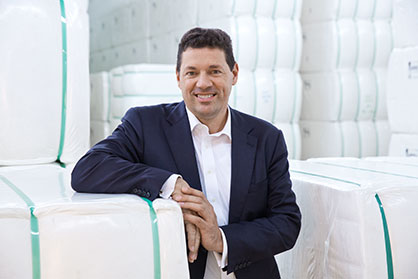
Robert van de Kerkhof (CCO) © 2023 Lenzing AG/Hermann Wakolbinger


“One company alone can’t solve the pressing issue of textile waste. It is proactive partnerships like this that enable us to move forward and bring about real systemic change,” said Robert van de Kerkhof, Chief Commercial Officer Fiber of the Lenzing Group. “We’re working hard to make our industries even more sustainable and to drive the transformation of the textile business model from linear to circular. Further efforts from the entire industry are needed for this transformation to take place,” van de Kerkhof said.

Filippa K © 2023 Filippa K / Romain Lenancker


“We are so excited to be the first brand developing products in the new textile based on OnceMore® pulp using Lenzing’s REFIBRA™ technology, supported by Riopele’s creative expertise in yarn and fabric production. We are not in this alone – collaboration is an essential step in sustainable transformation of the industry. It’s important to us at Filippa K to join forces with like-minded partners who are innovators in their own fields,” said Jodi Everding, Vice President of Sustainability at Filippa K.


Lenzing and Södra – a long-standing partnership for systemic change

Lenzing and Södra have been joining forces in textile recycling since 2021, making a decisive contribution to promoting the circular economy in the fashion industry. As part of the cooperation, the companies intend to share their knowledge with each other and jointly develop processes to enable broader use of cellulosic used textiles on a commercial scale.The jointly developed pulp OnceMore® will subsequently also be used as a raw material for the production of Lenzing’s TENCEL™ x REFIBRA™ branded specialty fibers. The goal is to be able to process 25,000 tons of textile waste per year by 2025.

Jodi Everding Vice President Sustainability at Filippa K © 2023 Filippa K


In line with its circular economy vision “We give waste a new life. Every day”, Lenzing drives the industry towards a fully-fledged circular economy by striving to give waste a new life in all aspects of its core business and by co-developing circular solutions together with potential partners in and outside the current value chain. Lenzing has extensive knowledge in developing cutting-edge innovations in recycling such as its REFIBRA™ and Eco Cycle technologies. Besides virgin dissolving wood pulp, these technologies allow the processing of a substantial proportion of recycled materials based on pre-consumer cottons scraps and post-consumer garments.


More News from Lenzing

#Nonwovens

Lenzing Group highlights scalable, bio-based nonwovens solutions at leading global industry fairs

From CIDPEX in China to Techtextil in Frankfurt and INDEX in Geneva, the Lenzing Group showcases ready-for-market, bio-based nonwoven solutions and receives industry recognition for LENZING™ Nonwoven Technology.

#Yarn & Fiber

Lenzing AG appoints Georg Kasperkovitz as Chief Executive Officer

The Supervisory Board of Lenzing AG has appointed Georg Kasperkovitz, Member of the Management Board and Chief Operations Officer, as Chief Executive Officer (CEO) of Lenzing AG with effect from June 1, 2026.

#Denim

TENCEL™ Lyocell - HV100 achieves global denim availability in six months; Vol. 2 debuts at Kingpins Amsterdam

When TENCEL™ Lyocell - HV100 debuted at last year’s Kingpins Amsterdam in October, 17 mill partners across five countries presented fabrics featuring the new fiber. Just six months on, participation has more than doubled, evolving into a global network that spans nine countries and four continents, signaling both strong industry momentum and growing demand.

#Techtextil 2026

Lenzing unveils three-tier cellulosic fiber portfolio for next generation protective wear

The Lenzing Group, a leading supplier of regenerated cellulosic fibers for the textile and nonwovens industries, today introduces Lenzing Solutions for Protective Wear. This integrated three-tier portfolio is anchored by LENZING™ FR fibers at the highest protection tier for inherent flame resistance and brings together complementary solutions including TENCEL™ Lyocell fibers, both EU Ecolabel-certified² and derived from certified or controlled wood sources³, within a unified protective wear architecture for the first time. The launch marks the most significant expansion of Lenzing’s protective wear business since the company pioneered inherently flame-resistant cellulosic fiber in 1977, and comes as the global personal protective equipment (PPE) market accelerates toward an estimated USD 130 billion by 2033⁴.

More News on Recycling / Circular Economy

#Research & Development

ALADIN paves the way for circular and demand-driven textile production in Europe

Textile production can be organized sustainably by utilizing short supply chains and preventing overproduction. This can already be achieved today by intelligently connecting and efficiently utilizing existing infrastructure. At the same time, production becomes circular when innovative technologies and materials are used that enable high-quality recycling. The ALADIN research project, launched in May 2026 and co-funded with five million euros under the EU Horizon Europe program, is creating the conditions for this.

#Recycling / Circular Economy

Ence and ShareTex begin initial testing of the ATENEA innovation project to promote textile recycling in Spain

Ence and ShareTex are making progress on the Atenea R&D project, which aims to develop a complete value chain for textile recycling in Spain. Specifically, the goal of the ATENEA project—which is funded by the Center for Technological Development and Innovation (CDTI)—is to connect all the necessary stages for the recovery of textile waste, from collection and management, through recycling and transformation into new raw materials, to their incorporation into new textile products.

#Recycling / Circular Economy

DePoly Inaugurates its Showcase Plant in Monthey Switzerland

What if used plastic bottles, PET packaging material and polyester textiles could become raw materials just as high performing as virgin resources? That is the ambition of DePoly, a circular materials company based in Sion, Switzerland which inaugurated its Showcase Plant in Monthey on July 6th & 7th. The first depolymerization facility of its kind and scale in Switzerland, this industrial Showcase Plant represents a major milestone in the company's growth and its journey toward commercialization.

#Recycling / Circular Economy

Commission clarifies rules on plastic bottles recycling

The European Commission today adopted new rules on recycling of single-use plastic beverage bottles made primarily of polyethylene terephthalate (PET bottles). These rules establish, for the first time, a methodology to calculate, verify and report chemically recycled content. This is part of the Commission’s December 2025 plastics package.

Latest News

#Nonwovens

Katharina Obergruber appointed to the Management Board of Sandler AG

The Supervisory Board of Sandler AG has appointed Katharina Obergruber to the company’s Management Board. Effective September 1, 2026, the Board will consist of Philipp Ebbinghaus (CEO), Dr. Ulrich Hornfeck (currently CCO, future COO), and Katharina Obergruber (CCO). Katharina Obergruber, currently Chief Sales Officer Hygiene and member of the Management Team of Sandler AG, will assume responsibility for all sales activities as Chief Commercial Officer. She will assume this role from Dr. Ulrich Hornfeck, who will focus primarily on production and supply chain topics.

#Sustainability

Global Standards establishes new non-profit foundation to strengthen governance

Global Standards gGmbH, the nonprofit organisation behind the globally recognised Global Organic Textile Standard (GOTS), announced a new governance structure designed to support its long-term mission and reinforce organisational autonomy of its Voluntary Sustainability Standards and programmes.

#Textile chemistry

DyStar releases FY2025 sustainability report, marking a new milestone towards its 2030 targets

DyStar, a leading specialty chemicals company with more than a century of expertise in product development and innovation, today announced the release of its FY2025 Sustainability Report, marking a significant milestone in its sustainability journey and reinforcing its commitment to long-term value creation.

#Research & Development

TERIS reaches milestone: Fraunhofer consortium develops new standards for tire analysis

In the “TERIS” project, the Fraunhofer institutes ICT, IGD, and IWM—led by the Fraunhofer Institute for Structural Durability and System Reliability LBF—have reached a decisive milestone. For the first time, the teams aim to generate, analyse, and predict tire wear in the laboratory in a standardized and practical manner. As part of this milestone, results are now available on reference abrasion, particle analysis, tribological models, AI-based surface analysis, a test bench concept, and methods for accelerated aging and VOC detection. The tire industry, testing services, and environmental agencies will in future benefit from reliable, rapid laboratory procedures for emissions assessment.

TOP