[pageLogInLogOut]

#Recycling / Circular Economy

Renewcell applies new textile fiber preparation system using ANDRITZ ADuro green technology
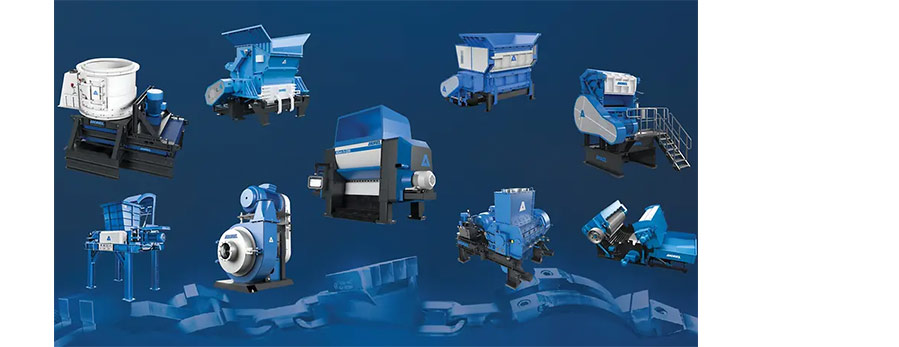
Different shredders of the ADuro product line from ANDRITZ © ANDRITZ
Renewcell has successfully produced its first fiber material with the ADuro textile fiber preparation system from ANDRITZ at its new site in Sundsvall, Sweden. Renewcell applies the process to produce pure dissolving pulp from 100% textile waste. The product is finally transformed by Renewcell’s customers into new garments for the circular clothing industry. The plant in Sundsvall recently reached its Commercial Operation Date (COD) on October 31, 2022.
  • ANDRITZ technology contributes to circular fashion with key solutions for production of pulp made from 100% textile waste
  • ANDRITZ textile fiber preparation system lays the foundation for a pioneering recycling process developed by Renewcell


ANDRITZ installed a complete textile fiber preparation system based on shredding and separation technology. Shredders of the ADuro product line form the technological centerpiece of the system and shred used textiles in only one step, enabling a throughput of up to 60,000 tons of textile waste per year. In the subsequent separation stages, impurities such as buttons and zippers are removed from the shredded textiles.

Since 2016, Renewcell and ANDRITZ have been working together on the development of Renewcell’s textile recycling process at its test plant in Kristinehamn, Sweden, and now also on their first commercial textile recycling plant in Sundsvall.


Renewcell was founded in Stockholm, Sweden, in 2012 and specializes in recycling textiles with the vision of making fashion circular. Its recycling technology transforms used cotton and other cellulose fibers into a new raw material called Circulose® pulp. The pulp is used to produce high-quality biodegradable viscose or lyocell textile fibers for the fashion industry.

ANDRITZ focuses on sustainable and state-of-the-art recycling solutions for pre- and post-consumer textile waste usage and collaborates with internationally renowned partners. ANDRITZ has always been a pioneer in providing industrially and economically viable solutions that bring the circular economy to the world of textile fibers.

More News from Andritz Küsters GmbH

More News on Recycling / Circular Economy

#Recycled Fibers

Circulose and CTA announce collaboration to enable lyocell fibers using CIRCULOSE® pulp

Circulose has announced an agreement with China Textile Academy Green Fibre (CTA) to offer lyocell fibers produced using CIRCULOSE® pulp. Producing lyocell from recycled pulp at commercial scale is an important step in making textile-to-textile recycled materials available across a wider range of textile applications.

#Recycling / Circular Economy

Solving the Feedstock Gap: Unlocking Post-consumer Feedstocks for Textile-to-Textile Recycling in Europe

Fashion for Good launches Project FAE (Feedstock Activation Europe) to develop the sorting and pre-processing infrastructure needed to channel non-rewearable post-consumer textiles into textile-to-textile (T2T) recycling at scale. The project is a practical response to one of the most pressing problems in textile circularity: making post-consumer waste a viable, commercially competitive raw material for recyclers.

#Techtextil 2026

BASF at Techtextil 2026: Helping to shape the future of the textile industry with tangible solutions

At the leading international trade fair for technical textiles and nonwovens from April 21 to 24, 2026 at the Messe Frankfurt, BASF will present numerous solutions and new projects in the textile sector to customers and partners at booth B 68 in hall 11.0. The focus is on product innovations and future-oriented technologies.

#Recycled Fibers

RE&UP partners with Madewell and ISKO on textile-to-textile denim capsule

RE&UP Recycling Technologies is accelerating the shift toward a closed-loop textile economy through a collaboration with American denim brand Madewell and global fabric manufacturer ISKO. By transforming approximately 20,000 pairs of post-consumer jeans into recycled feedstock for a textile-to-textile denim capsule, RE&UP demonstrates the commercial viability of circular systems in the denim sector.

Latest News

#Techtextil 2026

Techtextil & Texprocess 2026: Global benchmark for textile innovation – Performance Apparel Textiles takes centre stage at the opening

With 1,700 exhibitors from 54 countries, Techtextil and Texprocess 2026 showcase the full range of innovation within the international textile industry – from new materials and recycling technologies to finishing solutions and high-performance textile manufacturing and processing technologies. The opening press conference centred on a key theme where innovation is especially strong: Performance Apparel Textiles.

#Heimtextil 2027

Heimtextil celebrates Milan Design Week honoring partnerships with Patricia Urquiola and Alcova Milano

Heimtextil is represented at Milan Design Week with its strong design partners Patricia Urquiola and Alcova. At Villa Pestarini, the leading trade fair spotlighted its dynamic collaborations with acclaimed designer Patricia Urquiola and Alcova Milano.

#Texprocess 2026

Kornit Digital expands digital production into footwear and technical textiles with Presto MAX PLUS

Kornit Digital (NASDAQ: KRNT) (“Kornit” or the “Company”), a global pioneer in sustainable, on-demand digital fashion and textile production, today unveiled the Kornit Presto MAX PLUS, a new roll-to-roll system expanding digital manufacturing into footwear, automotive interiors, military camouflage, high-performance sportswear, and high-end furnishings. Debuting at Texprocess 2026 in Frankfurt, Presto MAX PLUS enables entirely new applications for on-demand textile production.

#Textile processing

NATULON® zipper series surpasses 50% of YKK’s global zipper sales

YKK Corporation (Headquarters: Chiyoda-ku, Tokyo; President: Koichi Matsushima; hereafter, YKK) announces that the global sales share of its NATULON® zipper series—zippers that incorporate recycled materials—has exceeded 50%.

TOP