[pageLogInLogOut]

#Recycling / Circular Economy

EREMA presents the new INTAREMA® TVEplus® DuaFil® Compact double filtration machine for post-consumer recycling
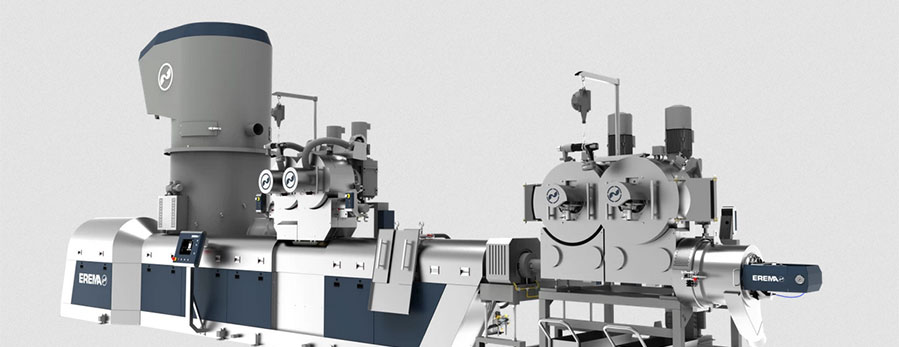
INTAREMA® TVEplus® DuaFil® Compact combines the patented extruder system for processing challenging materials with a second high-performance filtration and upstream reduced-temperature pressure build-up zone. The name of this plant is derived from the double filtration concept and the compact design. Photo: EREMA GmbH
The circular economy for plastics can only be achieved with the highest possible quality of recycled pellets. The recycling machine manufacturer EREMA is a pioneer with many years of development experience when it comes to actually implementing what is technically feasible. With its new development INTAREMA® TVEplus® DuaFil® Compact, the company is redefining the quality level for recycling particularly challenging post-consumer materials, and is doing so with significantly reduced energy consumption.

Lower temperature, lower energy consumption, compact design

A key feature of the innovative double filtration machine is the consistently gentle treatment of the melt throughout the entire process. This is the result of combining TVEplus® technology, patented and proven thousands of times over, with the new DuaFil® Compact technology. "Because there is no discharge metering zone and the melt pump is custom designed to the application, the pressure build-up required for the second filtration unit is especially efficient and only needs a much lower temperature", explains Sebastian Sochor, R&D Engineer at EREMA.

The extruder does not need to build up pressure and can be built much shorter, 10 L/D shorter compared to the previous EREMA double filtration solution. The lower melt temperature of the DuaFil® Compact in this area has a positive effect on the melt quality and significantly reduces energy consumption", says Sochor.


Lower melt temperature, lower energy consumption

That is how the new INTAREMA® TVEplus® DuaFil® Compact 1108 achieves a melt temperature upstream of the second filter unit that is 18.5 degrees Celsius lower than the previous EREMA double filtration solution when processing LDPE supermarket film containing paper, and consumes 10 percent less energy overall (specific energy consumption kWh/kg). Another advantage is in the processing of LDPE/LLDPE material streams that often havevarying degrees of moisture and contamination due to impurities such as paper labels, wood particles or foreign polymers. These get into the material stream through splinters from pallets or strapping bands and can lead to the formation of unpleasant odours and discolouration. This is where the DuaFil®Compact Zone really comes into its own, because operating at a lower melt temperature very effectively prevents the combustion that would otherwise cause these odours.

All these features make the new INTAREMA® TVEplus® DuaFil® Compact machine the first choice for post-consumer applications where polymer-conserving processing and strong filtration performance are important. "Ultimately, the high quality of the recycled pellets that we achieve with this system creates the opportunity to increasingly replace virgin material with recycled material in end products, meeting the current market trend and sustainability requirements," says Michael Heitzinger, Managing Director, EREMA GmbH.



More News from TEXDATA International

#Texprocess 2026

Texprocess 2026: Automation, digitalisation and AI reshape textile processing

Investment decisions in textile processing have become increasingly complex. Rising energy prices, labour shortages and geopolitical uncertainties are forcing companies to prioritise technologies that deliver measurable improvements in efficiency and process stability. This applies not only to apparel production, but also to the processing of technical textiles and high-performance materials. Modernisation projects are therefore being evaluated more selectively – but the pressure to upgrade production systems continues to grow. Texprocess 2026 reflects this tension between cautious investment behaviour and increasing technological demand.

#Techtextil 2026

Textile Chemicals & Dyes: Innovation in Textile Chemistry moves into focus at Techtextil 2026

From PFAS-free finishes and water-saving dyeing technologies to advanced coatings and recycling-compatible formulations, innovation in textile chemistry is accelerating across the industry. Reflecting this development, Techtextil 2026 introduces Textile Chemicals & Dyes as a dedicated product segment, highlighting the growing role of chemical solutions in shaping the next generation of technical textiles.

#Recycling / Circular Economy

textile.4U publishes special edition “Top 100 Textile Recycling Companies 2025”

With a comprehensive 176-page special edition, textile.4U is dedicating its latest issue entirely to one of the most dynamic and influential topics in today’s textile industry: textile recycling. The new issue, published exclusively in high-quality print, presents the Top 100 textile recycling companies researched and selected by TexData – organizations that already play a key role in the transition to circular textiles or are expected to have a significant impact in the near future.

#Recycling / Circular Economy

Responsible Textile Recovery Act of 2024 signed by Governor

Senator Josh Newman (D-Fullerton) is proud to announce that Senate Bill 707 (SB 707), the Responsible Textile Recovery Act of 2024, has been signed into law by the Governor of California, Gavin Newsom. This groundbreaking legislation establishes the country’s first Extended Producer Responsibility (EPR) textile recycling program, marking a significant step forward in the state’s efforts to combat waste and promote sustainability.

More News on Recycling / Circular Economy

#Recycling / Circular Economy

AI Circular Economy Conference 2026 fuels innovation at the intersection of AI and Circular Economy

The AI Circular Economy Conference 2026, organised by nova-Institute, brought together 116 participants from 15 countries in Cologne and online to explore the transformation of the chemical and materials industry supported and accelerated by artificial intelligence. During the two-day event, leading experts from industry, research, start-ups and the investment community discussed how AI can maximise the potential of renewable carbon creating efficient circular value chains. The conference featured 24 presentations and multiple panel discussions, highlighting the growing convergence of digital technologies and circular material systems. It demonstrated how artificial intelligence is progressing from the experimental stage to real industrial implementation within the circular economy.

#Recycled_Fibers

Circ deepens access to recycled fibers with Xinxiang Bailu Chemical Fiber Co., Ltd. partnership agreement

Circ®, a global leader in textile‑to‑textile recycling, today announced a new partnership agreement with Xinxiang Bailu Chemical Fiber Co., a Canopy Dark Green Shirt producer and one of the world’s leading producers of viscose filament. The agreement marks a significant step in Circ’s continued expansion in China and strengthens its position within the country’s rapidly evolving circular textile ecosystem; further supporting Circ’s ability to supply recycled fibers near existing fashion supply chains.

#Recycled_Fibers

Worn Again Technologies unveils the Accelerator

Worn Again Technologies unveils the Accelerator, the next major step towards commercialising its pioneering Textile-to-Fibre recycling process and proving the technical and economic feasibility of polycotton recycling.

#Recycling / Circular Economy

Textile‑to‑textile recycling leader Circulose joins Spinnova’s ecosystem to accelerate technology scale‑up

Textile‑to‑textile recycling leader Circulose joins Spinnova’s ecosystem (consortium) to help advance the scale‑up of Spinnova’s technology. Spinnova has actively sought partners to accelerate commercial scale‑up, and Circulose, as a key player in textile recycling, strengthens the ecosystem by providing a raw material that is in high demand across the industry.

Latest News

#Techtextil 2026

Gebr. Otto highlights versatility at Techtextil with regional supply chains, yarn innovations and new hygiene segment

At this year’s Techtextil, Gebr. Otto places its versatility at the center of its presentation. In addition to spinning, twisting and dyeing – traditionally focused on fine cotton – textile processors will also find a competent development partner for technical specialty solutions. The Dietenheim-based spinning mill has now built up a decade of experience in the production of technical yarns, particularly from aramids. A new hygiene segment has also been established, where yarns for medical and hygiene products are currently being produced. In the future, this department could also develop textile products for the food sector. Gebr. Otto will once again be present at the BW-i joint stand, booth D81, hall 12.1. What is wound onto the spool is determined by the customer: Gebr. Otto develops according to specific customer requirements and transforms its own ideas into yarn innovations.

#Europe

Commission presents proposal for EU Inc. - unlocking the full potential of the Single Market for Europe's entrepreneurs

Today, the European Commission presented its proposal for EU Inc., a new single set of corporate rules, building the cornerstone and starting point for the EU's 28th regime. EU Inc. is an optional, digital-by-default European corporate framework. It will make it easier for businesses to start, operate and grow across the EU – incentivising them to stay in Europe, and encourage those who once looked elsewhere to return.

#Man-Made Fibers

OnceMore® from Södra brings end-to-end traceability for circular Man-made Cellulosic Fibers (MMCF) using TextileGenesis

OnceMore® from Södra, the world’s first large-scale process for recycling blended fabrics into high‐quality dissolving pulp, will begin using TextileGenesis, a Lectra company, to strengthen traceability from raw material to retail across the value chain. OnceMore® produces dissolving pulp made from blended textile waste and wood sourced from responsibly managed Swedish forests. By integrating TextileGenesis, OnceMore® supports the growing need for verified data and secure, transparent tracking throughout increasingly complex supply chain.

#Sustainability

Experts publish APAC policy priorities

Cascale today announced the publication of its APAC Policy Priorities Paper, developed by the Asia-Pacific (APAC) Policy Member Expert Team (MET) to identify key regional sustainability challenges and provide practical, aligned recommendations for policymakers and industry stakeholders across Asia-Pacific.

TOP