[pageLogInLogOut]

#Recycling / Circular Economy

Berry builds recycling ecosystem to provide nonwovens customers with recycled content
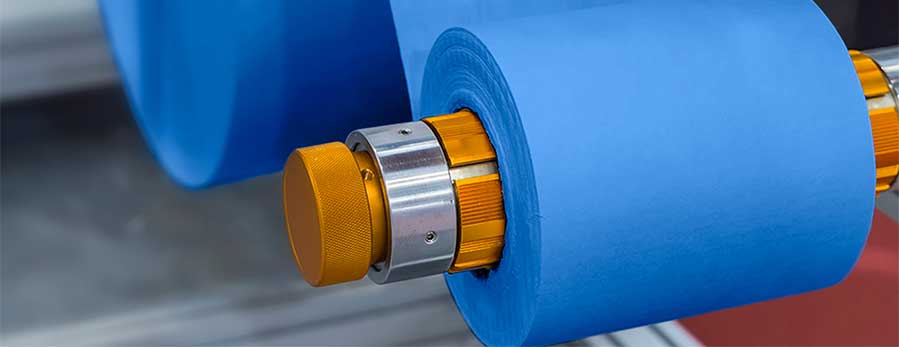
© 2022 Berry Global Group
Berry Global Group, Inc. (NYSE: BERY) announces the formation of a closed-loop recycling ecosystem to supply post-industrial recycled materials into the manufacturing of its Endura™ spunbond and meltblown nonwovens product line. Berry Global leverages its sustainability leadership, providing nonwovens customers with outlet for pre-consumer recycled plastic waste.

Products under the Endura product line are recognized under the SCS Recycled Content Certification, which measures the percentage of recycled content for the purpose of making an accurate claim in the marketplace, allowing customers the ability to include the SCS logo on-pack.

In an effort to reduce waste, Berry began the manufacturing of Endura products through recycling the Company’s post-industrial waste from its operations. The Company has added to its Endura product line through the additions of Endura Scrubby and Endura Meltblown.

Endura nonwovens provide 90% recycled content

Berry introduced the closed-loop recycling ecosystem earlier this year with manufacturing spanning six of its existing European locations. Through the ecosystem, Berry supplies customers with nonwoven materials, receives post-industrial waste from the conversion processes of its customers, and lastly incorporates the recycled content into Berry’s Endura nonwovens line. Within the Endura line, Berry offers spunbond products containing up to 90% recycled content for use in applications such as disinfectant wipes, home and bedding, roofing, and carpet tiles.

“Customers look to Berry for help in reaching their sustainability goals. Through our size and scale, we have the unique ability to invest and commercialize innovative, sustainable solutions to increase recycled content, reduce emissions, and promote circularity,” said Achim Schalk, EVP/GM Health, Hygiene, and Specialties EMEIA for Berry Global.


Closed-loop recycling reduces CO2eq emissions

Through the introduction of the Endura collection and recycling scheme for spunbound materials, Berry aims to increase the availability of post-industrial recycled materials, reducing dependence on virgin polymers. Increasing the circularity of its nonwovens products, Berry further increases its access to valuable recycled plastic. The use of post-industrial materials results in a 70% reduction of CO2eq emissions1 during the manufacturing process, per kilogram versus virgin materials. This reduction in CO2eq emissions directly impacts Berry’s Science Based Target to reduce absolute scope 1+2 emissions 25% from 2019.

Within the Endura ecosystem, Berry collaborates with customers to collect and repelletize nonwovens waste from customer operations. In turn, the material collected reenters the product stream in the form of new nonwovens materials for customers.

1This calculation has not been externally reviewed for compliance with ISO 14040/44 Standard and Guideline. Material GHG savings are estimated based solely on resin production according to “Cradle to Gate LCI of nine plastic resins and four PU precursors” Franklin and Associates.



More News from Berry Global Inc.

More News on Recycling / Circular Economy

#Europe

New EU rules to stop the destruction of unsold clothes and shoes

The European Commission today (Feb 9) adopted new measures under the Ecodesign for Sustainable Products Regulation (ESPR) to prevent the destruction of unsold apparel, clothing, accessories and footwear.

#Recycling / Circular Economy

Sahil Kaushik appointed CEO of Infinited Fiber as the company advances a phased path to commercial scale

Infinited Fiber has appointed Sahil Kaushik as Chief Executive Officer. Kaushik has served as Acting CEO alongside his role as Chief Operating Officer and will continue to oversee operations until a new COO is appointed.

#Recycling / Circular Economy

trinamiX with new management

BASF is examining strategic options for its subsidiary trinamiX GmbH. trinamiX specializes in biometric imaging and mobile material analysis. These activities are not part of BASF’s core business, on which the company is focusing as part of the implementation of its new strategy.

#Recycling / Circular Economy

Reju announces site selection for first U.S. industrial sized facility regeneration hub in Rochester, New York

Reju, the textile-to-textile regeneration company, today announced it has selected the site for its first U.S.-based industrial facility marking a significant milestone in its efforts to scale globally. This future Regeneration Hub will be in Rochester, New York, reinforcing Reju’s commitment to the adoption of circular textile system across key regions worldwide.

Latest News

#Sustainability

Ying McGuire becomes new CEO of Cascale

Cascale today announced the appointment of Ying McGuire as Chief Executive Officer, effective June 1, 2026.

#Technical Textiles

Sustainable, lightweight, and sound absorbing: Polyester-based front trunk solution for BEVs

As car manufacturers look to further reduce their carbon footprint, Autoneum has developed an innovative front trunk solution for battery electric vehicles (BEVs), made entirely from polyester-based textile. The Ultra-Silent Frunk offers significant weight reduction, improved acoustic and thermal insulation, and uses up to 70 percent recycled material, supporting sustainable and efficient vehicle design. Autoneum, global technology leader in acoustic and thermal management for vehicles, has already received orders for the new frunk from three major OEMs in Asia and Europe to be built in three BEV models. Series production for two BEVs has been underway in China and Germany since last year.

#Raw Materials

Modern testing methods for raw cotton

The 38th International Cotton Conference Bremen will take place from 25 to 27 March 2026 at the Bremen Parliament. This conference has traditionally stood for in-depth expertise and international exchange. The program will focus on technical innovations, market trends, and regulatory frameworks across the entire value chain – from agriculture to the circular economy. With high-profile speakers, the conference is regarded as the key meeting point for the global cotton industry. Today’s focus: Cotton quality and testing methods.

#Spinning

Rieter responds to higher raw material prices

Global political and economic developments have been leading to rising raw material and energy costs for some time. The textile machinery industry is also affected by this trend. Rieter machines and components consist to a large extent of steel, copper, aluminum and electronics. These materials in particular have seen higher demand and higher prices in recent months.

TOP