[pageLogInLogOut]

#Recycling / Circular Economy

NTU Singapore and RGE launch S$6 million joint research centre to tackle textile waste

Nanyang Technological University, Singapore (NTU Singapore) and Royal Golden Eagle (RGE), a global resources-based manufacturing group, today launched the RGE-NTU Sustainable Textile Research Centre (RGE-NTU SusTex) to accelerate innovation in textile recycling and translate research outcomes into practical solutions that can be deployed in urban settings like Singapore.

Researchers in the S$6 million joint research centre will look into areas such as next- generation eco-friendly and sustainable textiles, and refabricating textile waste into fibre. The aim is to study the chemistry of various textile materials and determine the optimal processes and techniques required to bring us closer to a circular textile economy. This is in line with Singapore’s Zero Waste vision, as well as the Singapore Green Plan 2030.

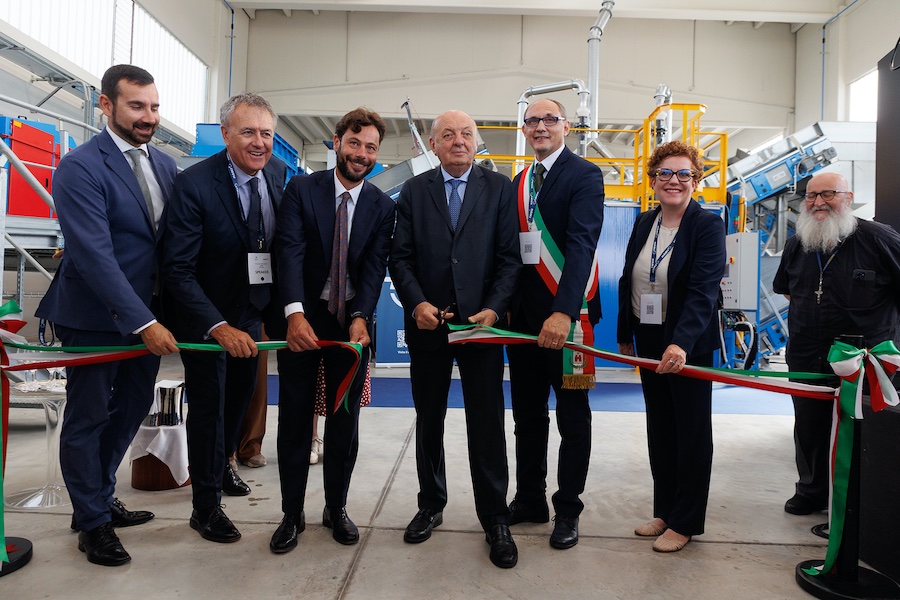
The research centre, located at NTU’s School of Materials Science and Engineering, was officially launched today by Ms Grace Fu, Singapore’s Minister for Sustainability and the Environment.

It comes at a time when an estimated 92 million tonnes of textile waste1 is created globally each year. Only 12 per cent of the material used for clothing ends up being recycled. The textile industry itself is responsible for 10 per cent of global greenhouse gas emissions2 – more than international flights and maritime shipping combined.

NTU President Professor Subra Suresh said: “The goal of the RGE-NTU Sustainable Textile Research Centre (RGE-NTU SusTex) is very much aligned with Singapore’s zero waste vision to build a sustainable, resource-efficient and climate- resilient nation. This partnership between NTU and RGE draws on RGE’s industry experience as a global resources-based manufacturing group and leverages NTU’s intellectual assets in materials and environmental chemistry.”

RGE Executive Director, Perry Lim, said: “We want to contribute where we can achieve the most impact. More countries are banning the import of waste including textile waste. However, current textile recycling technologies, which rely on a bleaching and separation process using heavy chemicals, cannot be implemented in urban settings such as Singapore. This is where RGE can help, drawing on our 20 years of experience in viscose fibre making, to provide S$6 million in funding to establish the research centre and fund its work; share our global R&D expertise as the world’s largest viscose producer; and to potentially scale up the viable innovations and solutions across our global operations. Backed by Singapore’s strong research ecosystem and leveraging NTU’s engineering capabilities, we aim to catalyse innovation and develop a first-of-its-kind urban-fit textile recycling solution.”

NTU Senior Vice President (Research) Professor Lam Khin Yong said: “Collaboration between universities and the industry has never been more important to tackle today’s complex social, environmental and economic challenges. The RGE- NTU SusTex is yet another example of how the culture of collaboration with industry is embedded in NTU’s innovation ecosystem. Such collaborations allow for a healthy exchange of ideas and know-how between industry and academia, and help pave the way for the translation of research ideas, maximising the reach and impact of NTU’s research for society’s benefit.”

Singapore Economic Development Board’s (EDB) Senior Vice President, Dino Tan said: “The successful launch of RGE-NTU SusTex is a testament to EDB’s efforts in connecting our corporates with Singapore’s research institutes. We are confident that by combining RGE’s manufacturing expertise with NTU’s research capabilities, the new research centre will represent a significant step towards meeting Singapore’s sustainable manufacturing goals. We look forward to forging more such partnerships, to support the development of innovative green technologies and solutions that can be scaled in Singapore and the region.”


The joint research centre is part of NTU’s ambition and efforts to mitigate our impact on the environment under its NTU 2025 strategic plan, and builds on RGE’s sustainability commitment, part of which is to explore how waste can also be used as a resource to generate new materials.

Driving high-impact research through interdisciplinary collaboration

The RGE-NTU SusTex leverages the University’s emphasis on interdisciplinary collaboration to catalyse high-impact research and take innovative ideas from the lab to the real world. It also builds on RGE’s wealth of industry experience and strong manufacturing capabilities. EDB seeded the relationship between NTU and RGE when the idea of an urban-fit textile recycling centre was first germinated last year.

The joint research centre will draw upon the expertise of NTU scientists in the School of Materials Science and Engineering and the School of Chemical and Biomedical Engineering.

It will look into four research areas:

• Cleaner and more energy efficient methods of recycling: looking at greener ways of textile recycling, with a focus on cellulose-based fabrics including rayon, viscose and cotton, minimising the degradation of fabric properties, and refabricating textile waste into fibre;

• Automated sorting of textile waste: using a combination of advanced spectroscopic techniques and machine learning capabilities for identifying and sorting textile waste based on fibre composition, and developing an automated system to remove accessories such as zips and buttons;

• Eco-friendly dye removal: developing eco-friendly methods of removing dye from textile waste using little to zero chlorinated chemicals, and formulating greener and biodegradable dye substitutes;

• New textiles: finding alternative uses for textile by-products and developing a new generation of eco-friendly and smart textiles with attributes such as moisture insensitivity, electrical conductivity, and infrared/ ultraviolet radiation reflectivity.

Leading the joint research centre in these research projects is Professor Hu Xiao from the NTU School of Materials Science and Engineering, who is also the director of the Environmental Chemistry & Materials Centre at NTU’s Nanyang Environment & Water Research Institute.

In conjunction with the establishment of the RGE-NTU SusTex, RGE plans to build a textile recycling pilot plant that is low carbon, low chemical emissions, and energy efficient in Singapore. The new sustainable textile recycling solutions developed under the RGE-NTU SusTex are expected to be test bedded in this pilot plant.
More News from TEXDATA International

#Techtextil 2026

Performance Apparels: Functional textiles drive innovation at Techtextil 2026

From high-performance fibres and advanced membranes to smart textiles and sustainable material concepts – functional apparel is becoming one of the most dynamic innovation fields in technical textiles. At Techtextil 2026, exhibitors demonstrate how new materials, finishing technologies and digital functions are shaping the next generation of protective, workwear and outdoor systems.

#Texprocess 2026

Texprocess 2026: Automation, digitalisation and AI reshape textile processing

Investment decisions in textile processing have become increasingly complex. Rising energy prices, labour shortages and geopolitical uncertainties are forcing companies to prioritise technologies that deliver measurable improvements in efficiency and process stability. This applies not only to apparel production, but also to the processing of technical textiles and high-performance materials. Modernisation projects are therefore being evaluated more selectively – but the pressure to upgrade production systems continues to grow. Texprocess 2026 reflects this tension between cautious investment behaviour and increasing technological demand.

#Techtextil 2026

Textile Chemicals & Dyes: Innovation in Textile Chemistry moves into focus at Techtextil 2026

From PFAS-free finishes and water-saving dyeing technologies to advanced coatings and recycling-compatible formulations, innovation in textile chemistry is accelerating across the industry. Reflecting this development, Techtextil 2026 introduces Textile Chemicals & Dyes as a dedicated product segment, highlighting the growing role of chemical solutions in shaping the next generation of technical textiles.

#Recycling / Circular Economy

textile.4U publishes special edition “Top 100 Textile Recycling Companies 2025”

With a comprehensive 176-page special edition, textile.4U is dedicating its latest issue entirely to one of the most dynamic and influential topics in today’s textile industry: textile recycling. The new issue, published exclusively in high-quality print, presents the Top 100 textile recycling companies researched and selected by TexData – organizations that already play a key role in the transition to circular textiles or are expected to have a significant impact in the near future.

More News on Recycling / Circular Economy

#Recycling / Circular Economy

Solving the Feedstock Gap: Unlocking Post-consumer Feedstocks for Textile-to-Textile Recycling in Europe

Fashion for Good launches Project FAE (Feedstock Activation Europe) to develop the sorting and pre-processing infrastructure needed to channel non-rewearable post-consumer textiles into textile-to-textile (T2T) recycling at scale. The project is a practical response to one of the most pressing problems in textile circularity: making post-consumer waste a viable, commercially competitive raw material for recyclers.

#Techtextil 2026

BASF at Techtextil 2026: Helping to shape the future of the textile industry with tangible solutions

At the leading international trade fair for technical textiles and nonwovens from April 21 to 24, 2026 at the Messe Frankfurt, BASF will present numerous solutions and new projects in the textile sector to customers and partners at booth B 68 in hall 11.0. The focus is on product innovations and future-oriented technologies.

#Recycled Fibers

RE&UP partners with Madewell and ISKO on textile-to-textile denim capsule

RE&UP Recycling Technologies is accelerating the shift toward a closed-loop textile economy through a collaboration with American denim brand Madewell and global fabric manufacturer ISKO. By transforming approximately 20,000 pairs of post-consumer jeans into recycled feedstock for a textile-to-textile denim capsule, RE&UP demonstrates the commercial viability of circular systems in the denim sector.

#Recycled Fibers

Syre and JEPLAN Announce Strategic Partnership to Accelerate Textile-to-Textile Recycling

JEPLAN, INC. the Japanese pioneer developing and operating chemical recycling technologies for circularity in packaging and textiles, and Syre, the textile impact company on a mission to hyperscale textile-to-textile recycling, announced today a strategic partnership. Together, the companies aim to extensively accelerate the timeline towards commercialization of next generation textile-to-textile polyester recycling technology.

Latest News

#Techtextil 2026

SAHM Winding Solutions and Vandewiele Automation present integrated automation solution for winding processes

For the first time at the Techtextil trade fair in Frankfurt am Main, Germany (21 - 26 April), SAHM Winding Solutions (Hallo 12.0. / Booth 95) and Vandewiele Automation will be showcasing their combined automation expertise for industrial winding processes. Under the motto “Combining Automation. Maximizing Flow”, the two companies will demonstrate how automated package handling and robot-assisted yarn knotting can be integrated into a continuous production flow.

#Recycled Fibers

UNIFI celebrates recycled and circular Innovation with ninth annual REPREVE® Champions of Sustainability Awards

Unifi, Inc. (NYSE: UFI), the makers of REPREVE® and one of the world’s leading innovators in recycled and synthetic yarns, today announced the winners of its ninth annual REPREVE Champions of Sustainability Awards, recognizing brands and mills that are advancing circularity and responsible manufacturing across the global textile industry.

#Man-Made Fibers

Teijin Frontier announces new Stretch Polyester yarn offering exceptional compatibility with high-performance Polyester materials

Teijin Frontier Co., Ltd. announced today that it has developed a new stretch polyester yarn that offers new opportunities to create comfortable, all- polyester fabrics for sports and outdoor wear. The new polyester yarn demonstrates exceptional compatibility with high-performance polyester materials. Further, Teijin Frontier’s proprietary polymer design and spinning technology impart excellent elasticity to the new yarn. In turn, this yarn adds stretchability and recovery to the advanced functionality and excellent texture of high-performance polyester materials.

#Man-Made Fibers

Lenzing commissions 14 MW power‑to‑heat facility, strengthening grid stability and heat management

The Lenzing Group has successfully commissioned a new power‑to‑heat (P2H) facility with an electrical capacity of 14 megawatts. The installation converts renewable electricity directly into process heat, is fully integrated into the existing heat network at the industrial site, and represents a key building block for a fossil‑free heat supply. As project partner, VERBUND was responsible for the energy‑market integration and will operate the facility for balancing energy marketing, enabling it to respond flexibly to short‑term fluctuations in the power grid.

TOP