[pageLogInLogOut]

#Recycling / Circular Economy

Berry Leadership Teams focus on sustainable development
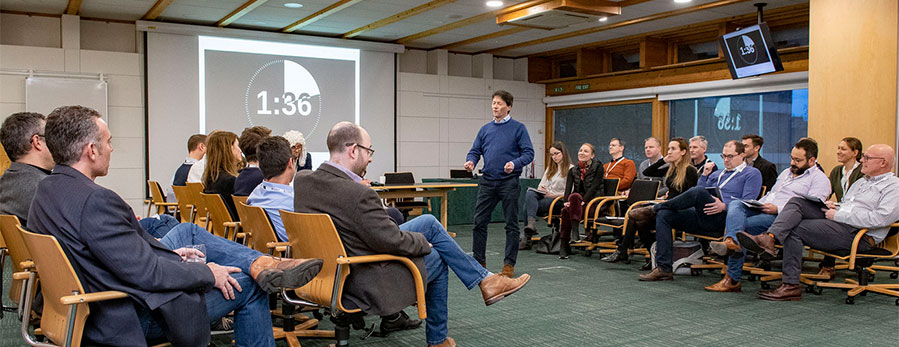
© 2022 Berry Global
As part of its stated commitments to support the move to a circular and net zero economy, a group of senior leaders from Berry Global’s worldwide operations took part in a five-day course, organised by the University of Cambridge Institute for Sustainability Leadership (CISL).

The Berry Global Plastics Ambassador Program and Network was created to enable employees, customers, suppliers and communities to better understand the positive value of plastics and its potential in a circular economy. As well as its focus on plastics, a critical element of the program is also to recognise the role of sustainability in the wider business environment and to help senior personnel within the company develop and lead effective sustainable business models.

The latest course combined practical sessions and discussions with keynote addresses from a number of experts in the fields of sustainability and regenerative societies. The comprehensive event covered a wide range of topics, including the latest facts around climate change, the value of business to society, the economics of a low carbon economy and the impacts of evolving regulation and stakeholder expectations.

There were presentations on the evolution and future of manufacturing in a circular economy and the different approaches that can be taken to identify and deliver new opportunities. Practical examples and case studies of recent sustainable business achievements and product innovations were also shared.

“This was an intensive event with an inspiring series of presentations and activities that threw new light on how we can effectively manage sustainable development and the transition to a circular economy in order to create genuine sustainable prosperity,” commented Berry Global CEO Tom Salmon.

“When it comes to climate change, it is very clear that society as a whole needs to take urgent action now. For Berry, the many learnings from this course will inform and expediate our actions as part of our Impact 2025 sustainability strategy. Equally important, the course also helped to further enhance and develop personal leadership and action among the delegates, who importantly came from all parts of our business, as we continue to deliver on our sustainability commitments and targets.”

The CISL is a globally influential institute developing leadership and solutions for a sustainable economy. Its Rewiring the Economy framework shows how the economy can be ‘rewired’, through focused collaboration between business, government and finance institutions, to deliver positive outcomes for people and environment in pursuit of the UN Sustainable Development Goals (SDGs).


Previous CISL courses for Berry have resulted in a number of significant company developments. At site level these have included the 100 million kWh energy reduction challenge, the first solar Virtual Power Purchase Agreement, a water saving project and the Waste is Gold waste reduction program.

There have also been several product-focused projects, such as the B Circular Range initiative to develop a standard range of 40 products that are refillable, recyclable and include a minimum of 30 percent PCR/bio resin and the closed loop program for the recycling of tree shelters.


More News from Berry Global Inc.

More News on Recycling / Circular Economy

#Recycling / Circular Economy

Efficient recycling of textile PET

At the upcoming Plastics Recycling Show Europe in Amsterdam on May 5–6, BB Engineering will present its portfolio of PET recycling technologies. The German machinery manufacturer will once again focus on textile recycling and melt filtration.

#Recycled Fibers

Circulose and CTA announce collaboration to enable lyocell fibers using CIRCULOSE® pulp

Circulose has announced an agreement with China Textile Academy Green Fibre (CTA) to offer lyocell fibers produced using CIRCULOSE® pulp. Producing lyocell from recycled pulp at commercial scale is an important step in making textile-to-textile recycled materials available across a wider range of textile applications.

#Recycling / Circular Economy

Solving the Feedstock Gap: Unlocking Post-consumer Feedstocks for Textile-to-Textile Recycling in Europe

Fashion for Good launches Project FAE (Feedstock Activation Europe) to develop the sorting and pre-processing infrastructure needed to channel non-rewearable post-consumer textiles into textile-to-textile (T2T) recycling at scale. The project is a practical response to one of the most pressing problems in textile circularity: making post-consumer waste a viable, commercially competitive raw material for recyclers.

#Techtextil 2026

BASF at Techtextil 2026: Helping to shape the future of the textile industry with tangible solutions

At the leading international trade fair for technical textiles and nonwovens from April 21 to 24, 2026 at the Messe Frankfurt, BASF will present numerous solutions and new projects in the textile sector to customers and partners at booth B 68 in hall 11.0. The focus is on product innovations and future-oriented technologies.

Latest News

#Associations

BTMA backs global growth while investing in future UK leaders

As one of a number of new initiatives launched this year, the British Textile Machinery Association (BTMA) is launching the UK-India Textile Machinery Coalition. The UK-India Free Trade Agreement, signed in July 2025, has implications that extend across sourcing, competitiveness and long-term trade dynamics, believes BTMA CEO Jason Kent.

#Raw Materials

China projected to increase cotton production, yields, and imports in 2026/27

World cotton production in the 2026/27 season is projected at 25.9 million tonnes, exceeding global consumption of 25.2 million tonnes, according to the May 2026 issue of Cotton This Month. That means both production and consumption are expected to remain close to current season levels, while global cotton trade is projected to decline by 2.7% to approximately 9.6-9.7 million tonnes.

#Raw Materials

ICAC launches Carbon Credits Initiative to deliver new income streams to cotton farmers

The International Cotton Advisory Committee (ICAC) has announced a new initiative designed to unlock additional income streams for cotton farmers through participation in carbon credit markets, linking sustainable production practices directly to financial returns.

#Sustainability

Number of GOTS-certified facilities grow 15% globally as demand for credible sustainability standards continues to strengthen

Global Organic Textile Standard (GOTS) certification continued to grow in 2025, with nearly 18,000 certified facilities worldwide, despite ongoing geopolitical uncertainty and rapidly evolving regulatory requirements across global textile supply chains.

TOP