[pageLogInLogOut]

#Recycling / Circular Economy

Wealth in waste: India's potential to lead circular textile sourcing
© 2022 Fashion for Good
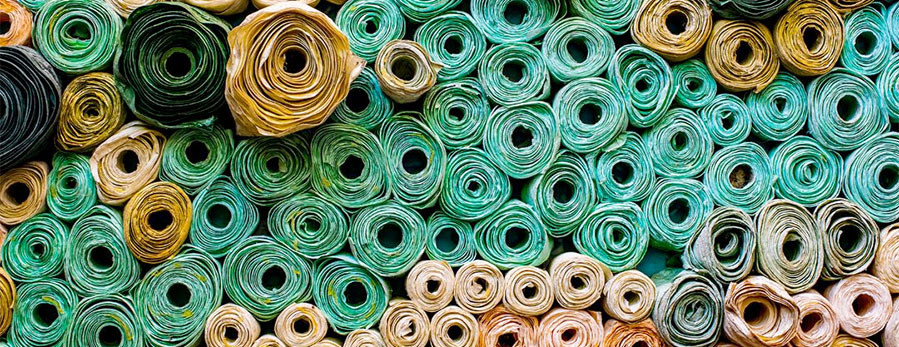
Today Fashion for Good releases “WEALTH IN WASTE: INDIA’S POTENTIAL TO BRING TEXTILE WASTE BACK INTO THE SUPPLY CHAIN”; a first-of-its-kind study, and the most comprehensive analysis of the Indian textile waste landscape. With global fibre-to-fibre recycling increasing, India is in a unique position to leverage existing infrastructure and resources to emerge as a leader in capturing waste, implementing new sorting and recycling technologies, and reintroducing its textile waste back into the global market, securing its role as the leading circular sourcing region.

“Advanced recycling technologies are at the cusp of closing the textile-to textile recycling loop. The resources and materials are available, yet the infrastructure and systems to source and provide higher quality feedstock fall short. With mounting pressure to reduce reliance on virgin sources and decarbonise the industry, what can be reused, must be reused to its full potential.” — Katrin Ley, Managing Director at Fashion for Good

Commissioned by Fashion for Good as part of the Sorting for Circularity; India Project, the study was conducted in collaboration with Sattva Consulting, Saahas Zero Waste and Reverse Resources, specialist organisations in strategic impact, waste, resource and data management, and the scaling of textile recycling infrastructures.

To enable an effective transition towards circularity, “WEALTH IN WASTE: THE OPPORTUNITY FOR INDIA TO BRING TEXTILE WASTE BACK INTO THE SUPPLY CHAIN” attempts to fill the data gaps that exist in the textile waste landscape in India. By building a better understanding across three key streams, domestic post-consumer waste, pre-consumer waste and imported waste, and by mapping stakeholders, geographical flows and recognising challenges in the current infrastructure, the study aims to help ecosystem players to orchestrate actions and devise solutions and mediate accordingly.

“The industry stands to gain a clear map of the textile waste value chain in India, armed with a robust set of recommendations for action. This now forms a strong basis to move forward collaboratively to scale the investments, infrastructure and innovation needed to make circularity in fashion a reality in India.” — Anita Chester, Managing Director at Laudes Foundation, India

UNLOCKING POTENTIAL: THE OPPORTUNITY FOR INDIAN PLAYERS

Up to 7800 kilotonnes of textile waste is accumulated in India annually; the largest share of which, an estimated 51%, originates from Indian consumers - post-consumer waste, with factory waste and offcuts - pre-consumer waste, amounting to 42%, followed by imported waste that contributes a further 7%. India’s textile waste accounts for 8.5% of the global total; only 59% of the textile waste in India finds its way back into the textile industry through reuse and recycling, with a mere fraction making it back into the global supply chain.

A lack of strict regulation, informal, and in some cases non-existent, traceability systems, excessive cost competitiveness and limited technological infrastructure to process certain waste types, has limited the potential of circular value chains so far. Detailing the bottlenecks in the current processing of waste, the study identifies materials that can be ranked according to their best potential through a waste value hierarchy framework as well as actions that can push the materials up the hierarchy in the future.


Outlining the potential for collaborative and systemic interventions to fortify circularity in the Indian textile waste industry and reintroduce it into the supply chain, the study presents a three-step approach to driving this transition;

  • 1. enabling visibility and access to waste,
  • 2. harnessing recycling potential of India, and
  • 3. establishing systems, infrastructure and regulations for waste management.


https://reports.fashionforgood.com/wp-content/uploads/2022/07/Sorting-for-Circularity-Wealth-in-Waste.pdf

More News from TEXDATA International

#ITM 2026

ITM 2026: The new geography of textile production

New production hubs are emerging across North Africa and Central Asia, while Türkiye is accelerating its transformation toward higher-value, technology-driven and more sustainable textile manufacturing.

#Research & Development

“Production is a product”

From technical textiles and AI-driven robotics to the limitations of textile circularity: Professor Dr Thomas Gries looks back on more than two decades of development at ITA Aachen. In the interview, he explains why production technology remains a decisive success factor, discusses international collaborations and innovation ecosystems, and shares his views on the transformation of production landscapes and the challenges facing an increasingly regulated industry.

#Knitting & Hosiery

“We need to move away from the price trap and return to a value-driven mindset.”

With its new Textile Innovation Center, KARL MAYER is sending a strong signal for innovation, collaboration, and the future of textile applications. In this interview, Karl Josef Mayer discusses new opportunities in warp knitting, the processing of staple fibres, recycling, the changing role of machinery manufacturers, and why the textile industry must once again focus more strongly on the value of textiles. by Oliver Schmidt

#Associations

“Innovation, resilience and international experience remain the great strengths of the Swiss textile machinery industry”

Geopolitical uncertainty, growing competitive pressure from China, new free trade agreements and the shift towards a circular economy are currently reshaping the global textile industry. In this interview, Cornelia Buchwalder discusses the current mood within the Swiss textile machinery sector, the industry’s distinctive innovative strength, new market opportunities in India and Asia, and the technological trends that could shape the upcoming trade fair cycle leading up to ITMA 2027.

More News on Recycling / Circular Economy

#Recycling / Circular Economy

Arc'teryx introduces System 0™, a new framework for the future of product design and circularity

Arc'teryx Equipment, the global design company specializing in technical high-performance apparel and equipment, today introduced System 0™, a new framework that reimagines how products can be designed, manufactured, used, repaired, and ultimately regenerated. System 0 represents the next evolution for sustainability in the outdoor industry, as it embeds circular thinking across an entire product lifecycle while maintaining the uncompromising performance standards that define the Arc’teryx brand.

#Recycling / Circular Economy

2. RETRAKT EU Conference - „Join the Circle“: Turning challenges of the textile sector into chances

On 19 November 2026, the second RETRAKT EU Conference – “Join the Circle” will take place in Brussels. The event, which focuses on the transformation of the textile sector towards a circular economy, will be held under the motto: “Turning Challenges in the Textile Sector into Chances.”

#Recycled Fibers

Indorama Ventures supports KH Editions in building on its RECO experience Taking Thai circular fashion to New York Fashion Week

Indorama Ventures Public Company Limited, a global sustainable chemical company, is supporting KH Editions, a Thai fashion brand that has grown through the RECO program, by providing fabrics woven with deja™ recycled polyester yarn. The fabrics have been used to create two fashion looks and accessories from the brand’s ten-look Spring/Summer 2027 collection, which will be presented in New York City, United States, on 15 September 2026 during New York Fashion Week.

#Recycled Fibers

RE&UP’s Next-Gen Cotton fibers power Zalando private label t-shirt collection crafted from innovative recycled textiles

RE&UP Recycling Technologies’ Next-Gen Cotton powers a new collection from Zalando’s private labels, marking a step forward in bringing textile-to-textile recycled fibers into commercial fashion production. Launching on Zalando in August, the collection comprises five t-shirts across YOURTURN by Zalando and Even&Odd by Zalando, made from a circular-knit fabric blending 80% organic cotton with 20% RE&UP Next-Gen Cotton — textile-to-textile recycled fiber produced from textile waste. This is the first time RE&UP's recycled fibers feature in Zalando's private label assortment.

Latest News

#Textiles & Apparel / Garment

Texworld Apparel Sourcing Paris reflects shift towards more diversified sourcing

The latest edition of Texworld Apparel Sourcing Paris confirms the global reshaping of sourcing strategies. The offer is evolving to satisfy more selective buyers, looking for responsiveness, innovation and diversification in their sourcing options.

#ITMA Asia + CITME 2026

ITMA Asia 2026: How Barmag is reshaping the future of man-made fiber production

The textile industry is entering a groundbreaking era. Manufacturers face rising energy prices, growing sustainability demands, increasing labor shortages, and an unprecedented need for flexibility. For a globally active textile industry, where competitiveness is closely linked to production efficiency and cost leadership, this means that technology is no longer merely a means of improving operational processes – it is increasingly becoming a strategic differentiator.

#Textile chemistry

Archroma wins ICIS Innovation Award for sulfur dye breakthrough

Archroma, a global leader in specialty chemicals, has won a coveted 2026 ICIS Innovation Award for Best Product Innovation from a Large Company for FiberColors®. These high-performance sulfur dyes are synthesized from pre-consumer wool waste, reducing industry reliance on petroleum-based inputs while contributing to the circular economy by upcycling unwanted wool that farmers would otherwise pay to dispose of.

#Sustainability

Action Cohort: Textile Exchange’s new initiative designed to help scale preferred production systems

Textile Exchange has published new guidance to help brands and retailers participating in its Action Cohort prepare for upcoming reporting and target-setting requirements. Earlier this year, the organization evolved its membership to create more action-oriented pathways, designed to accelerate progress toward scaling preferred production systems that create beneficial impacts and resilient supply chains and livelihoods.

TOP