[pageLogInLogOut]

#Recycling / Circular Economy

Spinnova partners with imogo to apply resource-efficient dyeing with sustainable SPINNOVA® fabrics
© 2022 SPINNOVA®
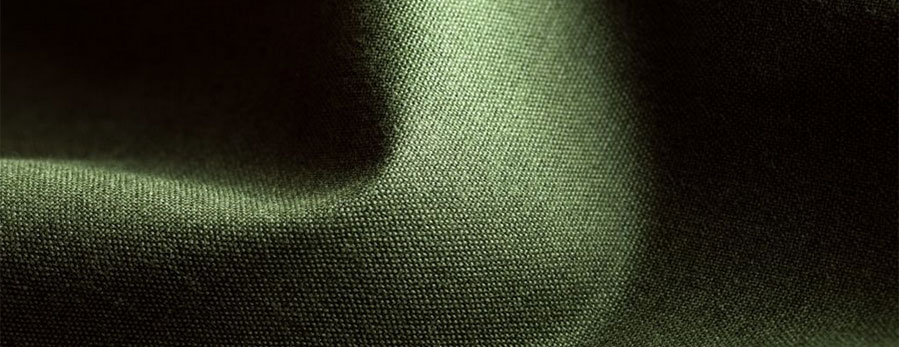
The partnership between the two textile companies is a promising shift towards responsible textile value chains and proves that sustainability and durability can go hand in hand. The first products made from SPINNOVA® and dyed with imogo’s resource-efficient technology are planned to be launched later this year.

Climate-positive textile material company Spinnova is announcing a new partnership with a cleantech company imogo, known for its sustainable textile dyeing technology that minimises water, energy and chemical use. The two Nordic companies aim to apply imogo’s resource-efficient dyeing method to the first SPINNOVA® products later this year.

As a majority of the fashion industry’s emissions come from upstream processes like fibre production and dyeing textile materials, the partnership presents a promising shift in sustainable fashion production. SPINNOVA® is a climate positive textile fibre whose first commercial scale factory will save more CO2 emissions than it emits. SPINNOVA® production uses zero harmful chemicals and 99% less water than conventional cotton production. imogo’s patented technology is also highly resource efficient, decreasing energy, chemical and water use by over 90% and dye use by almost a third.

– We’re constantly exploring sustainable alternatives in textile processing to further reduce the environmental impact of the products we create. imogo has the potential to revolutionise the industry’s dyeing process, and has already proven that sustainability and durability go hand in hand. Combining our technologies, we can create a huge shift within the entire industry, says Shahriare Mahmood, Chief Sustainability Officer of Spinnova. 


In addition to being significantly more sustainable than conventional methods, Spinnova and imogo’s products do not compromise in performance. The colour – and its resistance to fading or bleeding – of items dyed with imogo’s technology has been found to be on the same level to the conventional dyeing methods. SPINNOVA® fibre is also a durable and versatile material with a natural feel, and has already been applied to products from high fashion to outdoor and everyday wear, as well as furniture and home decor.

– At imogo we are very excited about the partnership with Spinnova and the impact the combination of our technologies can have on the textile value chain. The uniquely sustainable combination will be an inspiration to the industry and clearly illustrate that, dramatically reduced environmental impact from the fashion industry is possible. Replacing obsolete technologies and materials with new innovative alternatives will be a cornerstone in building a new responsible textile industry that can be part of overcoming the crisis of global warming and the consequences of it, adds Per Stenflo, CCO and Founding Partner of imogo.

The first product using Spinnova and imogo’s technologies are planned to be revealed later this year. The launch will be part of Spinnova’s commercialization journey. Spinnova’s first commercial-scale factory is expected to be completed in Finland at the end of this year. Together with its investor and joint venture partner Suzano, Spinnova aims to scale its global production to one million tonnes of sustainable fibre annually within the next 10-12 years – providing global fashion brands and retailers with a versatile and sustainable fibre at scale. 



More News from TEXDATA International

#ITM 2026

ITM 2026: The new geography of textile production

New production hubs are emerging across North Africa and Central Asia, while Türkiye is accelerating its transformation toward higher-value, technology-driven and more sustainable textile manufacturing.

#Research & Development

“Production is a product”

From technical textiles and AI-driven robotics to the limitations of textile circularity: Professor Dr Thomas Gries looks back on more than two decades of development at ITA Aachen. In the interview, he explains why production technology remains a decisive success factor, discusses international collaborations and innovation ecosystems, and shares his views on the transformation of production landscapes and the challenges facing an increasingly regulated industry.

#Knitting & Hosiery

“We need to move away from the price trap and return to a value-driven mindset.”

With its new Textile Innovation Center, KARL MAYER is sending a strong signal for innovation, collaboration, and the future of textile applications. In this interview, Karl Josef Mayer discusses new opportunities in warp knitting, the processing of staple fibres, recycling, the changing role of machinery manufacturers, and why the textile industry must once again focus more strongly on the value of textiles. by Oliver Schmidt

#Associations

“Innovation, resilience and international experience remain the great strengths of the Swiss textile machinery industry”

Geopolitical uncertainty, growing competitive pressure from China, new free trade agreements and the shift towards a circular economy are currently reshaping the global textile industry. In this interview, Cornelia Buchwalder discusses the current mood within the Swiss textile machinery sector, the industry’s distinctive innovative strength, new market opportunities in India and Asia, and the technological trends that could shape the upcoming trade fair cycle leading up to ITMA 2027.

More News on Recycling / Circular Economy

#Recycled Fibers

Recover™ and Ünteks Group partner to scale recycled cotton in knitwear

Recover(TM), a global producer of low‐impact, high‐quality recycled cotton fiber, announces a new partnership with Ünteks Group, a vertically integrated textile manufacturer based in Turkey. The collaboration focuses on the development of circular knit fabrics and garments, combining Recover’s recycled cotton fiber with Ünteks Group’s integrated capabilities across knitting, dyeing, printing, and garment production.

#Research & Development

ALADIN paves the way for circular and demand-driven textile production in Europe

Textile production can be organized sustainably by utilizing short supply chains and preventing overproduction. This can already be achieved today by intelligently connecting and efficiently utilizing existing infrastructure. At the same time, production becomes circular when innovative technologies and materials are used that enable high-quality recycling. The ALADIN research project, launched in May 2026 and co-funded with five million euros under the EU Horizon Europe program, is creating the conditions for this.

#Recycling / Circular Economy

Ence and ShareTex begin initial testing of the ATENEA innovation project to promote textile recycling in Spain

Ence and ShareTex are making progress on the Atenea R&D project, which aims to develop a complete value chain for textile recycling in Spain. Specifically, the goal of the ATENEA project—which is funded by the Center for Technological Development and Innovation (CDTI)—is to connect all the necessary stages for the recovery of textile waste, from collection and management, through recycling and transformation into new raw materials, to their incorporation into new textile products.

#Recycling / Circular Economy

DePoly Inaugurates its Showcase Plant in Monthey Switzerland

What if used plastic bottles, PET packaging material and polyester textiles could become raw materials just as high performing as virgin resources? That is the ambition of DePoly, a circular materials company based in Sion, Switzerland which inaugurated its Showcase Plant in Monthey on July 6th & 7th. The first depolymerization facility of its kind and scale in Switzerland, this industrial Showcase Plant represents a major milestone in the company's growth and its journey toward commercialization.

Latest News

#Spinning

STEELTOP®: A new benchmark in flat tops for spinning preparation

Modern carding generations achieve higher production performance, placing significantly greater stress on flat tops. Higher cylinder speeds and increased fiber density, combined with tighter carding gaps, create more demanding operating conditions. At the same time, poorer raw material quality and the increased use of recycled materials further intensify these challenges. With STEELTOP®, Trützschler introduces a new full steel flat top series developed for these demanding modern carding processes.

#Textile processing

YKK develops concept EXCELLA® zipper tape using nonwoven fabric partially derived from used clothing

YKK Corporation has developed a concept version of its premium EXCELLA® zipper series made from nonwoven fabric sheets created by fiberizing used clothing and other textile materials. Based on a proposal by fashion designer Yuima Nakazato, this item was created as a result of collaboration between Nakazato, Seiko Epson Corporation and YKK. The concept zipper was incorporated as a material component for pieces in the newest YUIMA NAKAZATO Couture Collection, “INFERNO,” which was unveiled in Paris, France on July 8, 2026.

#Textiles & Apparel / Garment

Texworld Apparel Sourcing Paris highlights evolving global sourcing landscape

From 31 August to 2 September 2026, Texworld Apparel Sourcing Paris will bring together more than 1,000 international exhibitors at Paris-Le Bourget Exhibition Centre. This edition reflects the new global balance of textile and apparel sourcing, highlighting a strong diversity of sourcing countries — some unexpected.

#Textile processing

Dedicated car seat model of SHIMA SEIKI’s P-CAM® R Cutting Machine unveiled

Leading Japanese textile solutions provider SHIMA SEIKI MFG., LTD. of Wakayama, Japan, showed a special version of its P-CAM® R multi-ply computerized cutting machine dedicated to the production of car seats for the first time, at a private exhibition held over two days on Thursday, July 2nd and Friday, July 3rd at the Kariya City Industrial Promotion Center in Aichi Prefecture.

TOP