[pageLogInLogOut]

#Recycling / Circular Economy

SABIC pioneers with New LNP™ ELCRIN™ IQ COMPOUNDS using pre-consumer recycled glass fiber to accelerate carbon neutrality

SABIC, a global leader in the chemical industry, launched today new LNP™ ELCRIN™ WF006XXPiQ compound and LNP™ ELCRIN™ WF0061XPiQ compound, the first two grades in a new portfolio of materials that incorporate pre-consumer recycled glass fiber diverted from the waste stream of industrial processes.

These polybutylene terephthalate (PBT) compounds, each reinforced with 30 percent pre-consumer recycled short glass fiber, offer mechanical properties and color equivalency of ELCRIN iQ grades that use virgin glass fiber reinforcement. This new technology further decreases the carbon footprint of ELCRIN iQ materials, which already support the circular economy and help reduce plastic waste by using upcycled polyethylene terephthalate (PET) from discarded water bottles.  
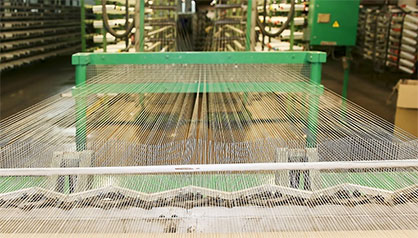
SABIC is one of the first material suppliers to adopt pre-consumer recycled glass fiber for thermoplastic compounds.  © 2021 Sabic
SABIC is one of the first material suppliers to adopt pre-consumer recycled glass fiber for thermoplastic compounds. © 2021 Sabic


“We are continually pursuing new avenues to accelerate carbon neutrality for our materials across our portfolio” said Luc Govaerts, director, Formulation & Application Development for SABIC’s Specialties Business. “This effort includes evaluating each component of our thermoplastic compounds and collaborating with others in the value chain to identify potential replacements that can drive circularity. Central to this process is the prioritization of customer needs, so that greater sustainability goes hand-in-hand with outstanding performance, consistent quality and processing efficiency.”

Lowering Environmental Impacts

SABIC is one of the first material suppliers to adopt pre-consumer recycled glass fiber for thermoplastic compounds. The short glass fiber used in these new ELCRIN iQ materials contains 100 percent recycled content according to Underwriters Laboratories’ Recycled Content Validation procedure (UL 2809), following the mass balance approach. Compared to virgin PBT reinforced with virgin glass fiber, LNP ELCRIN WF006XXPiQ compound contains 67 percent recycled content and lowers carbon footprint by 29 percent, while LNP ELCRIN WF0061XPiQ compound contains 55 percent recycled content and reduces carbon footprint by 24 percent . 


In addition to their improved sustainability profile, these materials deliver good structural performance (stiffness and strength), chemical resistance and colorability for applications in the consumer electronics, automotive and electrical & electronics industries. Furthermore, the new LNP ELCRIN WF0061XPiQ compound offers non-halogenated flame retardance. As a drop-in replacement for incumbent virgin PBT and ELCRIN iQ grades, the two new compounds enable customers to increase application sustainability without the need for design or tooling changes.

“These two next-generation materials create new possibilities for customers to advance their carbon neutrality strategy by further increasing the amount of recycled content they use and lowering the carbon emissions of their applications, all while maintaining equivalent properties and processability,” said Darpan Parikh, Global Product Management Leader, LNP Portfolio, SABIC’s Specialties business. “For SABIC, the move to adopt pre-consumer recycled glass fiber reinforces our commitment  to optimize the use of resources and contribute to our customers net zero carbon goals.”

SABIC plans to extend the use of pre-consumer recycled glass fiber to reinforced compounds based on other resins from their specialty offerings. These new products are available for sampling globally and formulations can be tailored to customers’ specific needs.



More News from SABIC

More News on Recycling / Circular Economy

#Recycling / Circular Economy

AI Circular Economy Conference 2026 fuels innovation at the intersection of AI and Circular Economy

The AI Circular Economy Conference 2026, organised by nova-Institute, brought together 116 participants from 15 countries in Cologne and online to explore the transformation of the chemical and materials industry supported and accelerated by artificial intelligence. During the two-day event, leading experts from industry, research, start-ups and the investment community discussed how AI can maximise the potential of renewable carbon creating efficient circular value chains. The conference featured 24 presentations and multiple panel discussions, highlighting the growing convergence of digital technologies and circular material systems. It demonstrated how artificial intelligence is progressing from the experimental stage to real industrial implementation within the circular economy.

#Recycled_Fibers

Worn Again Technologies unveils the Accelerator

Worn Again Technologies unveils the Accelerator, the next major step towards commercialising its pioneering Textile-to-Fibre recycling process and proving the technical and economic feasibility of polycotton recycling.

#Recycling / Circular Economy

Textile‑to‑textile recycling leader Circulose joins Spinnova’s ecosystem to accelerate technology scale‑up

Textile‑to‑textile recycling leader Circulose joins Spinnova’s ecosystem (consortium) to help advance the scale‑up of Spinnova’s technology. Spinnova has actively sought partners to accelerate commercial scale‑up, and Circulose, as a key player in textile recycling, strengthens the ecosystem by providing a raw material that is in high demand across the industry.

#Recycling / Circular Economy

Epoch Biodesign joins T2T Alliance to support textile-to-textile recycling policy

UK-based recycling technology company Epoch Biodesign has joined the Textile-to-Textile (T2T) Alliance, an industry association representing textile-to-textile recyclers within the EU’s policy landscape.

Latest News

#ITM 2026

ITM 2026 will bring the global textile technologies industry together in Istanbul

ITM 2026 International Textile Machinery Exhibition, considered one of the most important organizations in the field of textile technologies in the world, is preparing to bring together all stakeholders of the industry in Istanbul between June 9–13, 2026. The exhibition, where advanced technology machines and innovative solutions for every stage of the textile production chain will be showcased, will offer an important global meeting platform for manufacturers, technology providers, investors, and professional visitors.

#Digital Printing

FESPA confirms participation from leading exhibiting suppliers and brands for inaugural textile event

FESPA has confirmed a strong exhibitor line-up for its inaugural Textile show, a dedicated new event that will run as part of FESPA 2026, alongside co-located events: Global Print Expo, Personalisation Experience, European Sign Expo, WrapFest and the brand-new Corrugated.

#Textiles & Apparel / Garment

Revived Replacement Elements for VISLON® wins the iF Design Award 2026

YKK Corporation (Headquarters: Chiyoda-ku, Tokyo; President: Koichi Matsushima; hereinafter “YKK”) is proud to announce that its Revived Replacement Elements for VISLON® has been awarded the prestigious iF DESIGN AWARD 2026, an award that recognizes excellence in design and quality, organized by iF Design Foundation.

#Yarn & Fiber

Teijin Carbon strengthens high‑end sports offering with advanced prepreg and resin technologies for next‑generation bicycle performance

High‑end bicycle manufacturers are entering a new era in which modern frames and components must be lighter, stiffer, tougher and more sustainable – all while enabling fast, repeatable and cost‑efficient production. To support this shift, Teijin Carbon is expanding its portfolio of advanced prepreg systems developed specifically for premium road, gravel and mountain bike applications.

TOP