[pageLogInLogOut]

#Recycling / Circular Economy

Teijin’s high-performance materials on display at COP26

The Teijin Group announced today that its high-performance materials used by the Envision Racing Formula E Team for all-electric-vehicle racing are being displayed at the 26th UN Climate Change Conference of the Parties (COP26), which is currently being held at the Scottish Event Campus (SEC) in Glasgow.

The world’s first electric two-seater formula race car, which incorporates Teijin’s TenaxTM carbon fiber, is on display in COP26’s Blue Zone, organized by United Nations, where government officials are gathering. The vehicle was developed by the Envision Racing Team in partnership with Johnson Matthey, a leader in sustainable technologies. TenaxTM, which combines strength, high modulus elasticity and low density, assures top mechanical performance even in high heat, design freedom and driver safety. 

World's first two-seat EV racing car which incorporates Tenax™ © 2021 Teijin


Also, Envision Racing's driver suits designed by OMP Racing and incorporating Teijin's meta-aramid Teijinconex® neo is on display in the Green Zone at COP26, where members of civil society, academia, art, business, etc. are gathering. The outer layer of the garment consists of an ultra-light fabric made with Teijinconex® neo to resist temperatures of up to 400°C (750°F) without burning or melting. Teijinconex® neo is produced in line with leading chemical industry environmental standards, including REACH.

Teijin, which is committed to supporting the society of the future, has established long-term goals for internal net-zero emissions by fiscal 2050. The targets include reducing internal CO2 emissions by 30% and two-thirds of total supply-chain emissions by 15% as of 2030 compared to 2018 levels.


Teijin’s TenaxTM carbon fibers and intermediate materials are being applied in the renewable energy field, including large wind-power turbine blades, advanced aircraft wings and hydrogen tanks. TenaxTM also is used to achieve increased production speed and safety, extended design freedom and customer targets for increased sustainability. 
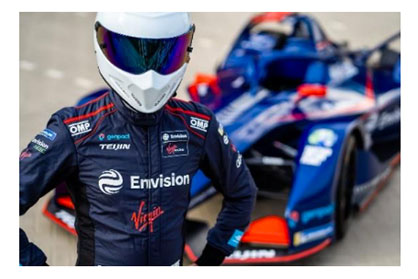
Racing suit made with Teijinconex® neo © 2021 Teijin


Teijin’s aramid business, which has been mechanically recycling end-of-life para-aramid Twaron® products into pulp for over 20 years, is now exploring new recycling possibilities for other aramid products. For example, it is using para-aramid yarn in recycling trials by adding recycled yarn in the spinning process. It is also working to create high-quality fiber by regenerating pre- and post-consumer meta-aramid-based materials from protective textiles. Teijin aims to build the circular performance economy by creating a circular value chain by minimizing both waste and the use of virgin materials. To achieve these ambitions, Teijin underpins three key areas: 1) reduce carbon emissions 2) set new standards for recycling all aramids, and 3) create transparent material streams for aramids.



More News from Teijin Aramid

#Yarn & Fiber

Teijin Aramid: Taiichi Machida to succeed Peter ter Horst as CEO

Peter ter Horst will step down as Chief Executive Officer at the end of 2025, after 19 years of dedicated service. Effective October 1, 2025, Taiichi Machida will take over as CEO.

#Yarn & Fiber

Teijin announces availability of DPP-compliant products aligned with Europe’s ESPR Environmental Regulation

Teijin Limited announced today that it has started rolling out initiatives to enable aramid fibers and carbon fibers to be accompanied by Digital Product Passport (DPP) technology, which enhances supply chain transparency by verifying the origins of materials and supporting sustainability claims. The company is using the supply chain traceability system from Netherlands-based Circularise B.V., in which Teijin has invested since November 2024, to develop DPPs for each product.

#Composites

Teijin Carbon showcases new eco-friendly Tenax Next™ R2S 513 6mm short carbon fiber at JEC World 2025

Teijin Carbon, a leading manufacturer of carbon fiber products, is presenting its latest development in sustainable materials at JEC World 2025 (hall 6, G22). New Tenax Next™ R2S 513 6mm is a short carbon fiber product in rice-shaped form for reinforcing thermoplastic compounds that not only offers exceptional performance characteristics but also reinforces the company’s commitment to environmental responsibility and circularity.

#Recycling / Circular Economy

Teijin to invest in Circularise B.V. and adopt its supply chain traceability platform to promote the Circular Economy

Teijin Limited announced today that it will invest in Circularise B.V., a company based in The Hague, Netherlands, which develops product traceability management systems using blockchain technology. Teijin will also implement Circularise’s software to improve visibility into its global supply chain. Circularise’s proprietary “Smart Questioning”(*) solution, which utilizes Zero-Knowledge Proof (ZKP) technology, provides both anonymity and transparency to ensure a highly reliable product traceability system.

More News on Recycling / Circular Economy

#Recycling / Circular Economy

Efficient recycling of textile PET

At the upcoming Plastics Recycling Show Europe in Amsterdam on May 5–6, BB Engineering will present its portfolio of PET recycling technologies. The German machinery manufacturer will once again focus on textile recycling and melt filtration.

#Recycled Fibers

Circulose and CTA announce collaboration to enable lyocell fibers using CIRCULOSE® pulp

Circulose has announced an agreement with China Textile Academy Green Fibre (CTA) to offer lyocell fibers produced using CIRCULOSE® pulp. Producing lyocell from recycled pulp at commercial scale is an important step in making textile-to-textile recycled materials available across a wider range of textile applications.

#Recycling / Circular Economy

Solving the Feedstock Gap: Unlocking Post-consumer Feedstocks for Textile-to-Textile Recycling in Europe

Fashion for Good launches Project FAE (Feedstock Activation Europe) to develop the sorting and pre-processing infrastructure needed to channel non-rewearable post-consumer textiles into textile-to-textile (T2T) recycling at scale. The project is a practical response to one of the most pressing problems in textile circularity: making post-consumer waste a viable, commercially competitive raw material for recyclers.

#Techtextil 2026

BASF at Techtextil 2026: Helping to shape the future of the textile industry with tangible solutions

At the leading international trade fair for technical textiles and nonwovens from April 21 to 24, 2026 at the Messe Frankfurt, BASF will present numerous solutions and new projects in the textile sector to customers and partners at booth B 68 in hall 11.0. The focus is on product innovations and future-oriented technologies.

Latest News

#Associations

BTMA backs global growth while investing in future UK leaders

As one of a number of new initiatives launched this year, the British Textile Machinery Association (BTMA) is launching the UK-India Textile Machinery Coalition. The UK-India Free Trade Agreement, signed in July 2025, has implications that extend across sourcing, competitiveness and long-term trade dynamics, believes BTMA CEO Jason Kent.

#Raw Materials

China projected to increase cotton production, yields, and imports in 2026/27

World cotton production in the 2026/27 season is projected at 25.9 million tonnes, exceeding global consumption of 25.2 million tonnes, according to the May 2026 issue of Cotton This Month. That means both production and consumption are expected to remain close to current season levels, while global cotton trade is projected to decline by 2.7% to approximately 9.6-9.7 million tonnes.

#Raw Materials

ICAC launches Carbon Credits Initiative to deliver new income streams to cotton farmers

The International Cotton Advisory Committee (ICAC) has announced a new initiative designed to unlock additional income streams for cotton farmers through participation in carbon credit markets, linking sustainable production practices directly to financial returns.

#Sustainability

Number of GOTS-certified facilities grow 15% globally as demand for credible sustainability standards continues to strengthen

Global Organic Textile Standard (GOTS) certification continued to grow in 2025, with nearly 18,000 certified facilities worldwide, despite ongoing geopolitical uncertainty and rapidly evolving regulatory requirements across global textile supply chains.

TOP