[pageLogInLogOut]

#Recycling / Circular Economy

Icebreaker® and Spinnova develop circular SPINNOVA®-merino wool products
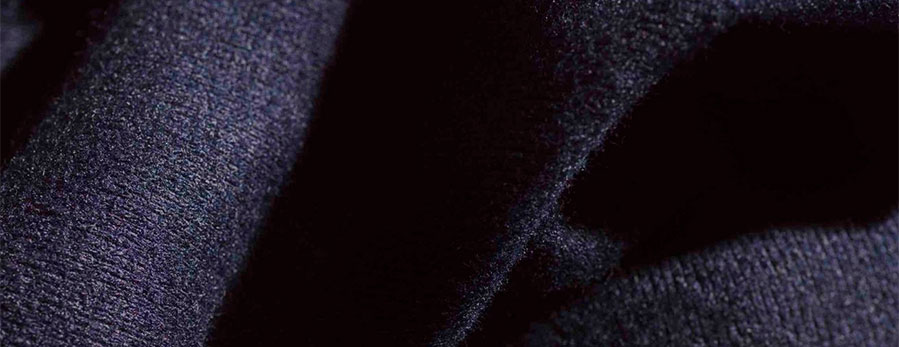
© 2021 Spinnova
The sustainable textile material company Spinnova and VF brand Icebreaker® proudly announce they are developing circular midlayer products with next-generation blends of merino wool and the highly sustainable SPINNOVA® fibre that can be recycled again and again.

The Icebreaker and Spinnova journey originates from a shared vision of believing that nature has the solutions: Icebreaker was founded to provide nature-based alternatives for synthetics, while Spinnova’s technology is inspired by nature; how spiders weave their web. Spinnova and Icebreaker have begun their joint sustainability journey by entering a product development agreement on SPINNOVA®-merino wool midlayer materials that will have a minimal environmental footprint and high performance.

The blend Spinnova and Icebreaker are now piloting for midlayer products is sustainable and comfortable, and also fully circular. After consumer use, the developed yarn is intended to be separated and reused, with the ambition to get one step closer to circularity and lowering the products’ impact on the environment.

Icebreaker is an industry sustainability pioneer with ambitious sustainability goals including abandoning the use of plastic fibres by 2023. In 2020, already 91% of Icebreaker’s materials were merino or plant-based. This partnership is a great match between Icebreaker’s high sustainability standards and Spinnova’s innovation that aims to transform the way textiles are made globally.

“Nature is our hero, and our source of inspiration – we were excited to learn about Spinnova’s approach to fibre spinning that mimics nature’s own processes. In addition to this shared source of inspiration, the potential to recycle SPINNOVA® into a new fibre again and again makes this disruptively circular. This partnership enables our strategy in developing circular business models and drive forward sustainable design,” says Alistair Smith, Director of Global Product Design at icebreaker.

The sustainable and fully circular SPINNOVA® fibre is made without harmful chemicals. SPINNOVA® fibre uses 99.5% less water and produces nearly 65% less CO2 emissions than cotton production cradle to gate. Thanks to the mechanical process Spinnova uses to harness its raw material, wood pulp, the fibres can simply be remade mechanically, again without harmful chemicals or quality loss. SPINNOVA® fibre also has strong insulation properties, and will be a great companion for merino wool.


As Spinnova’s wood-based fibre is produced in a simple and clean process without chemical dissolving unlike man-made cellulosic fibres, SPINNOVA® fibre is defined as one of the few representatives of a new “Other plant-based fibres” class according to the Textile Exchange’s Preferred Fibres and Materials Report 2020.

“We’re very proud of this collaboration, and excited to keep experimenting how SPINNOVA® can fight climate change as both a sustainable new material and a disruptively circular new material that can be remade over and over again,” comments Spinnova’s CEO and co-founder Janne Poranen.??

The partners in this collaboration are developing a completely novel material that has not been seen before. This bold and adventurous collaboration demonstrates how Icebreaker is in the frontline of sustainable development and part of a wider movement of textile industry players developing new circular and sustainable alternatives. For instance, Spinnova recently announced partnering with The North Face®, which is also a VF Corporation company like Icebreaker.

Spinnova is building its first commercial factory in Finland to meet the growing demand for sustainable materials from global textile brands. The factory producing SPINNOVA® fibre is expected to be completed at the end of 2022, for the joint venture that Spinnova has with its strategic partner Suzano, the world’s largest cellulose producer. Spinnova’s long term business targets include reaching one million tonnes of annual SPINNOVA® fibre production capacity in the next 10-12 years.
More News from TEXDATA International

#Texprocess 2026

Texprocess 2026: Automation, digitalisation and AI redefine textile processing

Making investment decisions in textile processing has become significantly more demanding. Increasing energy costs, a shortage of skilled labour and ongoing geopolitical uncertainties are compelling companies to focus on technologies that deliver clear gains in efficiency and process reliability. This applies equally to apparel manufacturing and to the processing of technical textiles and high-performance materials. As a result, modernisation initiatives are assessed more carefully – even as the need to upgrade production systems continues to intensify.

#Techtextil 2026

Techtextil 2026: Between innovation pressure & market reality

From 21 to 24 April 2026, Techtextil in Frankfurt am Main will once again become the central meeting point for the international technical textiles and nonwovens industry. Running in parallel, Texprocess will focus on the industrial implementation of textile processing technologies as the leading platform in this field. Together, the two trade fairs form a closely integrated presentation and working platform along the entire textile value chain – from material development to finished applications.

#Techtextil 2026

Between geopolitical pressure and industrial resilience

In this interview, Dr. Janpeter Horn (VDMA) discusses the current challenges facing textile machinery manufacturers, shaped by geopolitical tensions, regulatory developments and subdued investment. He also outlines why innovation strength, integrated solutions and strategic positioning remain key to global competitiveness.

#Texprocess 2026

Between investment restraint and modernization pressure

Texprocess 2026 takes place in a complex market environment shaped by uncertainty and innovation pressure. In this interview, Elgar Straub (VDMA) explains why the trade fair is particularly relevant this year and which technologies are driving efficiency and competitiveness.

More News on Recycling / Circular Economy

#Recycling / Circular Economy

Efficient recycling of textile PET

At the upcoming Plastics Recycling Show Europe in Amsterdam on May 5–6, BB Engineering will present its portfolio of PET recycling technologies. The German machinery manufacturer will once again focus on textile recycling and melt filtration.

#Recycled Fibers

Circulose and CTA announce collaboration to enable lyocell fibers using CIRCULOSE® pulp

Circulose has announced an agreement with China Textile Academy Green Fibre (CTA) to offer lyocell fibers produced using CIRCULOSE® pulp. Producing lyocell from recycled pulp at commercial scale is an important step in making textile-to-textile recycled materials available across a wider range of textile applications.

#Recycling / Circular Economy

Solving the Feedstock Gap: Unlocking Post-consumer Feedstocks for Textile-to-Textile Recycling in Europe

Fashion for Good launches Project FAE (Feedstock Activation Europe) to develop the sorting and pre-processing infrastructure needed to channel non-rewearable post-consumer textiles into textile-to-textile (T2T) recycling at scale. The project is a practical response to one of the most pressing problems in textile circularity: making post-consumer waste a viable, commercially competitive raw material for recyclers.

#Techtextil 2026

BASF at Techtextil 2026: Helping to shape the future of the textile industry with tangible solutions

At the leading international trade fair for technical textiles and nonwovens from April 21 to 24, 2026 at the Messe Frankfurt, BASF will present numerous solutions and new projects in the textile sector to customers and partners at booth B 68 in hall 11.0. The focus is on product innovations and future-oriented technologies.

Latest News

#Sustainability

Number of GOTS-certified facilities grow 15% globally as demand for credible sustainability standards continues to strengthen

Global Organic Textile Standard (GOTS) certification continued to grow in 2025, with nearly 18,000 certified facilities worldwide, despite ongoing geopolitical uncertainty and rapidly evolving regulatory requirements across global textile supply chains.

#Raw Materials

ECCO introduces first shoe featuring innovative protein-based fibre

ECCO, in partnership with Spinnova, announces the launch of the limited edition ECCO BIOM® 720, a first-of-its-kind shoe utilising an often overlooked leather by-product, transformed into a protein-based fibre. The fibres are produced using patented technology that advances material innovation while reducing waste and supporting full resource use across the leather and textile industry.

#Man-Made Fibers

The LYCRA Company strengthens sustainability leadership, appoints Alistair Williamson as VP of Product Sustainability

The LYCRA Company has appointed longtime executive Alistair Williamson as vice president of product sustainability, reaffirming its commitment to developing sustainable solutions for apparel and personal care products. In this role, he will guide the company’s next chapter of sustainability strategy and oversee all initiatives aimed at reducing environmental impact across products, operations, and innovation platforms.

#Raw Materials

Kraig Biocraft Laboratories reports major progress converting record-setting spider silk cocoon production into reeled silk

Kraig Biocraft Laboratories, Inc. (OTCQB: KBLB) (“the Company”, “Kraig Labs”, or “Kraig’s”), a world leader in spider silk technology*, today announced significant progress in the processing of its recently produced recombinant spider silk cocoons into reeled silk.

TOP