[pageLogInLogOut]

#Recycling / Circular Economy

Rester Ltd and Vileda Professional Finland are beginning a collaboration in textile circular economy

The textile circular economy is moving fast forward and interest of end-of-life textile recycling and therefor Resters`s circular economy facility is continuously growing. Companies are thinking again their own business models on circular aspect.

Now Rester has started a collaboration with Vileda Professional Finland. At the begining of this collaboration Vileda`s production sideflows are coming to recycling to Rester to be refined mechanically to recycled fibres. Production sideflows are just a beginning of this great collaboration and together we pursue to solve challenges towards our common vision ergo a new life for end-of-life textiles.

Environmental savings are in key position in this collaboration. When Vileda`s production sideflows are being recycled in Rester`s mechanical recycling process there comes also natural resource savings. When Vileda`s production sideflows are recycled in Rester process it means that 1000 kilos of end-of-life textiles accumulates 4500 kilos CO2eq of greenhouse gas savings.


Both companies have great drive to advance textiles circular economy. In the future this collaboration has already next business models that advance circularity under planning and other development ideas that evoke enthusiasm. More of these later, so stay tuned!

Rester Ltd is a Finnish company offering textile recycling solutions and enabling the recovery of business textiles into a new textile fibre and quality raw material.Vileda Professional Finland develop and manufacture leading cleaning solutions to professional use to several fields like health care, controlled environments, public buildings as well as hotel and catering businesses.

More News from TEXDATA International

#ITM 2026

ITM 2026: The new geography of textile production

New production hubs are emerging across North Africa and Central Asia, while Türkiye is accelerating its transformation toward higher-value, technology-driven and more sustainable textile manufacturing.

#Research & Development

“Production is a product”

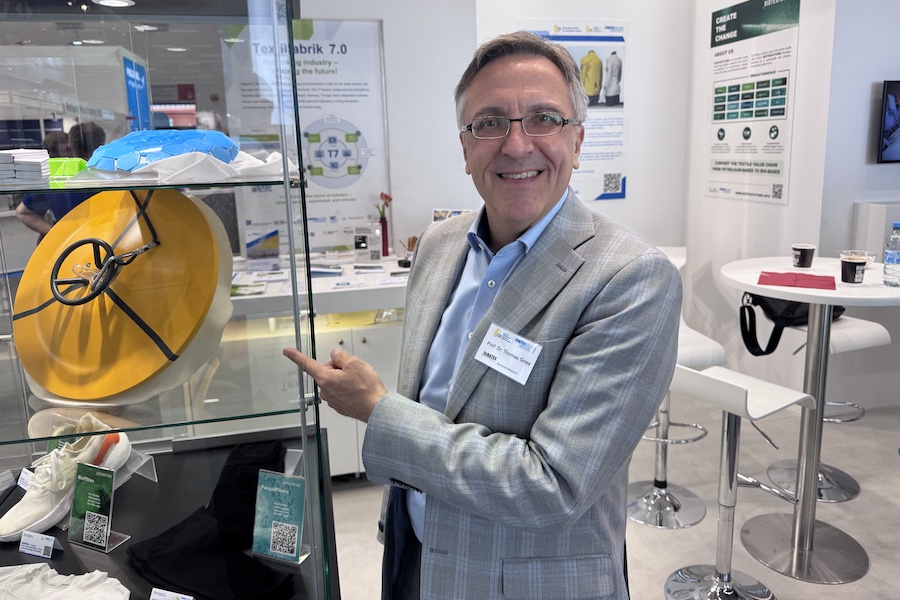
From technical textiles and AI-driven robotics to the limitations of textile circularity: Professor Dr Thomas Gries looks back on more than two decades of development at ITA Aachen. In the interview, he explains why production technology remains a decisive success factor, discusses international collaborations and innovation ecosystems, and shares his views on the transformation of production landscapes and the challenges facing an increasingly regulated industry.

#Knitting & Hosiery

“We need to move away from the price trap and return to a value-driven mindset.”

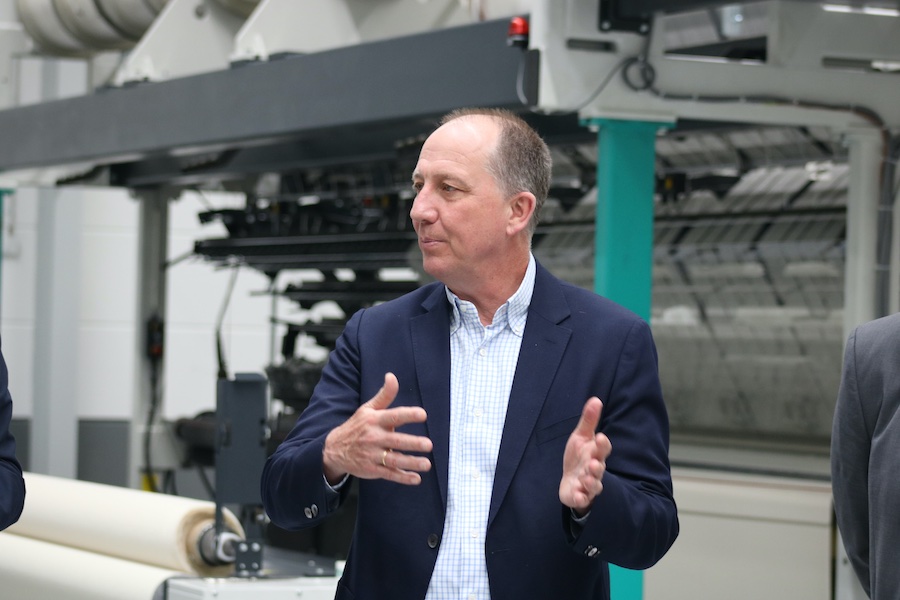
With its new Textile Innovation Center, KARL MAYER is sending a strong signal for innovation, collaboration, and the future of textile applications. In this interview, Karl Josef Mayer discusses new opportunities in warp knitting, the processing of staple fibres, recycling, the changing role of machinery manufacturers, and why the textile industry must once again focus more strongly on the value of textiles. by Oliver Schmidt

#Associations

“Innovation, resilience and international experience remain the great strengths of the Swiss textile machinery industry”

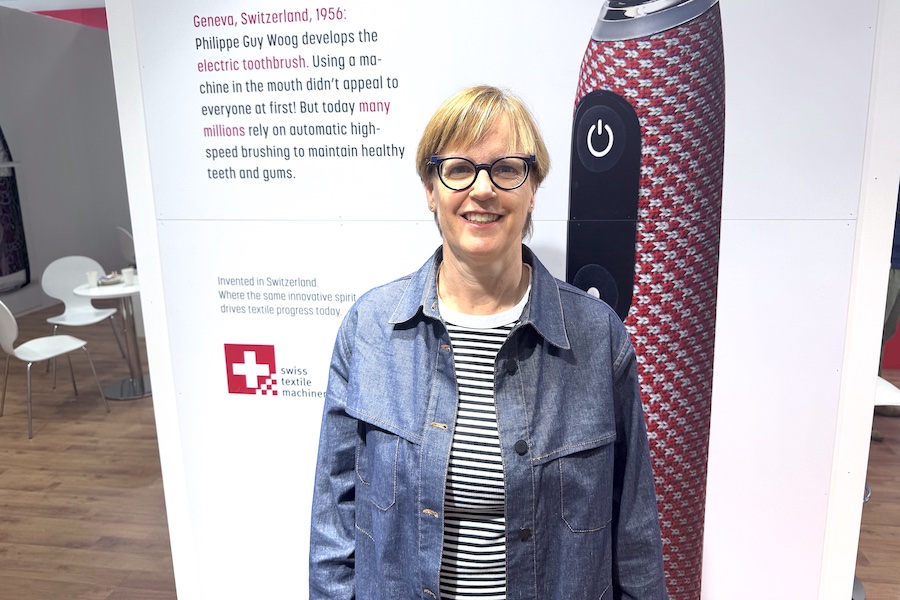
Geopolitical uncertainty, growing competitive pressure from China, new free trade agreements and the shift towards a circular economy are currently reshaping the global textile industry. In this interview, Cornelia Buchwalder discusses the current mood within the Swiss textile machinery sector, the industry’s distinctive innovative strength, new market opportunities in India and Asia, and the technological trends that could shape the upcoming trade fair cycle leading up to ITMA 2027.

More News on Recycling / Circular Economy

#Recycling / Circular Economy

Canopy shifts focus towards recycling and traceability in updated Hot Button criteria

Environmental non-profit organisation Canopy has introduced revised criteria for its annual Hot Button Report, which evaluates producers of man-made cellulosic fibres (MMCFs), including viscose, lyocell and acetate. The updated framework places greater emphasis on scaling alternative fibre sources, improving supply chain traceability and supporting forest conservation, while maintaining responsible sourcing as a central requirement.

#Recycling / Circular Economy

The Or Foundation, adidas, BESTSELLER, H&M Group, and Inditex launch Apparel Recovery Coalition, responding to impacts of post-consumer textile exports

adidas, BESTSELLER, H&M Group, Inditex and The Or Foundation, with support from Circle Economy, unveiled the Apparel Recovery Coalition (ARC). The coalition will explore how producer responsibility systems can support circular pathways such as reuse, upcycling, recycling, and responsible waste management in countries that receive large volumes of exported secondhand apparel.

#Recycling / Circular Economy

Syre appoints Tim King as CEO

Syre has appointed Tim King as its new Chief Executive Officer, succeeding Dennis Nobelius, who has decided to leave the company after more than three years as CEO to pursue new opportunities in another industry. King, who has been with Syre since its early days, has been responsible for the company's industrial development and the execution of its strategy.

#Recycled Fibers

Recover™ launches Recover™One, a 100% recycled fiber blend range that eliminates downstream overdyeing

Recover™, a leading materials science company and global producer of recycled cotton at scale, today announces the launch of Recover™One, a new range of fiber blends made entirely from recycled materials. Developed to support the textile industry’s transition toward greater circularity, Recover™One combines recycled polyester and Recover recycled cotton to create soft, smooth, high-performance fabrics for a wide range of applications.

Latest News

#Spinning

FET highlights advances in fibre spinning technology at Dornbirn Global Fiber Congress

Fibre Extrusion Technology Limited (FET) presented its latest developments in fibre spinning technology at the Dornbirn Global Fiber Congress in Austria in September 2026. In a presentation entitled “Spinning a good yarn”, Dr Jonny Hunter examined recent technological developments and challenges facing the fibre industry, highlighting the company's expanding range of specialised fibre extrusion and spinning systems.

#Textiles & Apparel / Garment

Vietnam’s market evolution creates new sourcing opportunities at VIATT 2027

As Vietnam’s textile industry continues to upgrade and scale, new opportunities are emerging for suppliers of advanced raw materials, design-led fabrics, production technologies, and sustainability solutions. The Vietnam International Trade Fair for Apparel, Textiles and Textile Technologies (VIATT) will return 24 – 26 February 2027, presenting a cross-sector platform – spanning apparel, home and technical categories – for overseas companies to connect with manufacturers, brands, sourcing offices, retailers, and industry buyers from Vietnam, ASEAN, and beyond.

#Heimtextil 2027

Textile performance for the global market: Heimtextil 2027 connects interior design, quality and global sourcing

With the new premium segment Carpets & Rugs Excellence, the Comfort & Connect area and the Heimtextil Trends 27/28, Heimtextil 2027 is sharpening its offering for a market under pressure. Today, textile products need to prove their quality, functionality and long-term value. From 12 to 15 January 2027, the leading trade fair for home and contract textiles and textile design showcases relevant innovations across the entire value chain: from fibres and yarns to designs by international studios and emerging talent, through to finished collections, functional contract textiles and complete interior solutions.

#Digital Printing

Blue Tomato accelerates agile retail apparel production with Kornit Digital

Kornit Digital (NASDAQ: KRNT), a global pioneer in on-demand digital fashion and textile production technologies, is highlighting how Blue Tomato, Europe’s largest board sports retailer, is using two Kornit Atlas MAX PLUS systems to support a more agile approach to in-house apparel production. The systems are helping Blue Tomato respond faster to changing consumer trends, produce high-quality apparel for its network of 86 retail stores across Europe and reduce inventory by printing only what the market demands.

TOP