[pageLogInLogOut]

#Recycling / Circular Economy

New Karawang facility to recycle 2 billion PET plastic bottles annually

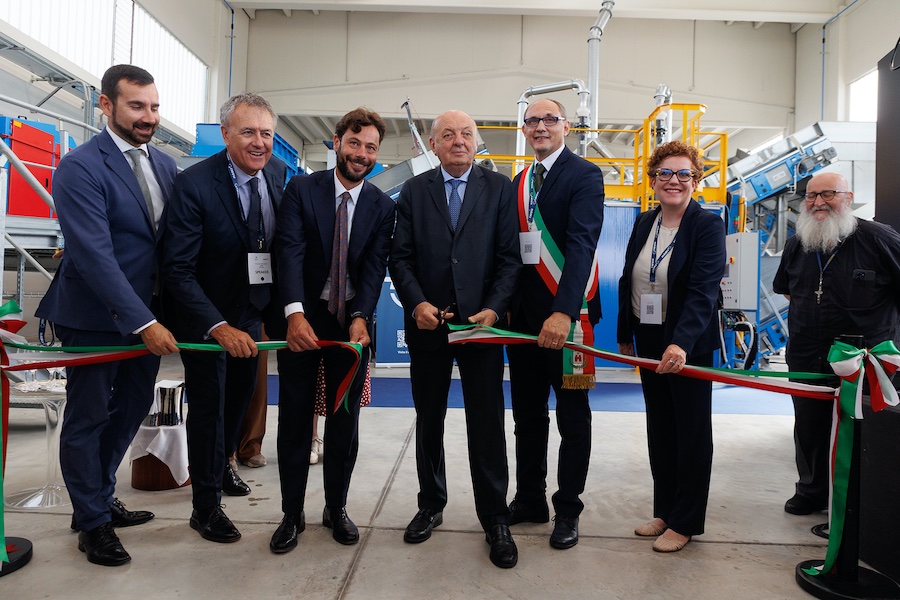
Thailand-based Indorama Ventures Public Company Limited (IVL), the world’s largest producer of recycled PET for beverage bottles, today announced it will build a facility in Karawang, West Java, to recycle almost 2 billion plastic bottles a year in support of the government’s plan to reduce ocean debris.

Indorama Ventures’ new recycling facility supports government action on ocean debris

The facility, which is planned to launch in 2023, will recycle 1.92 billion PET (polyethylene terephthalate) plastic bottles annually and create 217 new jobs. It is part of IVL’s global commitment to divert post-consumer PET bottles away from waste and back into the circular economy, supporting the Government of Indonesia’s National Plan of Action on Marine Plastic Debris. The recycling plant will provide the washed and shredded post-consumer bottles as PET flake feedstock to produce recycled resin that is suitable for food contact use.

Bahlil Lahadalia, Minister of Investment of the Republic of Indonesia, said, “I appreciate the initiative of Indorama Ventures to help the government to end and mitigate the plastic waste crisis through their investment in this greenfield recycling facility. It is time for the government, and all of us, to take action and address the waste problem. We invite more investors who are committed to social impacts for the community and environment. Together we must safeguard the richness of our marine biodiversity for our children and grandchildren.”

As the largest archipelagic state in the world, Indonesia is endowed with great biodiversity, rich natural resources as well as strategic and economic value that have all created blessings and challenges for Indonesians. Against this backdrop, Indonesia will by the end 2025 reduce 70% of its plastic debris from 2017. PET plastic, commonly used in bottles, is 100% recyclable and the most collected and recycled plastic packaging in the world.


“The unique PET plastic used in soft drinks and water bottles is 100% recyclable and must never end up in our oceans. Today we are announcing a new PET recycling facility in Karawang. It will recycle 1.92 billion post-consumer PET bottles per year from across Indonesia by the end of 2023,” said Mr. Yashovardhan Lohia, Chief Sustainability Officer at Indorama Ventures. “We are pleased to contribute to the Indonesian economy by adding 217 ‘green jobs’ as well as indirect employment to the area. Today’s announcement is possible because of Indonesia’s ambitious national plan to reduce marine plastic debris by 70%, reduce solid waste by 30%, and handle 70% of solid waste by 2025.”

Mr. D K Agarwal, CEO of Combined PET, IOD and Fibers Business at Indorama Ventures said, “The Indonesia Government’s leadership on waste allows us to invest in the infrastructure needed. Giving waste an economic value, as feedstock for new bottles, also drives improvements in waste collection systems. By building the infrastructure to recycle post-consumer PET bottles into new bottles, we are reducing waste and preserving our oceans. This new recycling facility will support our shared goal of closed-loop solutions and clean oceans.”

Indorama Ventures has six Indonesian sites across Purwakarta, Cilegon, Tangerang and Karawang. With this new recycling facility, IVL brings a circular business model to support our Indonesian operations. In 2019 Indorama Ventures announced it aims to recycle a minimum of 750,000 metric tons of PET globally by 2025, investing up to US$1.5 billion to achieve this goal. IVL’s new plant in Karawang, along with its other recycling facilities in Southeast Asia, will work with existing PET flake production facilities in Indonesia.




More News from TEXDATA International

#ITM 2026

ITM 2026: The new geography of textile production

New production hubs are emerging across North Africa and Central Asia, while Türkiye is accelerating its transformation toward higher-value, technology-driven and more sustainable textile manufacturing.

#Research & Development

“Production is a product”

From technical textiles and AI-driven robotics to the limitations of textile circularity: Professor Dr Thomas Gries looks back on more than two decades of development at ITA Aachen. In the interview, he explains why production technology remains a decisive success factor, discusses international collaborations and innovation ecosystems, and shares his views on the transformation of production landscapes and the challenges facing an increasingly regulated industry.

#Knitting & Hosiery

“We need to move away from the price trap and return to a value-driven mindset.”

With its new Textile Innovation Center, KARL MAYER is sending a strong signal for innovation, collaboration, and the future of textile applications. In this interview, Karl Josef Mayer discusses new opportunities in warp knitting, the processing of staple fibres, recycling, the changing role of machinery manufacturers, and why the textile industry must once again focus more strongly on the value of textiles. by Oliver Schmidt

#Associations

“Innovation, resilience and international experience remain the great strengths of the Swiss textile machinery industry”

Geopolitical uncertainty, growing competitive pressure from China, new free trade agreements and the shift towards a circular economy are currently reshaping the global textile industry. In this interview, Cornelia Buchwalder discusses the current mood within the Swiss textile machinery sector, the industry’s distinctive innovative strength, new market opportunities in India and Asia, and the technological trends that could shape the upcoming trade fair cycle leading up to ITMA 2027.

More News on Recycling / Circular Economy

#Research & Development

ALADIN paves the way for circular and demand-driven textile production in Europe

Textile production can be organized sustainably by utilizing short supply chains and preventing overproduction. This can already be achieved today by intelligently connecting and efficiently utilizing existing infrastructure. At the same time, production becomes circular when innovative technologies and materials are used that enable high-quality recycling. The ALADIN research project, launched in May 2026 and co-funded with five million euros under the EU Horizon Europe program, is creating the conditions for this.

#Recycling / Circular Economy

Ence and ShareTex begin initial testing of the ATENEA innovation project to promote textile recycling in Spain

Ence and ShareTex are making progress on the Atenea R&D project, which aims to develop a complete value chain for textile recycling in Spain. Specifically, the goal of the ATENEA project—which is funded by the Center for Technological Development and Innovation (CDTI)—is to connect all the necessary stages for the recovery of textile waste, from collection and management, through recycling and transformation into new raw materials, to their incorporation into new textile products.

#Recycling / Circular Economy

DePoly Inaugurates its Showcase Plant in Monthey Switzerland

What if used plastic bottles, PET packaging material and polyester textiles could become raw materials just as high performing as virgin resources? That is the ambition of DePoly, a circular materials company based in Sion, Switzerland which inaugurated its Showcase Plant in Monthey on July 6th & 7th. The first depolymerization facility of its kind and scale in Switzerland, this industrial Showcase Plant represents a major milestone in the company's growth and its journey toward commercialization.

#Recycling / Circular Economy

Commission clarifies rules on plastic bottles recycling

The European Commission today adopted new rules on recycling of single-use plastic beverage bottles made primarily of polyethylene terephthalate (PET bottles). These rules establish, for the first time, a methodology to calculate, verify and report chemically recycled content. This is part of the Commission’s December 2025 plastics package.

Latest News

#Nonwovens

Katharina Obergruber appointed to the Management Board of Sandler AG

The Supervisory Board of Sandler AG has appointed Katharina Obergruber to the company’s Management Board. Effective September 1, 2026, the Board will consist of Philipp Ebbinghaus (CEO), Dr. Ulrich Hornfeck (currently CCO, future COO), and Katharina Obergruber (CCO). Katharina Obergruber, currently Chief Sales Officer Hygiene and member of the Management Team of Sandler AG, will assume responsibility for all sales activities as Chief Commercial Officer. She will assume this role from Dr. Ulrich Hornfeck, who will focus primarily on production and supply chain topics.

#Sustainability

Global Standards establishes new non-profit foundation to strengthen governance

Global Standards gGmbH, the nonprofit organisation behind the globally recognised Global Organic Textile Standard (GOTS), announced a new governance structure designed to support its long-term mission and reinforce organisational autonomy of its Voluntary Sustainability Standards and programmes.

#Textile chemistry

DyStar releases FY2025 sustainability report, marking a new milestone towards its 2030 targets

DyStar, a leading specialty chemicals company with more than a century of expertise in product development and innovation, today announced the release of its FY2025 Sustainability Report, marking a significant milestone in its sustainability journey and reinforcing its commitment to long-term value creation.

#Research & Development

TERIS reaches milestone: Fraunhofer consortium develops new standards for tire analysis

In the “TERIS” project, the Fraunhofer institutes ICT, IGD, and IWM—led by the Fraunhofer Institute for Structural Durability and System Reliability LBF—have reached a decisive milestone. For the first time, the teams aim to generate, analyse, and predict tire wear in the laboratory in a standardized and practical manner. As part of this milestone, results are now available on reference abrasion, particle analysis, tribological models, AI-based surface analysis, a test bench concept, and methods for accelerated aging and VOC detection. The tire industry, testing services, and environmental agencies will in future benefit from reliable, rapid laboratory procedures for emissions assessment.

TOP