[pageLogInLogOut]

#Recycling / Circular Economy

Worn Again Technologies is part of the Circular Fashion Ecosystem Advisory Board

Launched in October 2020, the Circular Fashion Ecosystem (CFE) programme is the inaugural project of the IPF. Its aim is to focus on the creation of a circular fashion economy in the UK. The programme will work with industry, academia and government to inform and implement change.  

The British Fashion Council (BFC)’s Institute of Positive Fashion (IPF) has announced the Advisory Board for its first project, the Circular Fashion Ecosystem (previously known as ‘The Waste Eco System Project). The Board is made up of nine industry experts: Alan Wheeler, Director, Textile Recycling Association; Claire Bergkamp, Chief Operating Officer, Textile Exchange; Cyndi Rhoades, Founder, Worn Again Technologies; Dax Lovegrove, Director of Sustainability, Jimmy Choo; Franz von Bismarck-Osten, Senior Director of Sector Development for the eRetail & Fashion Industry, DHL; Jalaj Hora, Vice President of Product Innovation and Consumer Creation, Nike; Judith Rosser-Davies, Head of Government Relations and Education, BFC; Shailja Dubé, IPF Programme Lead and Circular Fashion EcoSystem Project Lead, BFC and Sonia Thimmiah, Head of Sustainable Brands and Customer Partnership, Reckitt Benckise.

The organisation also welcomed sustainability consultancy 3Keel who will work alongside Founding Partner Vanish, part of Reckitt Benckiser, and DHL to support the initial stages of the Circular Fashion Ecosystem.

Collaboration across the industry is needed now more than ever. The CFE programme will help determine what a new ecosystem looks like, the responsibilities of each stakeholder, and what are the practical next steps needed to arrive at the key programme objectives: 

• To accelerate industry-wide ability for textile recycling in the UK  

• To make the UK a major fashion “revalue” centre within the global industry

• To influence consumer behaviour into adopting responsible consumption habits

This is a multi-year, multi stakeholder endeavour which will establish a roadmap for change to enable a circular UK fashion economy. 

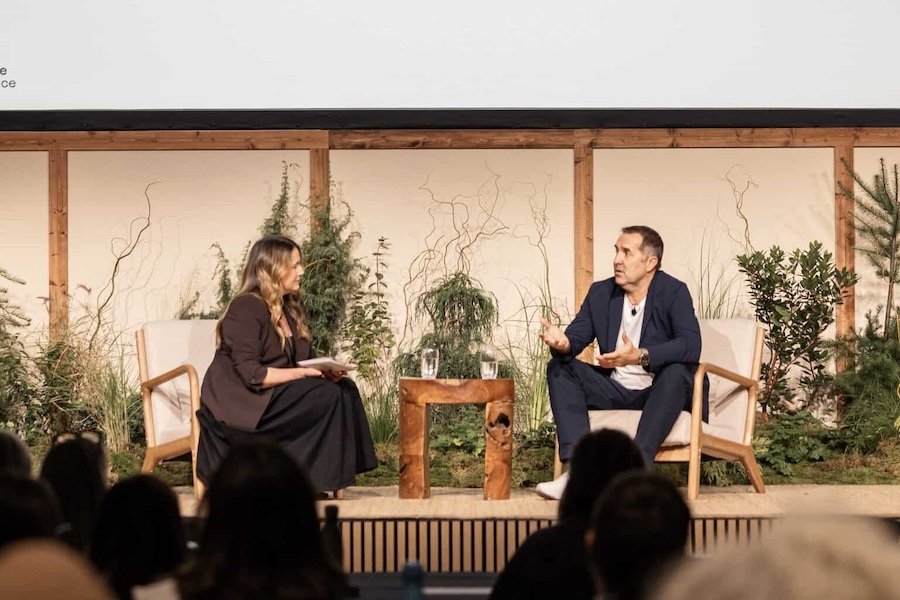
As part of London Fashion Week February 2021 Presented by Clearpay, the BFC hosted a panel discussion on Tuesday 23rd February in line with the start of the research phase in order to raise awareness of the programme. Hosted by Caroline Rush, BFC Chief Executive, the CFE Advisory Board will discuss the project to enable a call to action to welcome collaborators, including NGOs, brands, big business, government agencies and innovators. 


Listen to the talk panel: Circular Fashion Ecosystem Project, A Conversation:

https://londonfashionweek.co.uk/schedule/282/the-circular-fashion-ecosystem-project-a-conversation

The Circular Fashion Ecosystem consortium will be led by Oxford-based certified B-Corp 3Keel LLP, an award-winning firm of sustainability advisors with particular focus on product supply chains. Comprising six core practice areas, 3Keel’s mission is to work with others to create a better future for people and the environment, through ideas, evidence, and by bringing people together. They have considerable experience of delivering lasting change through working with businesses, policy makers, and non-profit organisations. To maximise impact, 3Keel purposefully pursues collaborative projects such as the recently launched BRC Climate Roadmap, their Landscape Enterprise Networks (LENs) programme and the ground-breaking Podback scheme.

The consortium will comprise four other partners, collectively combining expertise in circular business models and strategy, consumer trends, and behaviour change in the fashion and textiles sector.

• QSA Partners: a specialist team of circular economy and sustainable business experts with more than 30 years’ experience working with the fashion sector on resource efficiency including significant experience in circular textiles.

• Flourish CSR: a team of industry-leading corporate social responsibility specialists with deep fashion sector knowledge and the network to match.

• Adam Smith Business School, University of Glasgow: one of the world’s top 100 universities and home to leading researchers in the fields of consumer research, marketing and sustainable clothing consumption.

• Icaro: a leading consumer insights agency with expertise in market research and behaviour change who apply the latest insights from behavioural economics to help their clients understand their audience and design change strategies and interventions.

The consortium will be led by Dr Alex Hetherington, who heads up 3Keel’s Circular Economy Practice and has extensive expertise in partner engagement, stakeholder management, circular economy and LCA in addition to practical end-of-life solutions and circularity for difficult to recycle materials.



More News from TEXDATA International

#ITM 2026

ITM 2026: The new geography of textile production

New production hubs are emerging across North Africa and Central Asia, while Türkiye is accelerating its transformation toward higher-value, technology-driven and more sustainable textile manufacturing.

#Research & Development

“Production is a product”

From technical textiles and AI-driven robotics to the limitations of textile circularity: Professor Dr Thomas Gries looks back on more than two decades of development at ITA Aachen. In the interview, he explains why production technology remains a decisive success factor, discusses international collaborations and innovation ecosystems, and shares his views on the transformation of production landscapes and the challenges facing an increasingly regulated industry.

#Knitting & Hosiery

“We need to move away from the price trap and return to a value-driven mindset.”

With its new Textile Innovation Center, KARL MAYER is sending a strong signal for innovation, collaboration, and the future of textile applications. In this interview, Karl Josef Mayer discusses new opportunities in warp knitting, the processing of staple fibres, recycling, the changing role of machinery manufacturers, and why the textile industry must once again focus more strongly on the value of textiles. by Oliver Schmidt

#Associations

“Innovation, resilience and international experience remain the great strengths of the Swiss textile machinery industry”

Geopolitical uncertainty, growing competitive pressure from China, new free trade agreements and the shift towards a circular economy are currently reshaping the global textile industry. In this interview, Cornelia Buchwalder discusses the current mood within the Swiss textile machinery sector, the industry’s distinctive innovative strength, new market opportunities in India and Asia, and the technological trends that could shape the upcoming trade fair cycle leading up to ITMA 2027.

More News on Recycling / Circular Economy

#Recycling / Circular Economy

Indorama Ventures advances circularity tthrough PETValue Philippines' “Zero Waste to Landfill Partnership” with Republic Cement

Indorama Ventures Public Company Limited, a global sustainable chemical company, is advancing the circular economy through a new Zero Waste to Landfill initiative at its recycling site PETValue Philippines, further demonstrating how collaboration across industries can maximize resource efficiency and reduce waste.

#Research & Development

Networking Day 2026: Industry stakeholders unite around textile recycling

In 2026, the Industry Research Group (IRG) Polymer Recycling once again brought together some of the key stakeholders in textile recycling for its annual Networking Day. This year, the event took place at EREMA’s premises in Ansfelden, Austria. It brought together key players from across the textile recycling value chain for a day of structured exchange and in-depth discussions.

#Europe

EU ban on destroying unsold clothing and footwear now in force

The European Union's ban on the destruction of unsold clothing, clothing accessories and footwear has entered into force. Since July 19, 2026, large companies across the EU have been prohibited from destroying unsold textile products, while medium-sized companies will be required to comply with the same rules from 2030.

#Recycling / Circular Economy

Circ launches first denim collection with H&M featuring TENCEL™ | Circ® with REFIBRA™ technology

Circ today announced that the first men's denim collection featuring TENCEL™ | Circ® with REFIBRA™ technology is now available at H&M, marking the commercial delivery of this unique pilot project first announced in October 2025. Featuring two styles available across the UK, Scandinavia, Central Europe, Eastern Europe, South Europe, Turkey, North America, Mexico, Canada, and the Middle East, the launch brings TENCEL™ | Circ® with REFIBRA™ technology into H&M's standard men's denim assortment for the first time.

Latest News

#Man-Made Fibers

Ministry of Industry Delegation visits NatureWorks’ second global manufacturing site at Nakhon Sawan Biocomplex

NatureWorks Asia Pacific Limited welcomed a high-level delegation led by Mr. Varawut Silpa-archa, Minister of Industry, to its manufacturing site at the Nakhon Sawan Biocomplex (NBC). The visit follows the successful inauguration of the site on April 29, 2026, and highlights the role of public-private collaboration in advancing Thailand’s sustainable industrial development and bioeconomy ambitions.

#Associations

IVGT membership: expertise that pays off

For energy-intensive textile companies, government compensation mechanisms are an important economic factor. The IVGT successfully supports its member companies in applying for state aid and thereby regularly contributes to significant financial relief.

#Knitting & Hosiery

The new RDJ 7/3 defines the design footprint of modern athletic shoes

Stylish, functional, and efficient to produce – spacer fabrics are the all-arounders among textile materials. These versatile fabrics are particularly in demand in the sports and casual footwear sector, as they combine comfort, breathability, and design freedom. At the same time, this industry is trend-driven, dynamic, and price-sensitive like few others. Innovations are therefore a decisive factor for success. With the RDJ 7/3, KARL MAYER offers a solution specifically tailored to these requirements. The particular strength of the new double raschel machine: its exceptional flexibility, thanks to its three jacquard bars.

#Research & Development

Smart textiles reversibly change shape in an energy-efficient manner in response to ambient temperature

Self-actuating textile structures are used in a wide range of applications, such as medical technology, automation, architecture, agriculture, and the apparel industry. An example is the use of shading nets in greenhouses, which can be deployed and retracted depending on the sunlight intensity. The German Institutes of Textile and Fiber Research Denkendorf (DITF) are developing textiles based on shape-memory polymers with reversibly controllable geometry.

TOP