[pageLogInLogOut]

#Recycling / Circular Economy

Borealis and TOMRA open state-of-the-art plant for post-consumer plastic waste sorting and advanced mechanical recycling
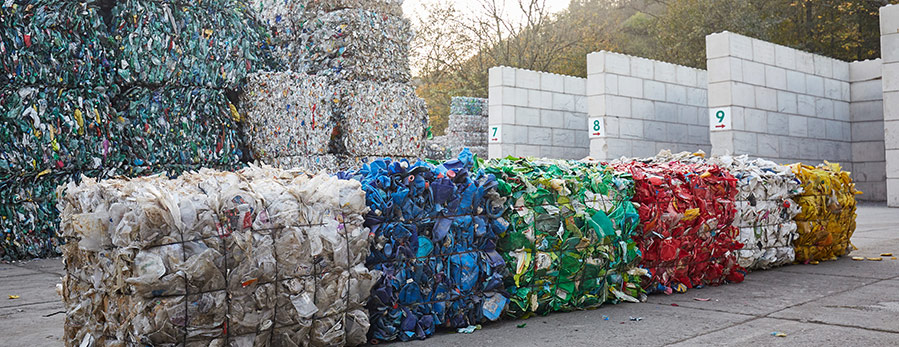
The state-of-the-art plant processes both rigid and flexible plastic waste from households. Photo: © Borealis & TOMRA
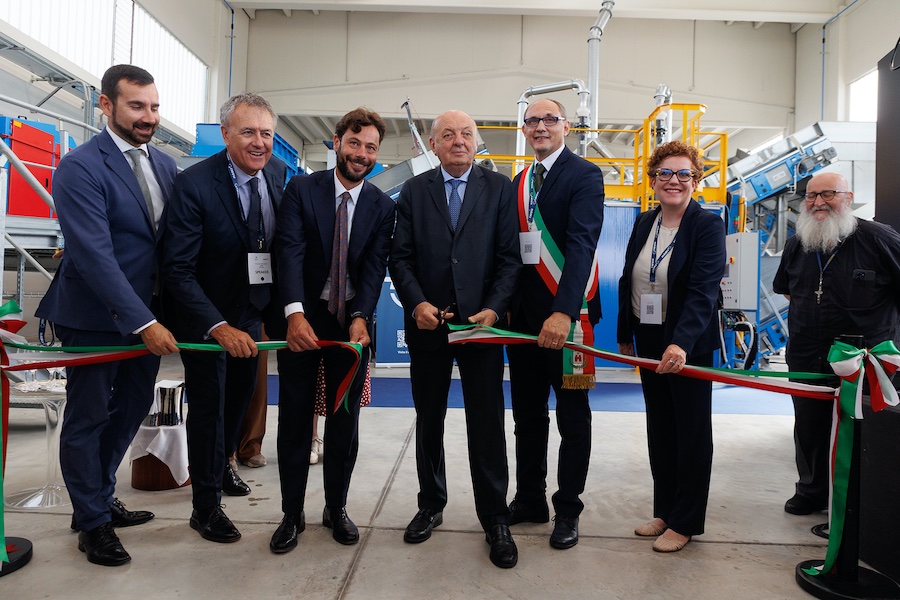
Borealis and TOMRA have today announced the operational start of their advanced mechanical recycling demo plant in Lahnstein, Germany, the result of a partnership that marries chemistry with technology for unsurpassed results.
  • Demo plant sorts post-consumer plastic waste and will produce ready-for-market fully formulated polymer pellets
  • Brand owners and converters will be able to access material for qualification and market validation in early 2021
  • EverMinds™ in action: Pioneering collaboration brings together expertise vital to advancing the circular economy

“This plant embodies the principles of the EverMinds™ platform founded by Borealis, which seeks to innovate plastics circularity through collaboration,” says Lucrèce Foufopoulos, Borealis Executive Vice President Polyolefins, Innovation & Technology and Circular Economy Solutions. “Offering brand owners and converters top quality recycled material, suitable for use in highly demanding applications is Borealis’ latest contribution to a more circular economy of plastics. Life demands progress, and through collaboration we re-invent for more sustainable living.”

The state-of-the-art plant processes both rigid and flexible plastic waste from households. And unlike many current recycling plants, it will produce the advanced solutions necessary for use in high-demanding plastic applications in various industries, including automotive and consumer products. With high purity, low odour, high product consistency and light colour fractions, these Borcycle™ M grade recycled polymers will meet customer quality requirements across the value chain.
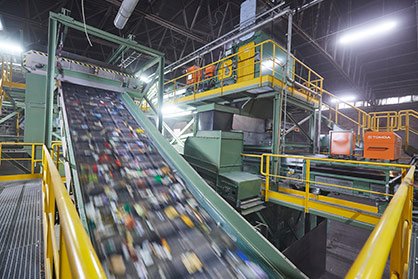
The plant in Lahnstein, Germany, is one of the most advanced mechanical recycling plants when it comes to post-consumer polymer waste. Photo: © Borealis & TOMRA


The purpose of this demo plant is to generate material for brand owners and converters to qualify, validate and prove fit for use in their highly demanding applications. Technical success will set the groundwork for a commercial-scale advanced recycling plant.


“This plant is just the beginning of what’s possible when key players in the value chain come together to make a truly significant impact in the market,” says Volker Rehrmann, Executive Vice President and Head of Circular Economy at TOMRA. “Having just launched the new Circular Economy Division, it is clear what a large role waste management and pivotal projects like this have on moving towards a sustainable future. We are proud to have initiated one of the most advanced mechanical recycling plants when it comes to post-consumer polymer waste. This will become an important enabler as we accelerate the transformation to a circular economy in the years to come, and we are excited to be a part of this pioneering project.”
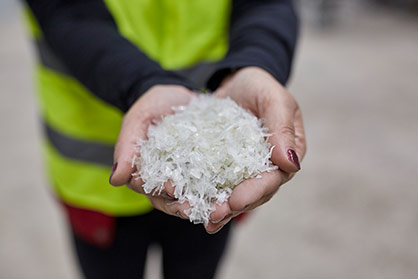
The new state-of-the-art plant produces the advanced solutions necessary for use in high-demanding plastic applications. Photo: © Borealis & TOMRA


Operation of the plant is a joint enterprise between Borealis, TOMRA and Zimmermann. Borealis is responsible for the plant’s commercial success and contributes its expertise and knowledge in innovation, recycling and compounding. Likewise, TOMRA contributes as a provider of technology-led solutions and brings its proven expertise, established process and market knowledge, which, in turn, enable the circular economy through advanced collection and sorting systems. Zimmermann is a waste management company with experience in sorting multiple types of waste, including plastics, and is responsible for successful plant operations and product quality.

“At P&G we are making packaging with the ‘next life’ in mind to help drive a more robust circular economy. We must increase the supply of high quality recycled plastic to enable the industry to deliver on this vision,” says Gian De Belder, Procter & Gamble (P&G) Technical Director, R&D Packaging Sustainability. “The innovative new approach that Borealis is taking shows potential to step-change both the quantity and quality of PCR available for our brands, and help us to achieve our 2030 goal to reduce our use of virgin plastic in packaging by 50%, or 300 kilotonnes annually. Early tests of the material looks very promising!”

“One major challenge towards more circular packaging is the availability of high-quality recycled plastics that can be used in the packaging of our brands,” comments Thorsten Leopold, Director International Packaging Technology Home Care at Henkel. “We are, therefore, very excited that this project brings together three proven experts along the value chain with the ambition to lift mechanical recycling to a new level.”





More News from TEXDATA International

#ITM 2026

ITM 2026: The new geography of textile production

New production hubs are emerging across North Africa and Central Asia, while Türkiye is accelerating its transformation toward higher-value, technology-driven and more sustainable textile manufacturing.

#Research & Development

“Production is a product”

From technical textiles and AI-driven robotics to the limitations of textile circularity: Professor Dr Thomas Gries looks back on more than two decades of development at ITA Aachen. In the interview, he explains why production technology remains a decisive success factor, discusses international collaborations and innovation ecosystems, and shares his views on the transformation of production landscapes and the challenges facing an increasingly regulated industry.

#Knitting & Hosiery

“We need to move away from the price trap and return to a value-driven mindset.”

With its new Textile Innovation Center, KARL MAYER is sending a strong signal for innovation, collaboration, and the future of textile applications. In this interview, Karl Josef Mayer discusses new opportunities in warp knitting, the processing of staple fibres, recycling, the changing role of machinery manufacturers, and why the textile industry must once again focus more strongly on the value of textiles. by Oliver Schmidt

#Associations

“Innovation, resilience and international experience remain the great strengths of the Swiss textile machinery industry”

Geopolitical uncertainty, growing competitive pressure from China, new free trade agreements and the shift towards a circular economy are currently reshaping the global textile industry. In this interview, Cornelia Buchwalder discusses the current mood within the Swiss textile machinery sector, the industry’s distinctive innovative strength, new market opportunities in India and Asia, and the technological trends that could shape the upcoming trade fair cycle leading up to ITMA 2027.

More News on Recycling / Circular Economy

#Recycling / Circular Economy

Mesdan to showcase laboratory-scale textile recycling solutions at Textiles Recycling Expo 2026

At Stand 2235 during the Textiles Recycling Expo 2026 in Brussels, Mesdan will present laboratory solutions designed to support the development and evaluation of textile-to-textile recycling processes.

#Recycled Fibers

Carbios and Wankai postpone startup of China’s first PET biorecycling plant to 2028

The industrial deployment of enzymatic PET recycling in Asia is progressing, but at a slower pace than initially planned. French recycling technology company Carbios and its Chinese partner Wankai New Materials have announced that the commissioning of their planned PET biorecycling facility in Haining, Zhejiang Province, has been postponed and is now expected in the first half of 2028.

#Sustainability

Closing the Footwear Loop reveals challenges and opportunities for circular footwear

The footwear industry faces one of the most complex circularity challenges in the fashion sector. A new Phase 1 report from the Fashion for Good initiative Closing the Footwear Loop, developed together with Circle Economy, provides new insights into the composition, condition and recycling potential of post-consumer footwear waste.

#Recycling / Circular Economy

Textiles Recycling Expo 2026 to spotlight the companies turning textile circularity into industrial reality

As the textile industry faces mounting pressure to scale circular solutions, improve recycling infrastructure, and respond to evolving regulation, Textiles Recycling Expo 2026 will bring together the organisations leading that transformation in practice.

Latest News

TOP