[pageLogInLogOut]

#Recycling / Circular Economy

ANDRITZ and Infinited Fiber Company sign equipment development deal

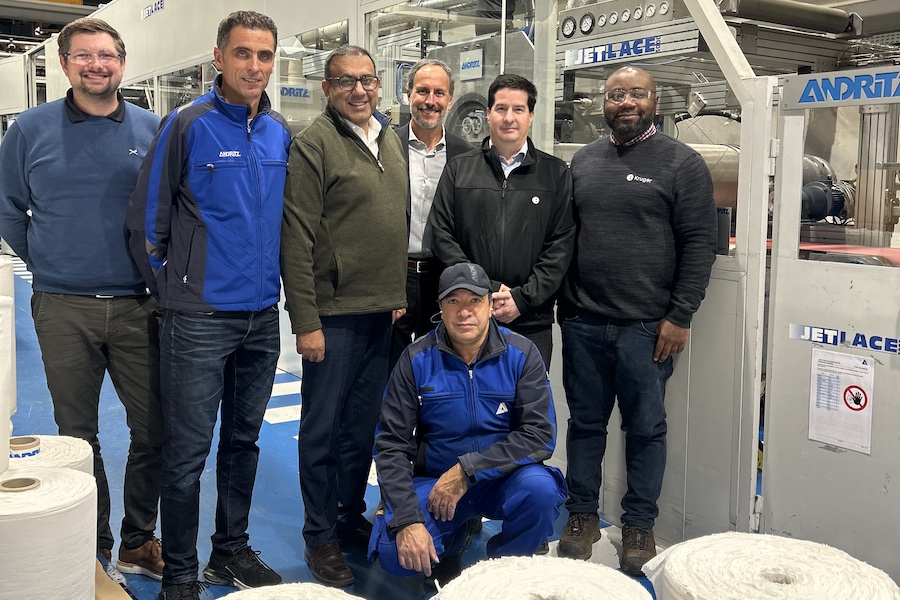
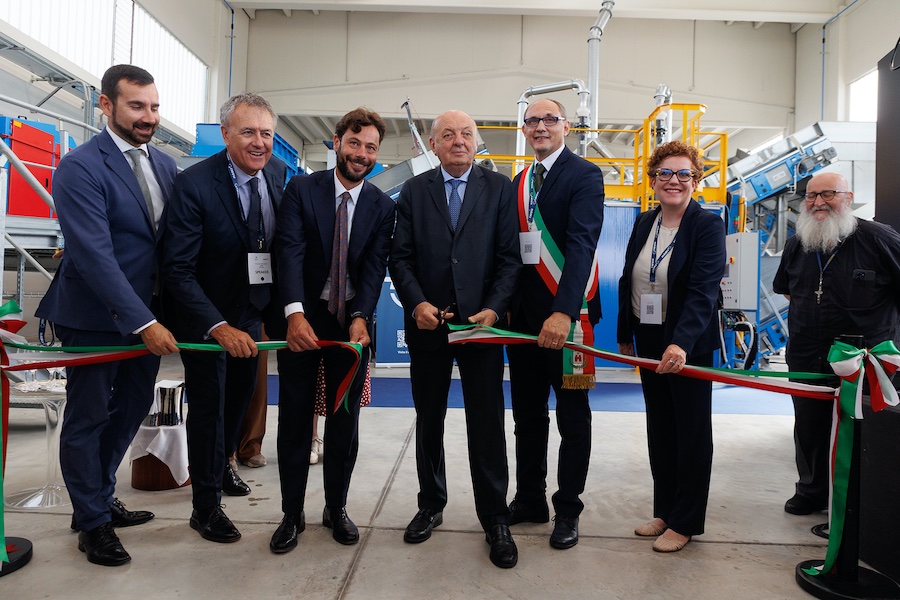
International technology group ANDRITZ and biotechnology group Infinited Fiber Company have signed a cooperation agreement to develop the process and equipment solutions for Infinited Fiber Company’s textile fiber regeneration technology. The technology can turn any cellulose-rich raw material, including discarded textiles, used cardboard or rice or wheat straw, into cellulose carbamate fibers – unique, high-quality textile fibers with the look and feel of cotton. ANDRITZ is the process equipment supplier for the technology. The two companies have worked together to carry out trials since the end of 2019.

Under the newly signed cooperation agreement, which came into effect on 13.11.2020, the two companies will work together to develop the factory process and equipment solutions, aiming to perfect every step in preparation for the technology to be scaled up to commercial scale production. Infinited Fiber Company currently operates two pilot facilities in Finland. The operations have a nominal combined capacity of 150 metric tons/annum. 
© 2020 Andritz
© 2020 Andritz


Under the new agreement, ANDRITZ and Infinited Fiber Company will spend the next six months collaborating on the development, testing and validation of the process and equipment solutions, with ANDRITZ providing equipment for both the mechanical and chemical pre-treatment processes as well as for the carbamation process. This will be followed by factory deliveries, with Infinited Fiber Company expecting to secure a commercial deal or deals during 2021. 


“ANDRITZ’s equipment and process portfolio offers good opportunities for fiber production technology, and the cooperation with Infinited Fiber Company is a significant step towards creating a new type of textile fiber. Textile waste recirculation is becoming mandatory in the EU in 2025 and we want to be involved in developing new bio-based fibers from textile waste and also from other pulp-based materials,” says Kari Tuominen, President and CEO of ANDRITZ Oy. “ANDRITZ is a leading factory equipment supplier, and we are delighted to be working with them to prepare our textile fiber regeneration technology for commercialization,” says Infinited Fiber Company Cofounder and CEO Petri Alava. “Bringing to market a new technology, a new fiber type, and even a new way of operating in accordance with circular economy principals requires the creation of a strong ecosystem of experts working towards common goals. We are proud that ANDRITZ is a key member of this ecosystem.”
More News from ANDRITZ Nonwoven

#Nonwoven machines

ANDRITZ collaborates with Tandem Repeat on solutions to produce novel sustainable fiber

International technology group ANDRITZ has entered into a collaboration with Tandem Repeat Technologies, a pioneering biotechnology company, to bring to the market industrial-scale solutions for producing ProcellTM, a new sustainable fiber for textiles and nonwovens.

#ITMA Asia + CITME Singapore 2025

ANDRITZ sets focus on textile recycling and durable nonwoven production technologies at ITMA Asia 2025

International technology Group ANDRITZ will be presenting its innovative nonwovens production and textile solutions at ITMA ASIA + CITME 2025 in Singapore, from October 28 to 31, 2025 (Hall 2, D106). ANDRITZ will showcase its MMCF production plants, textile sorting and recycling, bast fiber processing, needlepunch, airlay, and life-cycle service technologies, with a focus on sustainable solutions. Discover how these innovations can grow your business opportunities and support a greener future.

#Nonwoven machines

Mistra-Autex, Estonia, orders new needlepunch line from ANDRITZ

Mistra-Autex AS has awarded ANDRITZ an order to supply a complete needlepunch line for its plant in Raasiku, Estonia. The new line will produce various types of nonwovens for surface applications, 3D molding, and other technical materials, primarily for the automotive industry.

#Nonwoven machines

SNC Kherib, Algeria, orders complete spunlace line from ANDRITZ

SNC Kherib et Cie. has awarded ANDRITZ an order to supply a complete spunlace line for its plant located in Bejaia City, Algeria. The start-up is scheduled for the end of Q3 2026.

More News on Recycling / Circular Economy

Latest News

#Heimtextil 2026

Mimaki demonstrates versatile, simple TRAPIS textile printing at Heimtextil 2026

Mimaki’s textile pigment transfer printing system, TRAPIS, is able to print on a diverse range of fabrics - unlike traditional processes - including natural fibres and synthetic fabrics. The full solution will be shown on Mimaki’s booth (Hall 3.0 Stand A97), as the company returns to Heimtextil to showcase its advancements in sustainable, high quality and efficient textile printing.

#ITM 2026

The Technology Hub for global denim trends: ITM 2026

The ITM 2026 International Textile Machinery Exhibition, to be held at the Tüyap Fair and Congress Center in Istanbul from June 9–13, 2026, brings together groundbreaking technologies in denim production. From smart production systems to eco-friendly raw materials, from digital washing solutions to laser effect technologies, innovations that will shape the future of denim will be showcased for the first time at ITM 2026.

#Natural Fibers

38th International Cotton Conference Bremen: Let´s Talk about Cotton!

The 38th International Cotton Conference Bremen, to be held on 25-27 March 2026 in Bremen’s parliament building on market square, once again sends a powerful signal for professional excellence and international dialogue. The focus is on the latest market trends and technical innovations throughout the entire value chain – from agriculture and quality assurance to processing and the circular economy. With its high-calibre speakers, the conference remains an indispensable forum for anyone involved in shaping the cotton industry scientifically, technically, or economically.

#Research & Development

More safety and comfort for protective clothing thanks to auxetic fabrics

When everyday materials are pulled, they stretch or elongate in the direction of the pull and become narrower in cross-section. We can also observe this property in two-dimensional textiles. Auxetic structures behave differently here. They have the striking property of not changing under tensile stress or even increasing their width or thickness. These properties are advantageous, for example, in protective textiles or textile filter media. The DITF are researching auxetic fabrics for various applications.

TOP