[pageLogInLogOut]

#Recycling / Circular Economy

ITOCHU, Borealis and Borouge announce collaboration to enable uptake of renewable polypropylene in the Japanese market
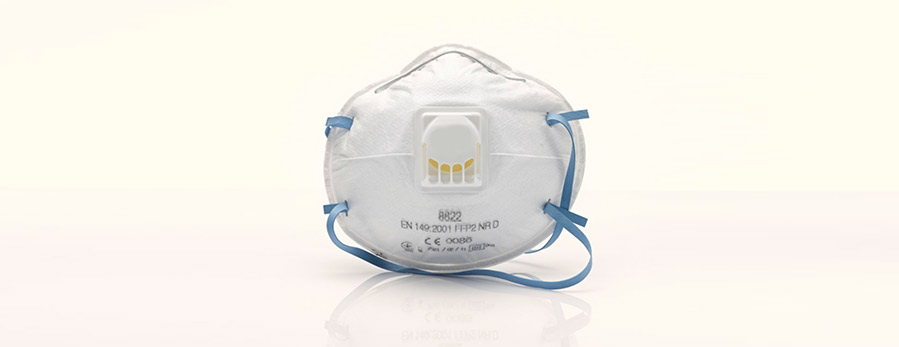
Renewable polypropylene can be used for producing a broad range of value-add applications. © 2020 Borealis
Borealis, Borouge and ITOCHU jointly announced today that they have the strategic intent to jointly evaluate how to enable uptake of renewable polypropylene (PP) in the Japanese market.

The developments of climate change are attracting attention in Japan and overseas, and countermeasures are urgently required. Under these circumstances, Japan has formulated a basic plan to introduce approximately two million tons of renewable plastic products by 2030. There is a need to shift to renewable plastics, which feature enhanced environmental considerations without compromising the superiority of plastics. 

Polypropylene is a principal raw material characterised by its high strength and high heat resistance. It is used extensively, including in food containers, daily commodities and automotive parts. Meanwhile, it has been considered difficult to commercialise polypropylene production from renewable materials due to the many technical difficulties in the production. 

Since its foundation in 1994, Borealis has been in business in at least 120 countries as a world-class plastic and resin manufacturer. In the environmental sector, it engages in manufacturing and sales of renewable plastics and recycled resins. In March 2020, it embarked on the commercial production of renewable PP and is now working to expand sales in Europe and around the world.

The renewable PP is made from sustainable feedstock from organic waste and residue streams. Unlike using feedstocks produced with agricultural crops suitable for food and livestock feed, this renewable feedstock is composed of various wastes and residues like from vegetable oil production or used cooking oil from the food industry. Re-using waste products to manufacture renewable feedstocks further enhances their appeal from a sustainability perspective. This step clearly showcases Boreali´s EverMinds™ ambition in terms of thinking circular. The traceability from the point of origin to the final product is ensured through the mass balance model and ISCC Plus certified by a third-party independent body.
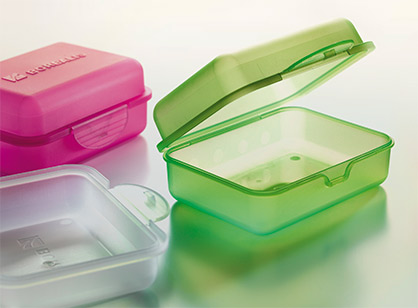
Borouge provides innovative plastics solutions for the packaging, energy, infrastructure, mobility, healthcare and agriculture industries. Borouge is working to bring about a plastics circular economy on several fronts, including developing new disruptive packaging designs for re-use and recyclability, and introducing mono-material solutions that enable recyclability and help to unlock value for customers while supporting their sustainability goals.


Renewable polypropylene can be used for producing a broad range of value-add applications. © 2020 Borealis


Borouge is also actively working across the entire value chain to drive innovations in quality, supply and usage of recyclate materials, and create ready to use, value-adding solutions that our customers require to advance their circularity. Borouge aims to be a one-stop shop to its customers for all their sustainable packaging requirements.

ITOCHU aims to enhance its corporate value by addressing social issues through its core business. ITOCHU will move forward with the expansion of the global renewable plastics business, particularly in Japan and in Asia. It targets to commercially launch Japan’s first food containers and packaging materials made of Renewable PP by the end of 2020 as well as other sanitary goods, miscellaneous daily goods, cosmetic containers, office supplies, home electric appliances, automotive parts and other items in many different fields.

ITOCHU will actively use its Group networks in Japan and overseas to create a new business model in the domain of renewable plastics and to accelerate actions towards achieving a society for sustainable global development.
More News from TEXDATA International

#Recycling / Circular Economy

textile.4U publishes special edition “Top 100 Textile Recycling Companies 2025”

With a comprehensive 176-page special edition, textile.4U is dedicating its latest issue entirely to one of the most dynamic and influential topics in today’s textile industry: textile recycling. The new issue, published exclusively in high-quality print, presents the Top 100 textile recycling companies researched and selected by TexData – organizations that already play a key role in the transition to circular textiles or are expected to have a significant impact in the near future.

#Recycling / Circular Economy

Responsible Textile Recovery Act of 2024 signed by Governor

Senator Josh Newman (D-Fullerton) is proud to announce that Senate Bill 707 (SB 707), the Responsible Textile Recovery Act of 2024, has been signed into law by the Governor of California, Gavin Newsom. This groundbreaking legislation establishes the country’s first Extended Producer Responsibility (EPR) textile recycling program, marking a significant step forward in the state’s efforts to combat waste and promote sustainability.

#Textiles & Apparel / Garment

Modtissimo promotes sustainability with 28 coordinates in the Green Circle

Modtissimo is proving more and more to be a textile and clothing show that delivers the latest innovations in the area of sustainability, with the iTechStyle Green Circle being the main showcase for companies' creations. In this 60+4 edition, taking place on 12 and 13 September, 28 coordinates will be exhibited in a section organised by CITEVE and curated by Paulo Gomes.

#Europe

The EU and Egypt team up to mobilise private sector investments at Investment Conference and sign a Memorandum of Understanding underpinning €1 billion in macro-financial assistance for Egypt

At the EU-Egypt Investment Conference, co-organised by the EU and the Government of Egypt on 29-30 June, the EU and Egypt are teaming up to intensify private sector investments in Egypt. They are also signing a Memorandum of Understanding (MoU) for the disbursement to Egypt of up to €1 billion in Macro-Financial Assistance.

More News on Recycling / Circular Economy

#Recycled_Fibers

Worn Again Technologies unveils the Accelerator

Worn Again Technologies unveils the Accelerator, the next major step towards commercialising its pioneering Textile-to-Fibre recycling process and proving the technical and economic feasibility of polycotton recycling.

#Recycling / Circular Economy

Textile‑to‑textile recycling leader Circulose joins Spinnova’s ecosystem to accelerate technology scale‑up

Textile‑to‑textile recycling leader Circulose joins Spinnova’s ecosystem (consortium) to help advance the scale‑up of Spinnova’s technology. Spinnova has actively sought partners to accelerate commercial scale‑up, and Circulose, as a key player in textile recycling, strengthens the ecosystem by providing a raw material that is in high demand across the industry.

#Recycling / Circular Economy

Epoch Biodesign joins T2T Alliance to support textile-to-textile recycling policy

UK-based recycling technology company Epoch Biodesign has joined the Textile-to-Textile (T2T) Alliance, an industry association representing textile-to-textile recyclers within the EU’s policy landscape.

#Recycling / Circular Economy

Circ announces new Fiber Club partners to accelerate commercial adoption of recycled textiles

Circ®, a global leader in textile‑to‑textile recycling, announced the scaling of its Fiber Club initiative. Building on the success of the inaugural program, Circ is bringing together a new group of brand partners: the lifestyle brand Madewell(under J.Crew Group), sustainable fashion brand Reformation, and European retailer C&A, alongside supply chain partners Lenzing and Linz Textil.

Latest News

#Knitting & Hosiery

Driving WARP KNIT Inspiration

KARL MAYER sees performance fabrics and next-level textile solutions in particular as potential growth drivers for its customers, as a motor for business development and as real game changers for the entire textile industry. Innovation does not happen by chance. It is the result of close exchange with customers & brands, textile expertise and competence in textile machine engineering. This is why KARL MAYER is investing in progress and collaborative development and opening its TEXTILE INNOVATION CEN-TER (TIC) – a place to be for the entire textile world.

#Dyeing, Drying, Finishing

Monforts unveils interactive digital platform for textile finishers

Monforts has launched a new digital platform designed to give textile manufacturers faster, more intuitive access to the company’s finishing technologies, technical expertise and aftersales support worldwide.

#Techtextil 2026

Knowledge that drives progress: Techtextil and Texprocess forums strengthen the global textile industry with a future-oriented programme

From AI-supported production optimisation and digital manufacturing solutions to circular technologies and bio-based high-performance materials: the Techtextil and Texprocess forums provide answers to the key challenges of the global textile industry with a curated content programme. As hubs for innovation and knowledge, they enhance competitiveness and offer orientation in changing markets. From 21 to 24 April 2026, Frankfurt is once again the global meeting point for thought leaders from industry, research and business.

#Techtextil 2026

Enhanced protection without added weight: Innovative technology for flame-retardant textiles doubles reaction time and ensures high wearing comfort

Flame-retardant textiles have long faced the same dilemma: the higher the level of protection, the greater the compromise in comfort, weight and breathability. This is especially important for workwear and protective clothing worn for long hours, where comfort is crucial to wearer acceptance and satisfaction. At Techtextil 2026 in Frankfurt, Swiss company Textilcolor AG will unveil pyroshell™, an innovative flame-retardant technology designed to tackle this challenge. Protection is provided by a graphite-based functional layer integrated into the textile structure, which doubles the reaction time before burns occur while significantly enhancing comfort. The material does not release any toxic fumes and offers textile manufacturers entirely new opportunities to design and produce protective and functional garments. It is also durable enough to withstand up to 50 industrial washes.

TOP