[pageLogInLogOut]

#Recycling / Circular Economy

Textiles Recycling Expo announces collaboration with Future Fabrics Expo for 2026
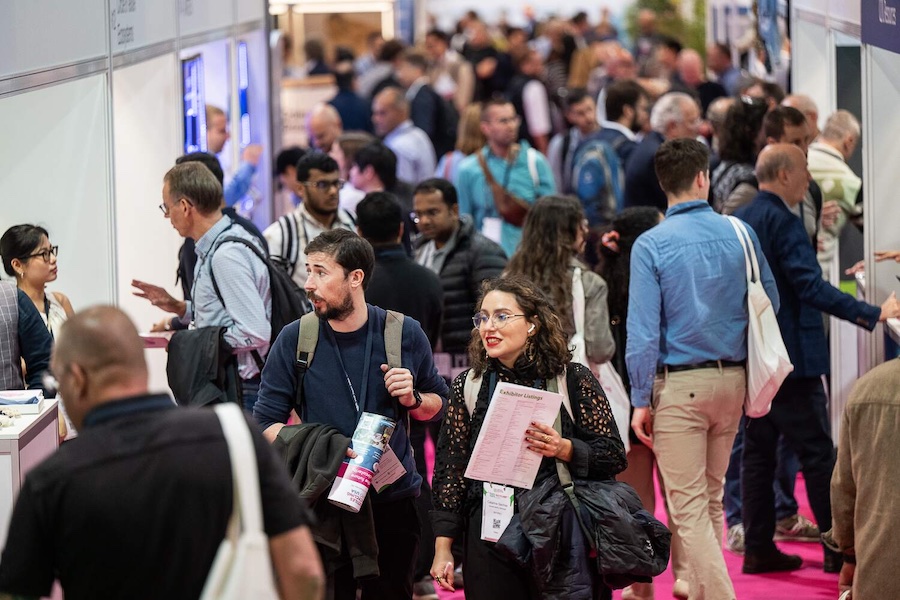
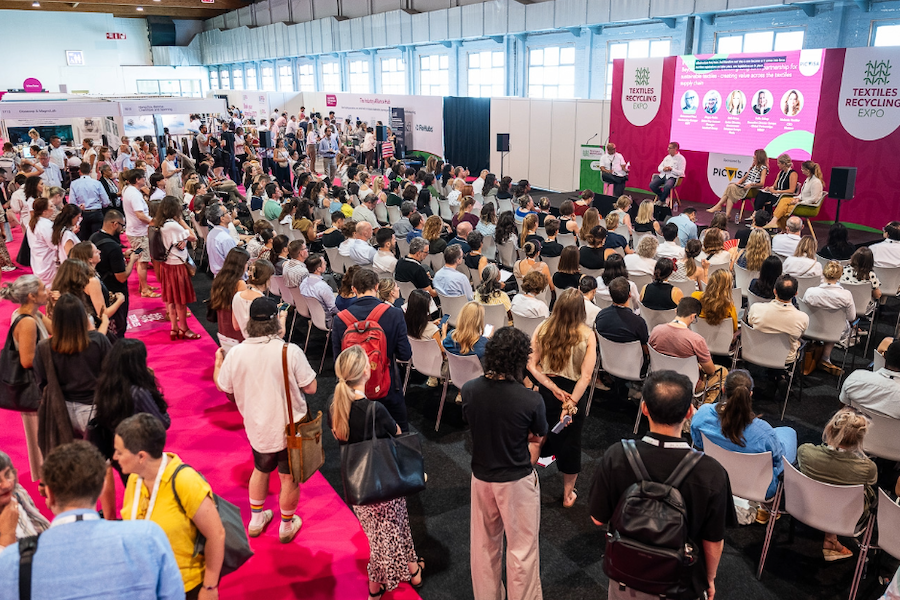
Textiles Recycling Expo showfloor © 2025 Textiles Recycling Expo
The Textiles Recycling Expo has entered a major new collaboration with the Future Fabrics Expo which means that both events will run alongside each other at the Brussels Expo, Belgium on 24–25 June 2026. This co-location marks a significant step forward for the textile and fashion industries, bringing together two influential and complementary events under one roof.


The Textiles Recycling Expo made its debut at the Brussels Expo in June 2025, attracting more than 3,300 attendees. The Future Fabrics Expo was launched in 2011 and has traditionally taken place in London, UK, where it attracted over 2,000 visitors in June 2025. Additional Future Fabrics events and showcases have taken place in New York, Paris, Shanghai and Munich.

The co-location of the two events brings together the textile-to-textile recycling and sustainable fabrics markets, creating a uniquely comprehensive meeting place for brands, retailers, manufacturers, recyclers, innovators, and policymakers. Visitors will be able to explore the full spectrum of sustainable materials in one place, from groundbreaking recycling technologies and systems at the Textiles Recycling Expo to responsibly-produced materials at the Future Fabrics Expo.

The event is free to attend, plus visitors can access both shows over the two days in the same venue (with separate registrations, each valid for both events). Visitors will engage directly with the latest recycling innovations, understand material impacts, and explore actionable pathways to reduce waste, close loops, and transition towards a more sustainable materials portfolio, design and manufacturing. Each event will host its own free-to-attend conference and seminar programme, opening the door to more diverse content and creating a unique learning experience.

“We are delighted that the Future Fabrics Expo will take place alongside our second Textiles Recycling Expo in Brussels next June,” said Zied Chetoui, the Exhibition Manager of Textiles Recycling Expo. “The two events complement each other perfectly; together they will create the essential meeting place for anyone involved in sustainable and circular fashion. This announcement is fantastic news for visitors and exhibitors alike and it’s an important step towards accelerating real change across the global value chain.”

Nina Marenzi, Founder and CEO of The Sustainable Angle and Future Fabrics Expo added: “Holding Future Fabrics Expo 2026 alongside Textiles Recycling Expo in Brussels presents a great collaborative opportunity which will benefit the entire industry by facilitating brand and industry attendance and engagement, driving deeper impact. Presenting alongside each other has synergistic effects with strong complementary advantages for our exhibitors and visiting brands. With significant EU policy changes reshaping our industry, Brussels provides a suitable location for Future Fabrics Expo 2026 to enable the industry to meet climate-related targets in this new regulatory environment.”

The Textiles Recycling Expo and Future Fabrics Expo will take place 24–25 June 2026 at Brussels Expo, Belgium.


More News from Textiles Recycling Expo

More News on Recycling / Circular Economy

#Recycling / Circular Economy

Reju announces site selection for first U.S. industrial sized facility regeneration hub in Rochester, New York

Reju, the textile-to-textile regeneration company, today announced it has selected the site for its first U.S.-based industrial facility marking a significant milestone in its efforts to scale globally. This future Regeneration Hub will be in Rochester, New York, reinforcing Reju’s commitment to the adoption of circular textile system across key regions worldwide.

#Business

Canopy introduces a first-of-its-kind $2 billion USD investment blueprint to decarbonize global materials supply chains

Today, the global, solutions-driven not-for-profit Canopy joined partners at Davos to introduce a new finance model designed to accelerate the growth of low-carbon materials and transform the paper, packaging, and textile supply chains. The event was anchored by a keynote speech from Sri A Revanth Reddy, Hon’ble Chief Minister of Telangana, with India set to host the first iteration of the new investment blueprint.

#Recycled_Fibers

Borealis invests EUR 49 million in Burghausen, Germany to accelerate design for circularity

Borealis announces a EUR 49 million strategic investment to scale up production of Borstar® Nextension polypropylene (PP) at its manufacturing site in Burghausen, Germany. This will expand commercial production of next-generation single-site polypropylene (ssPP) grades that deliver enhanced purity, processability, and performance - supporting customers in key sectors including packaging, healthcare, mobility, and fibers, to meet evolving market and regulatory demands.

#Recycling / Circular Economy

From local actions to industrial innovations: SOLSTICE shares mid-project results

Since its launch in May 2024, the SOLSTICE project is accelerating the transition from linear models to circular regional ecosystems in the textile industry, focusing on four key territories: Grenoble-Alpes Métropole (France), Berlin (Germany), Prato (Italy), and Catalonia (Spain). By mid-project, SOLSTICE has already revealed both regional disparities and promising solutions to strengthen textile repair, reuse, and recycling infrastructure.

Latest News

#Fabrics

MUNICH FABRIC START: Between Attitude and Sensuality

The future begins where we reimagine it. After seasons of restraint, Spring.Summer 27 marks a conscious counter-trend: optimism, sensuality, and creative freedom are replacing pragmatism and neutrality. Physical presence and individuality are regaining importance – as a response to uncertainty, exhaustion, and algorithmic predictability. The overarching theme of PLEASURE stands for fashion as an emotional space, as an expression of attitude and cultural reflection. Colours, surfaces, and materials become vehicles for self-confidence and joie de vivre.

#Denim

organIQ seek: smart alternative to potassium permanganate

CHT Group announces new technical findings within its organIQ seek platform that significantly advance the transition toward permanganate-free denim bleaching. Through extensive industrial testing and application research, CHT confirms that organIQ seek can now be used with remarkable effectiveness as a substitute for potassium permanganate in spray bleach, while remaining aligned with sustainability expectations and cost realities in the European market. At the COLOMBIATEX in Medellín as well as at the Exintex in Puebla and the Kingpins Show in Amsterdam the CHT Group will present organIQ seek as an alternative to potassium permanganate.

#Functional Fabrics

PERFORMANCE DAYS: Focus topic shifts to the beginning of the value chain

Following the last Focus Topic in October 2025, which placed Textile-to-Textile Recycling at its core, PERFORMANCE DAYS continues to drive the conversation around circularity – this time with an expanded and more upstream perspective. The upcoming Focus Topic, “Textile to Textile: The Role of Collectors and Sorters,” presented during the spring edition on March 18–19, will spotlight one of the most essential yet often overlooked components of a functioning circular textile system: the efficient collection and sorting of post-consumer textiles.

#Knitting & Hosiery

Proven performance, optimised costs – the new RE 6 EL

Nowadays textile companies increasingly need to produce small production runs and respond to market changes with instantaneous pattern changes in order to operate profitably – meaning they require machines that offer maximum flexibility, reliability and cost efficiency. KARL MAYER understands the challenges of the market and is launching its new RE 6 EL. The Raschel machine offers the core strengths of the classic RSE 6 EL and essentially the same performance parameters, but has been further cost-optimised largely due to local production advantages. This makes the newcomer an efficiency champion in production, especially when it comes to frequent pattern changes.

TOP