[pageLogInLogOut]

#Recycling / Circular Economy

Loop Industries announces launch of Twist(TM), its high-performance polyester resin brand for textile and apparel customers

Loop Industries, Inc. (Nasdaq:LOOP), a clean technology company accelerating circularity in plastic and fiber markets, today announced the launch of Twist™, a branded circular polyester resin made entirely from textile waste. Loop is currently advancing its discussions with apparel brands for offtake from its planned India JV and will supply Twist™ as its branded product offering.

Originally developed as Loop's fiber-grade PET resin, the product has now been rebranded to reflect its role in helping the textile industry transition from linear to circular systems, shifting away from virgin materials and from bottle-to-textile recycling, to give global brands a high-performance solution that embodies both sustainability and next-gen material innovation.

Utilizing Loop's globally patented depolymerization technology, Twist™ is produced by breaking down polyester textile waste into its base monomers, DMT and MEG, which are then purified back to their initial purity, before being polymerized into Twist™ resin. This process removes all dyes, colorants, contaminants, and blends, delivering a resin that is chemically identical to virgin polyester. Textile-to-textile recycling allows apparel companies to mitigate the increasing environment impact of textile waste.

Twist™ achieves the highest purity, color and dyability consistency and increases production efficiency, making it fully compatible with existing spinning and manufacturing infrastructure.

The production of Twist™ saves up to 418,600 tonnes of CO? emissions annually1 and reduces greenhouse gas (GHG) emissions by up to 81%2 when compared to fossil fuel-based resin. This has been independently validated by Franklin Associates, a division of ERG who completed an LCA study of Loop's technology. 418,600 tonnes of CO? emissions are the equivalent of more than 1 billion miles driven by an average gasoline-powered passenger vehicle.

Twist™ is set to transform textile recycling as the first textile-to-textile polyester resin offering complete traceability. Embedded chemical tracers allow customers to track finished products directly back to their original waste textile inputs. This transparency meticulously verifies every step of the recycling and manufacturing process, building crucial trust in the circular economy and setting a new standard for accountability in sustainable textile production. With full traceability from waste input to finished product, Twist™ empowers brands to confidently meet growing regulatory, and consumer demands for transparency and circularity.

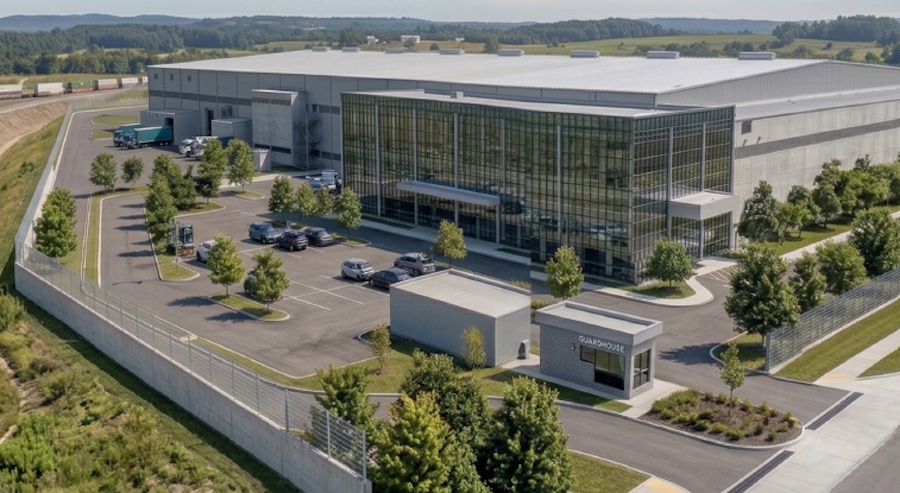
Twist™ will be expanded from Loop's Terrebonne facility and produced at the Infinite Loop™ India facility, a strategically located manufacturing platform designed to serve global textile and apparel brands. The facility will provide Twist™ at competitive pricing levels. This combination of performance, price, traceability and sustainability positions Twist™ as a key material for brands seeking to lead on circularity and meet evolving sustainability targets.

"Twist™ represents a major step forward in closing the loop for textiles," said Giovanni Catino, Chief Revenue Officer of Loop Industries. "It supports the textile industry's shift toward a circular model and provides a unique product offering which meets the needs of Loop's customers as we secure agreements for the offtake of our India JV."

1 A 70,000 tonne Infinite Loop™ facility could save up to 418,600 tonnes / year of CO? compared to virgin PET.

2 Life Cycle Assessment of an Infinite Loop™ facility in India done by Franklin Associates, a division of ERG, compares kg for kg Loop PET vs. Virgin PET. CO2 savings are compared to the production of virgin PET made from fossil fuels and the avoided incineration of waste used as a feedstock.



More News from Loptex Italia S.r.l

More News on Recycling / Circular Economy

#Recycling / Circular Economy

Mesdan to showcase laboratory-scale textile recycling solutions at Textiles Recycling Expo 2026

At Stand 2235 during the Textiles Recycling Expo 2026 in Brussels, Mesdan will present laboratory solutions designed to support the development and evaluation of textile-to-textile recycling processes.

#Recycled Fibers

Carbios and Wankai postpone startup of China’s first PET biorecycling plant to 2028

The industrial deployment of enzymatic PET recycling in Asia is progressing, but at a slower pace than initially planned. French recycling technology company Carbios and its Chinese partner Wankai New Materials have announced that the commissioning of their planned PET biorecycling facility in Haining, Zhejiang Province, has been postponed and is now expected in the first half of 2028.

#Sustainability

Closing the Footwear Loop reveals challenges and opportunities for circular footwear

The footwear industry faces one of the most complex circularity challenges in the fashion sector. A new Phase 1 report from the Fashion for Good initiative Closing the Footwear Loop, developed together with Circle Economy, provides new insights into the composition, condition and recycling potential of post-consumer footwear waste.

#Recycling / Circular Economy

Textiles Recycling Expo 2026 to spotlight the companies turning textile circularity into industrial reality

As the textile industry faces mounting pressure to scale circular solutions, improve recycling infrastructure, and respond to evolving regulation, Textiles Recycling Expo 2026 will bring together the organisations leading that transformation in practice.

Latest News

#Research & Development

“Production is a product”

From technical textiles and AI-driven robotics to the limitations of textile circularity: Professor Dr Thomas Gries looks back on more than two decades of development at ITA Aachen. In the interview, he explains why production technology remains a decisive success factor, discusses international collaborations and innovation ecosystems, and shares his views on the transformation of production landscapes and the challenges facing an increasingly regulated industry.

#Knitting & Hosiery

“We need to move away from the price trap and return to a value-driven mindset.”

With its new Textile Innovation Center, KARL MAYER is sending a strong signal for innovation, collaboration, and the future of textile applications. In this interview, Karl Josef Mayer discusses new opportunities in warp knitting, the processing of staple fibres, recycling, the changing role of machinery manufacturers, and why the textile industry must once again focus more strongly on the value of textiles. by Oliver Schmidt

#Associations

“Innovation, resilience and international experience remain the great strengths of the Swiss textile machinery industry”

Geopolitical uncertainty, growing competitive pressure from China, new free trade agreements and the shift towards a circular economy are currently reshaping the global textile industry. In this interview, Cornelia Buchwalder discusses the current mood within the Swiss textile machinery sector, the industry’s distinctive innovative strength, new market opportunities in India and Asia, and the technological trends that could shape the upcoming trade fair cycle leading up to ITMA 2027.

#Textile processing

YKK invests USD 150 million in new manufacturing facility in India

YKK Corporation has announced plans to construct a new manufacturing facility in India, reinforcing its long-term commitment to one of the world's fastest-growing textile and apparel production hubs. The new factory will be built at Origins by Mahindra in Chennai, Tamil Nadu, and will become the third manufacturing site of YKK India Private Limited. The facility is expected to be completed by February 2028 and represents an investment of approximately USD 150 million, covering land, buildings, machinery and equipment.

TOP