[pageLogInLogOut]

#Recycling / Circular Economy

Industry heavyweights join Samsara Eco to accelerate its enzymatic recycling technology
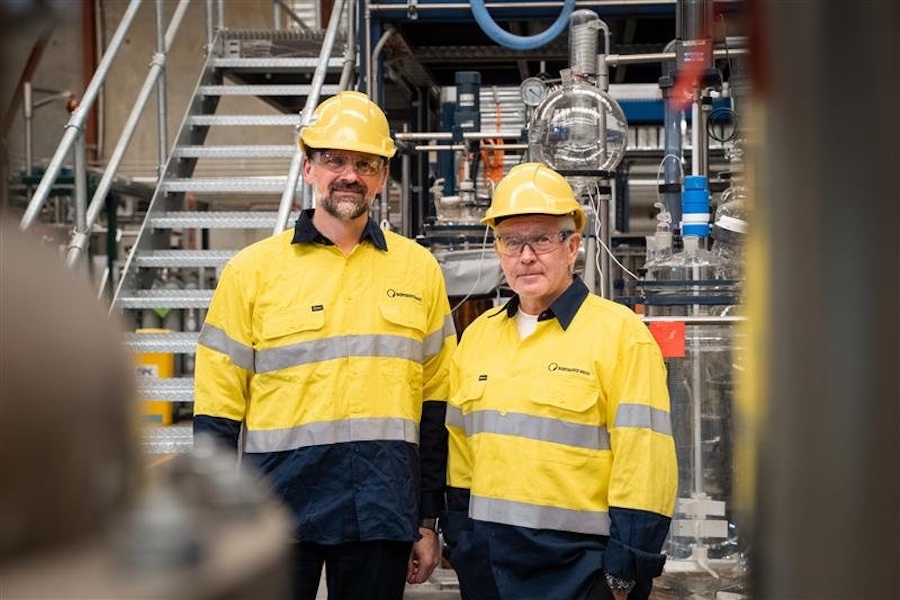
Australian biotech innovator, Samsara Eco, has expanded its global leadership team with the appointment of material science and engineering veterans, Brock Thomas as Chief Innovation Officer and Isaac Iverson as Executive Director of Product. Thomas and Iverson bring decades of experience working within the polymer space in the US and will lead the scaling of the company’s enzymatic recycling technology and first-of-a-kind facilities.
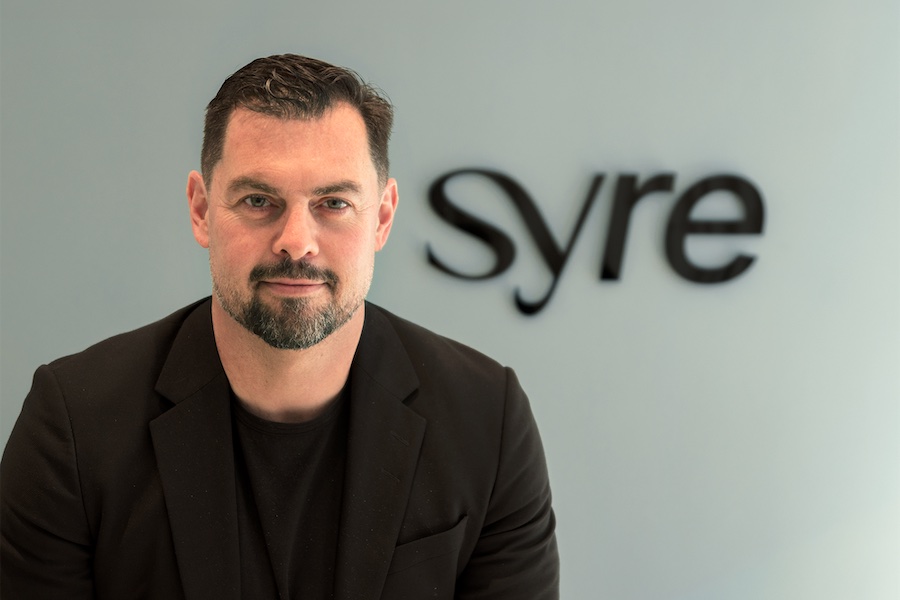
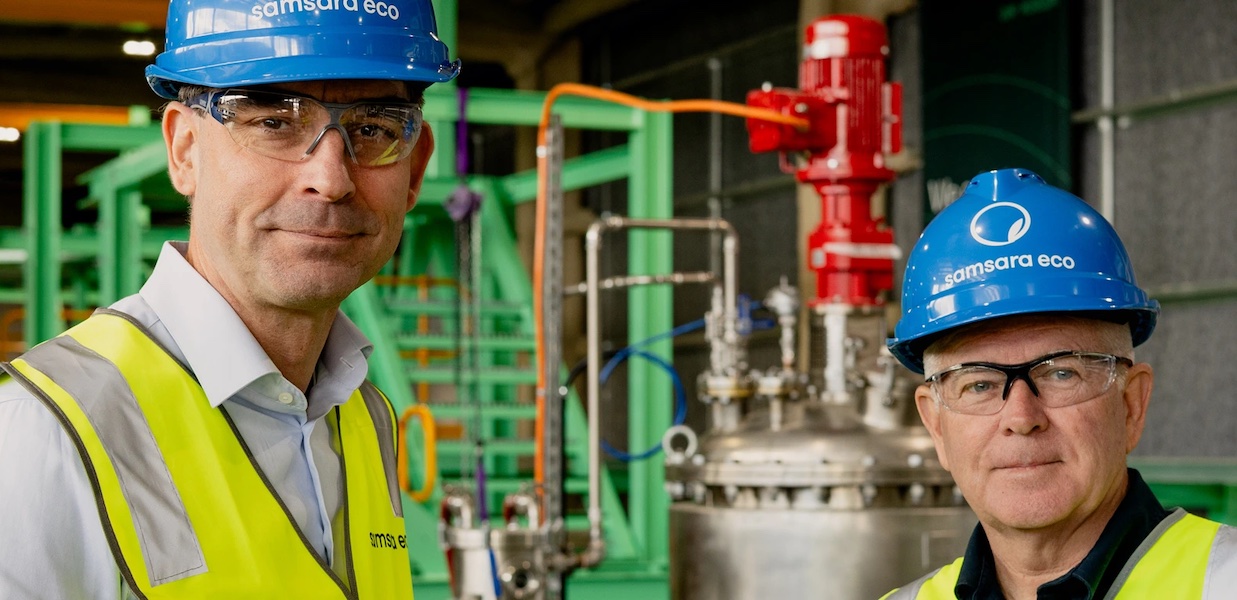
Brock Thomas, CIO and Paul Riley, Founder and CEO, Samsara Eco © 2025 Samsara Eco


Chief Innovation Officer and Executive Director of Product appointed to drive forward commercialisation and first-of-a-kind facilities 

Thomas joins from global speciality materials company, Eastman, where he spent almost 15 years. During his time at Eastman, he worked with tire additives, speciality copolyesters, and led the Polyester Renewal Technology platform He was most recently the Director of Plastics and Circular Development where he provided technology support to build the company’s polyester depolymerisation facility and led cross-functional teams to improve and scale production across the copolyester stream.

Iverson joins with an extensive background in nylon. He spent 15 years at INVISTA in a number of research and development and commercial roles, building out the company’s nylon product offering across various industries. 

On the appointments, Paul Riley, CEO and Founder of Samsara Eco said, “We’re at a pivot point in our scale-up journey. We need the best minds with both deep technical knowledge and commercial acumen to lead us forward. Thomas’ proven track record in scaling lab operations, building and starting up pilot facilities, and providing technology support to commercial depolymerisation plants will be vital as we continue to refine our technology processes, build new facilities and scale operations in the coming years.” 

"Likewise, Iverson’s unique blend of technical and commercial expertise and extensive global network will be invaluable as we continue to build out our offerings and work with customers and partners to meet their circularity goals.” 

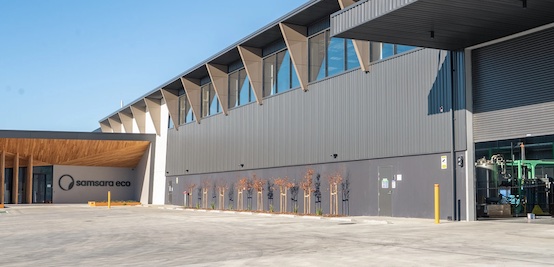
The company’s new plant in Jerrabomberra, New South Wales is set to open mid-year and will become the home base for Samsara Eco as it scales up production and furthers develops its suite of AI-crafted enzymes. Its first-of-a-kind nylon 6,6 enzymatic recycling plant is also planned to be operational by 2027. Thomas and Iverson will play an important role in both developments. More broadly, they will focus on accelerating innovation, enhancing Samsara’s enzymatic recycling process and supporting commercial growth. 

On joining Samsara Eco Brock Thomas, Chief Innovation Officer said, “Enzymatic recycling has the potential to redefine circularity. Recycling is no longer limited by material composition but opens a range of possibilities to keep more plastics in circulation, without emitting additional carbon in the process. The science, technical and operations teams at Samsara Eco are second to none, and I look forward to working closely with them as we scale operations and push the boundaries of innovation to help transform the future of sustainable materials.” 

Isaac Iverson, Executive Director of Product, also commented, “I’m proud to join Samsara Eco and help achieve its ambitions to make plastics truly circular. The company has already made great strides in four short years, working with brands to bring enzymatically recycled materials to market. I’m looking forward to further opening new pathways to market and unlocking the potential of enzymes to infinitely recycle plastics.” 

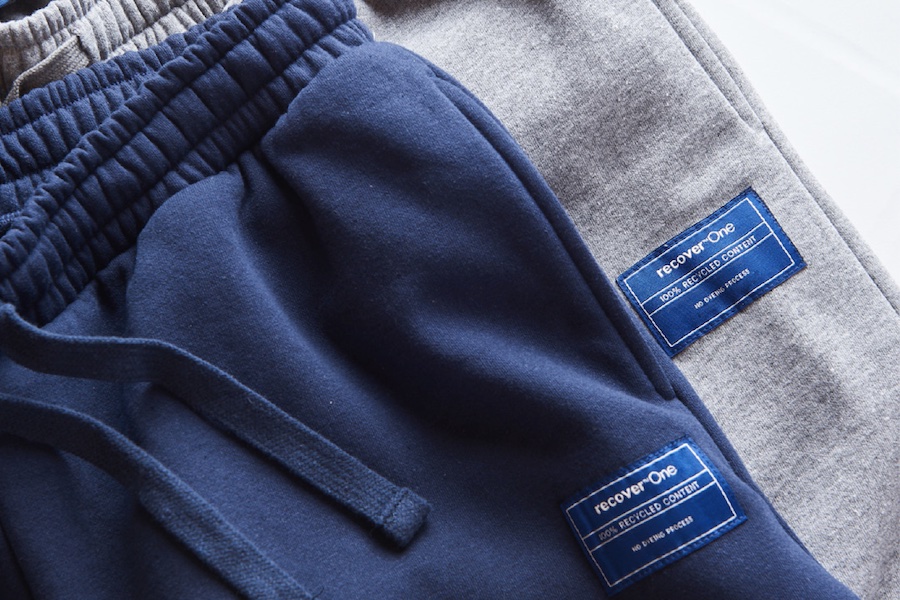
Since launching in 2021, Samsara Eco has led world-first discoveries in enzymatic recycling, pioneering the ability to recycle mixed plastics and fibres including nylon 6,6, nylon 6 and polyester to keep plastics and textiles in circulation and out of landfill. In 2024, it created the world’s first enzymatically recycled nylon 6,6 garment with lululemon, the Swiftly top, and also launched a jacket range made from its enzymatically recycled polyester. 

Thomas and Iverson will divide their time between Australia and the United States.


More News from Samsara Eco

#Recycled Fibers

Samsara Eco and European Outdoor Group launch the Nylon Materials Collective

Australian biotech, Samsara Eco and the European Outdoor Group (EOG) today launched the Nylon Materials Collective, a collaboration designed to make high-performance, virgin-identical recycled nylon accessible to more outdoor brands and accelerate the industry’s shift toward a truly circular textiles future.

#Recycling / Circular Economy

Samsara Eco appoints first General Manager of Asia to lead expansion

Samsara Eco has announced the appointment of Dr Lars Kissau as its first General Manager of Asia. Based in Singapore, Kissau will lead the company's expansion across Asia as it scales operations and sprints towards the opening of the company's first commercial nylon 6,6 facility in 2028.

#Recycling / Circular Economy

Samsara Eco opens first plant to scale circular plastics

Australian biotech innovator, Samsara Eco, has today opened its first plant, representing a significant milestone in the fight against plastic waste. The new plant will exponentially increase the company’s ability to produce virgin-identical, low-carbon circular materials like recycled nylon 6,6 and polyester with broad applications across apparel, packaging and automotives, at scale.

#Recycling / Circular Economy

KBR selected as key commercialization partner for Samsara Eco’s first-of-a-kind enzymatic recycling plant

KBR (NYSE: KBR) announced today it will support biotech innovator, Samsara Eco, to design its first-of-a-kind plastics and textile enzymatic recycling plant, due for completion in early 2028.

More News on Recycling / Circular Economy

#Recycling / Circular Economy

Mesdan to showcase laboratory-scale textile recycling solutions at Textiles Recycling Expo 2026

At Stand 2235 during the Textiles Recycling Expo 2026 in Brussels, Mesdan will present laboratory solutions designed to support the development and evaluation of textile-to-textile recycling processes.

#Recycled Fibers

Carbios and Wankai postpone startup of China’s first PET biorecycling plant to 2028

The industrial deployment of enzymatic PET recycling in Asia is progressing, but at a slower pace than initially planned. French recycling technology company Carbios and its Chinese partner Wankai New Materials have announced that the commissioning of their planned PET biorecycling facility in Haining, Zhejiang Province, has been postponed and is now expected in the first half of 2028.

#Sustainability

Closing the Footwear Loop reveals challenges and opportunities for circular footwear

The footwear industry faces one of the most complex circularity challenges in the fashion sector. A new Phase 1 report from the Fashion for Good initiative Closing the Footwear Loop, developed together with Circle Economy, provides new insights into the composition, condition and recycling potential of post-consumer footwear waste.

#Recycling / Circular Economy

Textiles Recycling Expo 2026 to spotlight the companies turning textile circularity into industrial reality

As the textile industry faces mounting pressure to scale circular solutions, improve recycling infrastructure, and respond to evolving regulation, Textiles Recycling Expo 2026 will bring together the organisations leading that transformation in practice.

Latest News

#Knitting & Hosiery

TM WEFT, 270" – More width, more design freedom for the fashion world

KARL MAYER is expanding its successful TM WEFT series with an innovative model that opens up new possibilities, particularly in the fashion & apparel sectors. With a working width of 270", this new machine with weft-insertion not only offers significantly higher output than its narrower counterparts but is also specifically tailored to the demands of dynamic clothing market – particularly in China and Türkiye. A well-thought-out upgrade also ensures even greater design versatility.

#Research & Development

“Production is a product”

From technical textiles and AI-driven robotics to the limitations of textile circularity: Professor Dr Thomas Gries looks back on more than two decades of development at ITA Aachen. In the interview, he explains why production technology remains a decisive success factor, discusses international collaborations and innovation ecosystems, and shares his views on the transformation of production landscapes and the challenges facing an increasingly regulated industry.

#Knitting & Hosiery

“We need to move away from the price trap and return to a value-driven mindset.”

With its new Textile Innovation Center, KARL MAYER is sending a strong signal for innovation, collaboration, and the future of textile applications. In this interview, Karl Josef Mayer discusses new opportunities in warp knitting, the processing of staple fibres, recycling, the changing role of machinery manufacturers, and why the textile industry must once again focus more strongly on the value of textiles. by Oliver Schmidt

#Associations

“Innovation, resilience and international experience remain the great strengths of the Swiss textile machinery industry”

Geopolitical uncertainty, growing competitive pressure from China, new free trade agreements and the shift towards a circular economy are currently reshaping the global textile industry. In this interview, Cornelia Buchwalder discusses the current mood within the Swiss textile machinery sector, the industry’s distinctive innovative strength, new market opportunities in India and Asia, and the technological trends that could shape the upcoming trade fair cycle leading up to ITMA 2027.

TOP