[pageLogInLogOut]

#Raw Materials

Cotton made in Africa joins WTO and FIFA in supporting African Cotton through football
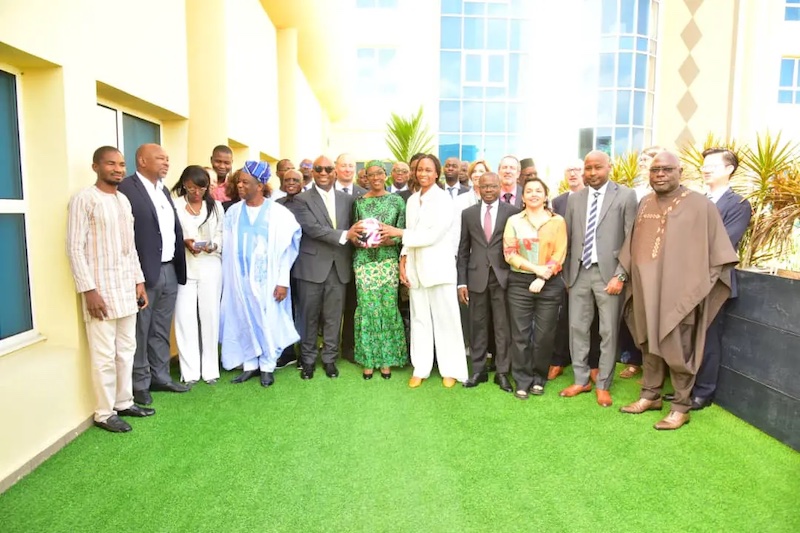
Cotton made in Africa (CmiA) is now supporting a joint initiative by the World Trade Organization (WTO) and the International Federation of Association Football (FIFA) that aims to promote economic growth in developing countries through football. As the newest member of the steering committee of the recently established initiative, Partnership for Cotton or Partenariat pour le Coton, CmiA is contributing its internationally recognised expertise as the largest standard for sustainable cotton in Africa.
© 2024 Cotton made in Africa


The aim is to integrate West African cotton-growing countries more closely in the global value chain for football clothing.

At their latest meeting, held in Benin in early June, the founding members—WTO and FIFA—welcomed the sustainability standard Cotton made in Africa as a new member of the steering committee of the initiative ‘Partenariat pour le Coton’ (Partnership for Cotton). As a standard of the Aid by Trade Foundation, Cotton made in Africa is a key player in sustainable cotton production in Africa. CmiA works with 20 cotton companies and nearly one million small-scale farmers in eleven countries in Africa South of the Sahara. “The topic of sustainable cotton production and the concerns of people in the region are close to our heart. The founding of this multilateral partnership on the initiative of WTO and FIFA is a step in the right direction in terms of developing a sustainable value chain, from raw cotton to the finished textile, in Africa,” states Tina Stridde, the managing director of the Aid by Trade Foundation (AbTF), adding, “We are happy to apply our now nearly 20 years of professional expertise in African cotton and the international textile trade to the task of making sustainable cotton profitable for small-scale farmers from Africa and economically viable for trade.”

The Partnership for Cotton initiative was established as Partenariat pour le Coton in February 2024 at the 13th Ministerial Conference of the World Trade Organization (WTO) in Abu Dhabi by the director-general of the WTO, Dr Ngozi Okonjo-Iweala, and by the president of FIFA, Gianni Infantino. In addition to its founding members—the World Trade Organization (WTO) and the International Federation of Association Football (FIFA)—the steering committee includes the United Nations Industrial Development Organization (UNIDO), the International Labour Organization (ILO), and the International Cotton Advisory Committee (ICAC). According to Okonjo-Iweala, the founding of this initiative marks a new phase of an agreement, made between FIFA and WTO in 2022, that aims to open up new markets to African cotton farmers and producers, for example in the area of sportswear.

‘Partenariat pour le Coton’ has set itself the goal of promoting the cotton and textile sector in West Africa’s “Cotton 4” (Mali, Chad, Burkina Faso, and Benin) and in Côte d’Ivoire by leveraging football’s economic development potential in cotton-producing countries. In practical terms, this means that the countries not only grow and export cotton but also increase business activity in the profitable processing stages of production. Cotton made in Africa has close connections to many countries in the region, with a particularly long history of cultivation and activity in Benin, Burkina Faso, and Côte d’Ivoire.

In connection with the meeting of the steering committee of ‘Partenariat pour le Coton’ in Cotonou, Benin, from 4 to 6 June, the members of the committee, including Cotton made in Africa, were informed about the initiative’s latest progress and its next steps. Committee members also visited an industrial estate in which African cotton is processed into textiles.




More News from TEXDATA International

#Techtextil 2026

Textile Chemicals & Dyes: Innovation in Textile Chemistry moves into focus at Techtextil 2026

From PFAS-free finishes and water-saving dyeing technologies to advanced coatings and recycling-compatible formulations, innovation in textile chemistry is accelerating across the industry. Reflecting this development, Techtextil 2026 introduces Textile Chemicals & Dyes as a dedicated product segment, highlighting the growing role of chemical solutions in shaping the next generation of technical textiles.

#Recycling / Circular Economy

textile.4U publishes special edition “Top 100 Textile Recycling Companies 2025”

With a comprehensive 176-page special edition, textile.4U is dedicating its latest issue entirely to one of the most dynamic and influential topics in today’s textile industry: textile recycling. The new issue, published exclusively in high-quality print, presents the Top 100 textile recycling companies researched and selected by TexData – organizations that already play a key role in the transition to circular textiles or are expected to have a significant impact in the near future.

#Recycling / Circular Economy

Responsible Textile Recovery Act of 2024 signed by Governor

Senator Josh Newman (D-Fullerton) is proud to announce that Senate Bill 707 (SB 707), the Responsible Textile Recovery Act of 2024, has been signed into law by the Governor of California, Gavin Newsom. This groundbreaking legislation establishes the country’s first Extended Producer Responsibility (EPR) textile recycling program, marking a significant step forward in the state’s efforts to combat waste and promote sustainability.

#Textiles & Apparel / Garment

Modtissimo promotes sustainability with 28 coordinates in the Green Circle

Modtissimo is proving more and more to be a textile and clothing show that delivers the latest innovations in the area of sustainability, with the iTechStyle Green Circle being the main showcase for companies' creations. In this 60+4 edition, taking place on 12 and 13 September, 28 coordinates will be exhibited in a section organised by CITEVE and curated by Paulo Gomes.

More News on Raw Materials

#Raw Materials

Lenzing Group positions bio‑based materials as a strategic asset for Europe’s economic security

The Lenzing Group, a leading supplier of regenerated cellulose fibers for the textile and nonwovens industries, hosted a high‑level roundtable in Brussels to discuss how bio‑based materials can strengthen Europe’s economic security and support the shift toward a fossil‑free future. Organized in cooperation with Euractiv, the event brought together representatives of the European Commission, the UK Mission to the EU, academia, civil society, and industry.

#Natural Fibers

Beyond Cotton: Natural Fibres in the Spotlight at the Bremen Cotton Conference - Branded by DNFI

Climate targets, fragile supply chains, and rising regulatory requirements are fundamentally changing the perspective of the textile industry - the focus is increasingly shifting toward the base material. Not only cotton, but natural fibres are gaining significant importance: they stand out not only because of their outstanding functional properties, but also because they make a valuable contribution to the bioeconomy and responsible product development.

#Raw Materials

International Women’s Day: Cotton made in Africa strengthens equality for women through targeted investments

On the occasion of International Women’s Day—which will be observed on 8 March under the motto “Rights. Justice. Action. For ALL Women and Girls”—the Aid by Trade Foundation (AbTF), which is responsible for Cotton made in Africa® (CmiA), underlines its long-standing and ongoing commitment to the equality of women in African cotton production areas.

#Raw Materials

ICAC projects slight decline in production, relative stability for consumption

Global cotton production is projected to decline by 4% in the 2026/27 season to 24.8 million tonnes, while consumption is expected to remain relatively steady at 25.0 million tonnes, according to the March 2026 edition of Cotton This Month.

Latest News

#Denim

Jeanologia launches Billy

The new AI extracts precise laser designs from a garment image in minutes, transforming how vintage denim is recreated for production. If Jeanologia’s laser changed the way jeans were made at the end of the last century, its AI now takes the next step: moving from reproducing wear to designing it. / archive photo © 2026 Jeanologia

#INDEX 2026

EDANA unveils nominees for INDEX™26 Awards: Highlighting the next generation of nonwoven excellence

EDANA is proud to unveil the highly anticipated nominees for the INDEX™26 Awards, the nonwoven industry’s highest accolade for technical and sustainable excellence. Out of a record-breaking field of entries, these finalists represent the cutting edge of material science—from bio-based hygiene fibers and PFAS-free protective textiles to revolutionary water-filtration machinery. Each nominee has been selected by a jury of industry experts for their ability to solve critical global challenges, including the transition to a circular economy and the pursuit of enhanced consumer performance.

#Textiles & Apparel / Garment

Coats to showcase innovative reinforcement and filler materials for leather goods and accessories at APLF 2026

Coats, a world-class Tier 2 manufacturer and trusted partner for the apparel and footwear industries, will be promoting four advanced materials from its ‘Lifestyle Solutions’ portfolio at APLF 2026 in Hong Kong in March. Each innovation has been specifically engineered to help luxury and premium brands elevate the craft, durability, sustainability and creative expression required in the manufacturing of handbags, purses, and other high-end designer accessories.

#Textiles & Apparel / Garment

Design, innovation and sustainability propel VIATT 2026’s expanding role in ASEAN textile sourcing

At its third edition, the Vietnam International Trade Fair for Apparel, Textiles, and Textile Technologies (VIATT) further reinforced its role as a key sourcing and business platform for ASEAN’s textile industry. The three-day fair welcomed over 17,000 visits from 54 countries and regions, and featured over 460 exhibitors from 21 countries and regions across 18,000 sqm. The 2026 edition was marked by the introduction of new international pavilions and zones, broadening the fair’s sourcing scope across new geographies and product categories. The fringe programme, headlined by the debut Trend Forum, further distinguished VIATT as the region’s most integrated textile trade platform – uniquely spanning the entire value chain.

TOP