[pageLogInLogOut]

#Natural Fibers

Panda Biotech announces commercial operations have begun at its flagship Panda Hemp Gin
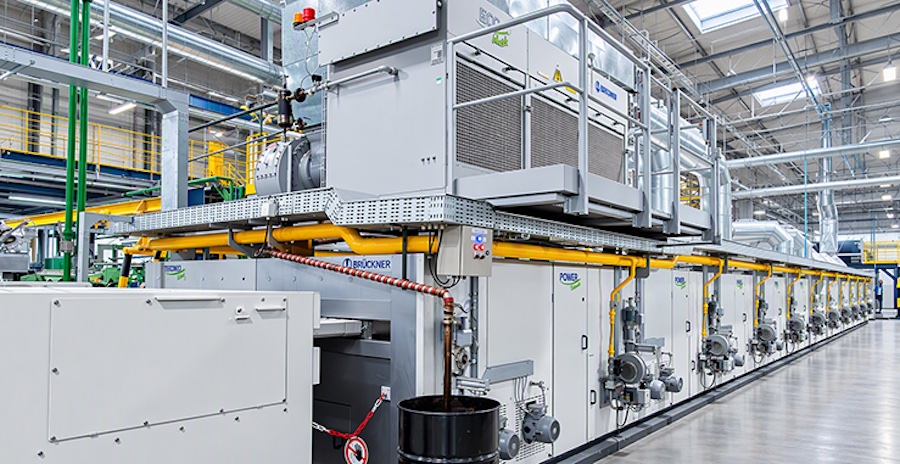
Panda Biotech™ announced today that commercial operations have officially begun at the Panda Hemp Gin, their landmark industrial hemp processing facility in Wichita Falls, Texas. The focus of the operation is on providing five main product lines from hemp, including mechanically cottonized fiber, decorticated fiber, hurd (cellulose), short-fiber/hurd mix, and nutrient-rich micronized hemp dust. The innumerous applications for each product vary broadly from consumer and industrial textiles, non-wovens, paper products, bioplastics, biofuel, animal bedding, fiberglass substitute, construction materials such as hempcrete, mulch, insulation, and more.
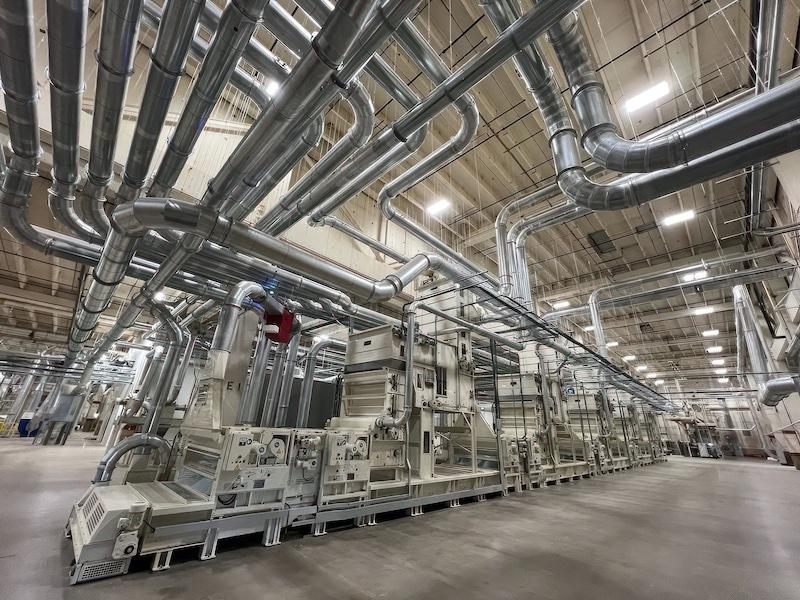
Panda Hemp Gin is a 500,000-square-foot building situated on 97 acres with the capacity to process 10 metric tons of industrial hemp into textile-grade fiber, hurd, short-fiber/hurd mix, and nutrient-rich micronized hurd per hour © 2024(Photo: Business Wire)


Panda Biotech™ announced today that commercial operations have officially begun at the Panda Hemp Gin, their landmark industrial hemp processing facility in Wichita Falls, Texas. The 500,000-square-foot building situated on 97 acres is the first of its kind and the largest in the Western Hemisphere, with the capacity to process 10 metric tons of industrial hemp into textile-grade fiber, hurd, short-fiber/hurd mix, and nutrient-rich micronized hurd per hour. It is a zero-waste process, utilizing every part of the industrial hemp stalk, and operates solely on 100 percent renewable energy, making it a paragon of sustainability in the industry.

“Panda Biotech's state-of-the-art industrial hemp processing facility is a monumental achievement and a game-changer for both agriculture and industry”

The Panda Hemp Gin is fully operational, and production will continue to ramp up in the coming months. In February, the complex commissioning process of Panda's 600-yard-long processing line and three miles of overhead pneumatic duct lines, including each piece of equipment for decortication, refining, blending, mechanical cottonization, hurd bagging and storage, and baling, was successfully completed.

"Panda Biotech's state-of-the-art industrial hemp processing facility is a monumental achievement and a game-changer for both agriculture and industry,” said Dixie Carter, president of Panda Biotech. “As research and development in this area continue to advance, industrial hemp fiber and cellulose will help transform numerous industries with sustainable goals and challenges. Panda’s industrial hemp will play a pivotal role in satisfying significant global market demand for renewable processes and products.”

Industrial hemp is considered one of the most versatile raw materials available with an unmatched variety of potential uses. The Panda Hemp Gin will focus on providing five main product lines from hemp, including mechanically cottonized fiber, decorticated fiber, hurd (cellulose), short-fiber/hurd mix, and nutrient-rich micronized hemp dust. The innumerous applications for each product vary broadly from consumer and industrial textiles, non-wovens, paper products, bioplastics, biofuel, animal bedding, fiberglass substitute, construction materials such as hempcrete, mulch, insulation, and more.

With a commitment to traceability and processing only U.S.-grown hemp straw, as well as providing an astounding pay-to-grow program, Panda’s partnership with the American farming community is at the heart of the operation. Industrial hemp provides a multitude of benefits for producers, as it is scientifically proven to minimize CO2 emissions, absorbing more per acre than any forest or commercial crop. Additionally, hemp requires significantly less water than most major crops, provides outstanding soil remediation, and requires minimal fertilizers, pesticides, and herbicides. Panda is actively contracting with producers for its pay-to-grow program for this harvest and with farmers who may have straw or fiber from previous harvests or the 2024 growing season. Interested producers can reach out to Panda through the website at pandabiotech.com.

"The massive scale of the campus, allowing more than 22,000 pounds of baled hemp straw for processing per hour, is what makes this industrial hemp processing facility unique,” said Scott Evans, chief operating officer of Panda Biotech. “Our straw is sourced directly from our farming partners in Texas and surrounding states, and, through our decortication process, it is transformed into packaged products, ready for retail or downstream manufacturing applications, within minutes. Panda's processing equipment and infrastructure is truly best-in-class."

More News from TEXDATA International

#ITM 2026

ITM 2026: The new geography of textile production

New production hubs are emerging across North Africa and Central Asia, while Türkiye is accelerating its transformation toward higher-value, technology-driven and more sustainable textile manufacturing.

#Research & Development

“Production is a product”

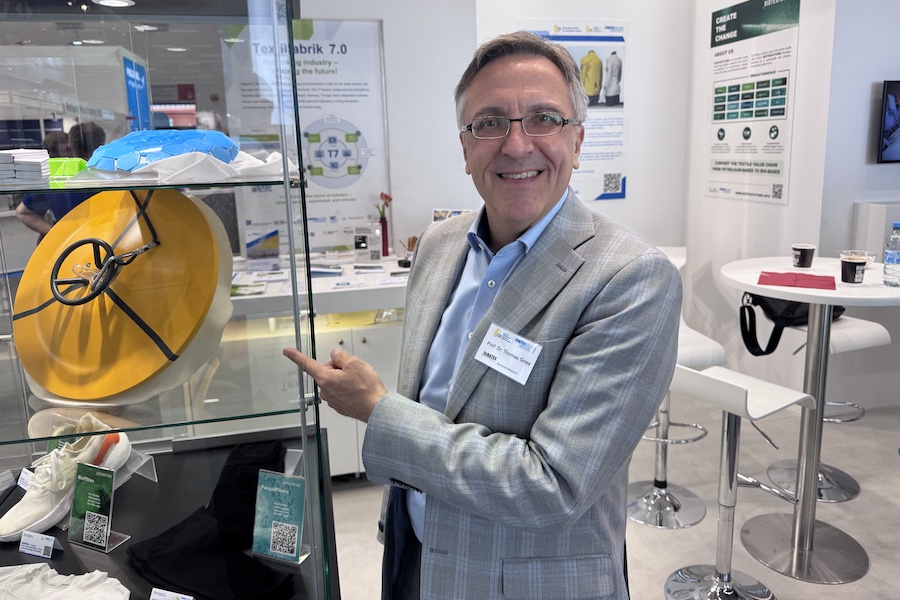
From technical textiles and AI-driven robotics to the limitations of textile circularity: Professor Dr Thomas Gries looks back on more than two decades of development at ITA Aachen. In the interview, he explains why production technology remains a decisive success factor, discusses international collaborations and innovation ecosystems, and shares his views on the transformation of production landscapes and the challenges facing an increasingly regulated industry.

#Knitting & Hosiery

“We need to move away from the price trap and return to a value-driven mindset.”

With its new Textile Innovation Center, KARL MAYER is sending a strong signal for innovation, collaboration, and the future of textile applications. In this interview, Karl Josef Mayer discusses new opportunities in warp knitting, the processing of staple fibres, recycling, the changing role of machinery manufacturers, and why the textile industry must once again focus more strongly on the value of textiles. by Oliver Schmidt

#Associations

“Innovation, resilience and international experience remain the great strengths of the Swiss textile machinery industry”

Geopolitical uncertainty, growing competitive pressure from China, new free trade agreements and the shift towards a circular economy are currently reshaping the global textile industry. In this interview, Cornelia Buchwalder discusses the current mood within the Swiss textile machinery sector, the industry’s distinctive innovative strength, new market opportunities in India and Asia, and the technological trends that could shape the upcoming trade fair cycle leading up to ITMA 2027.

More News on Natural Fibers

Latest News

#Associations

Mario Jorge Machado re-elected President of EURATEX

The EURATEX General Assembly has re-elected Mario Jorge Machado as President of EURATEX, renewing its confidence in his leadership at a crucial moment for the European textile and clothing industry. The sector is facing rising costs, global competitive pressure and an increasingly challenging transition towards sustainability and digitalisation.

#ITM 2026

ITM 2026 makes happy participants with its international and qualified visitor profile

ITM 2026 International Textile Machinery Exhibition, one of the most prestigious meeting points of the textile machinery sector, attracted attention in its first three days, particularly with its diverse international visitor numbers. Industry professionals from all over the world had the opportunity to closely examine the latest technology machines and solutions displayed in operation. Thousands of visitors from approximately 100 countries, primarily Egypt, Pakistan, India, Uzbekistan, Syria, Turkmenistan, Tajikistan, Morocco, Algeria, and Tunisia, met at the Tüyap Fair and Congress Center for new investment and cooperation opportunities.

#ITM 2026

KARL MAYER presents a textile TEXTRONIC® innovation at ITM 2026

With highly efficient machines and continuous textile innovations, KARL MAYER underscores its role as a reliable partner for discerning top-tier customers. Just in time for ITM 2026 in Istanbul, the industry leader is introducing a true innovation: an eyelash lace with its characteristic fringed look – combined with a previously unattainable 4-way stretch. While the established fabric could until now only be produced as rigid version or with one-dimensional stretch, the new elasticity in both dimensions expands the possibilities for cross-band panel fabrics.

#Man-Made Fibers

DYNEEMA® and NP Aerospace advance personal protection for military servicewomen

Dyneema®, owned by Avient Corporation, an innovator of materials solutions, is supplying its high-performance unidirectional (UD) materials to world-leading armor manufacturer NP Aerospace, enabling the production of armor systems designed specifically to fit the female body. With 2,000 new armor systems, including 4,000 plates, made in the United Kingdom (UK) and delivered in June 2026, this collaboration addresses a long-standing lack of high-quality personal protection specially built for female defense and security personnel.

TOP