[pageLogInLogOut]

#Raw Materials

Bangladesh lifts fumigation requirements on U.S. Cotton following CCI-sponsored U.S. Cotton Tour
© 2023 Cotton USA
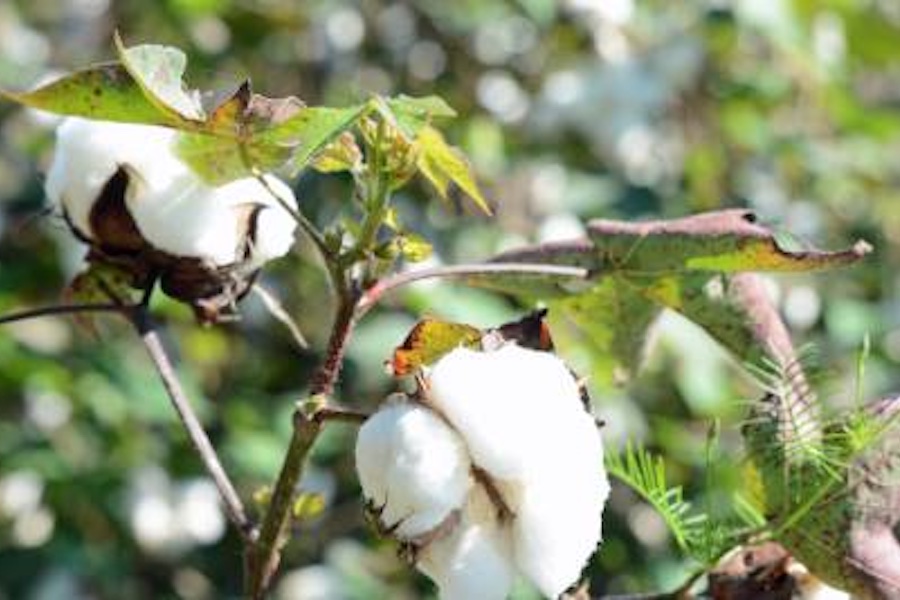
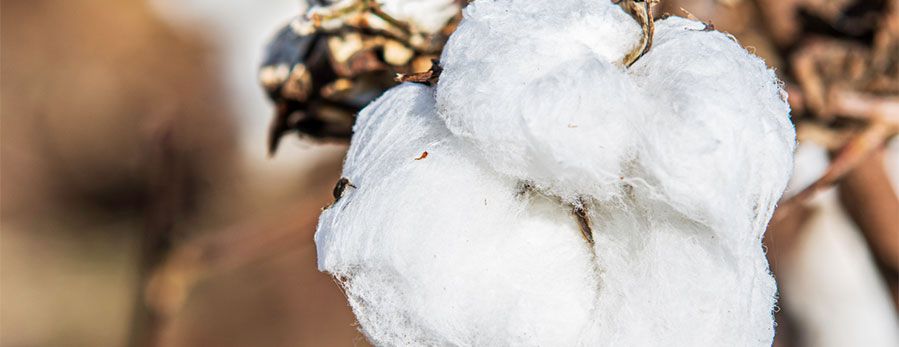
A Cotton Council International (CCI)-sponsored Bangladesh Ministry of Agriculture Delegation’s U.S. visit from Oct. 30-Nov. 5, 2022, coupled with indispensable efforts by the U.S. Department of Agriculture’s (USDA) Foreign Agricultural Service (FAS) office in Dhaka,ultimately convinced the Bangladesh government to relax its nearly-five-decade-long fumigation requirement on U.S. cotton imports.

This shift will remove a significant export barrier for U.S. cotton to Bangladesh, as well as saving Bangladeshi mills time and money as they look to the U.S. to fill their cotton fiber import needs. Bangladeshi mills have been paying over a million dollars annually to cover unnecessary fumigation costs imposed on cotton imported from the U.S.

U.S. exporters will continue to use APHIS-generated phytosanitary certificates, but under the new regulation the certificate will have additional language confirming no live boll weevils are in U.S. baled cotton. APHIS will issue revised instructions for exporters.

Bangladesh’s Agricultural and Commerce Ministries’ decision to lift the fumigation requirements on U.S. cotton came after six Bangladesh Ministry of Agriculture delegation members joined a CCI-sponsored U.S. cotton tour. Thanks to coordination with the National Cotton Council (NCC), the Bangladesh Ministry of Agriculture delegation conducted U.S. cotton meetings in Tennessee, Mississippi and Texas. They met with U.S. cotton industry representatives and visited cotton fields, gins and warehouses, and the USDA Agricultural Ginning Research Laboratory in Stoneville, Miss.

The delegation learned why U.S. cotton bales do not harbor live boll weevils, including a review of the U.S. cotton industry’s successful Boll Weevil Eradication Program and its modern cotton harvesting and standardized ginning techniques. Additional discussion topics included the phytosanitary inspection and certification process with APHIS during Zoom calls at the NCC headquarters in Cordova, Tenn., and during a meeting with the Texas Boll Weevil Eradication Program in Harlingen, Texas.


In Mississippi, the Bangladesh Ministry of Agriculture delegation members met with Staplcotn—a U.S. cooperative and leading exporter of U.S. cotton to Bangladesh—and toured a gin and warehouse. U.S. cotton grower Sledge Taylor gave the group a tour of his family’s cotton farm and gin operations, as well as an overview of the sustainable cotton production practices U.S. cotton growers follow.

Bangladesh presently ranks as the No. 2 global importer of cotton, according to the USDA FAS’s global market analysis in May 2023. Although there is some domestic cotton produced in Bangladesh, it accounts for 1% or less of total demand.

Bangladesh was a Top 10 export market for U.S. cotton in 2022, with exports valued at $477.07 million.

https://www.fas.usda.gov/regions/bangladesh



More News from TEXDATA International

#Texprocess 2026

Texprocess 2026: Automation, digitalisation and AI redefine textile processing

Making investment decisions in textile processing has become significantly more demanding. Increasing energy costs, a shortage of skilled labour and ongoing geopolitical uncertainties are compelling companies to focus on technologies that deliver clear gains in efficiency and process reliability. This applies equally to apparel manufacturing and to the processing of technical textiles and high-performance materials. As a result, modernisation initiatives are assessed more carefully – even as the need to upgrade production systems continues to intensify.

#Techtextil 2026

Techtextil 2026: Between innovation pressure & market reality

From 21 to 24 April 2026, Techtextil in Frankfurt am Main will once again become the central meeting point for the international technical textiles and nonwovens industry. Running in parallel, Texprocess will focus on the industrial implementation of textile processing technologies as the leading platform in this field. Together, the two trade fairs form a closely integrated presentation and working platform along the entire textile value chain – from material development to finished applications.

#Techtextil 2026

Between geopolitical pressure and industrial resilience

In this interview, Dr. Janpeter Horn (VDMA) discusses the current challenges facing textile machinery manufacturers, shaped by geopolitical tensions, regulatory developments and subdued investment. He also outlines why innovation strength, integrated solutions and strategic positioning remain key to global competitiveness.

#Texprocess 2026

Between investment restraint and modernization pressure

Texprocess 2026 takes place in a complex market environment shaped by uncertainty and innovation pressure. In this interview, Elgar Straub (VDMA) explains why the trade fair is particularly relevant this year and which technologies are driving efficiency and competitiveness.

More News on Raw Materials

#Raw Materials

China projected to increase cotton production, yields, and imports in 2026/27

World cotton production in the 2026/27 season is projected at 25.9 million tonnes, exceeding global consumption of 25.2 million tonnes, according to the May 2026 issue of Cotton This Month. That means both production and consumption are expected to remain close to current season levels, while global cotton trade is projected to decline by 2.7% to approximately 9.6-9.7 million tonnes.

#Raw Materials

ICAC launches Carbon Credits Initiative to deliver new income streams to cotton farmers

The International Cotton Advisory Committee (ICAC) has announced a new initiative designed to unlock additional income streams for cotton farmers through participation in carbon credit markets, linking sustainable production practices directly to financial returns.

#Raw Materials

ECCO introduces first shoe featuring innovative protein-based fibre

ECCO, in partnership with Spinnova, announces the launch of the limited edition ECCO BIOM® 720, a first-of-its-kind shoe utilising an often overlooked leather by-product, transformed into a protein-based fibre. The fibres are produced using patented technology that advances material innovation while reducing waste and supporting full resource use across the leather and textile industry.

#Raw Materials

Kraig Biocraft Laboratories reports major progress converting record-setting spider silk cocoon production into reeled silk

Kraig Biocraft Laboratories, Inc. (OTCQB: KBLB) (“the Company”, “Kraig Labs”, or “Kraig’s”), a world leader in spider silk technology*, today announced significant progress in the processing of its recently produced recombinant spider silk cocoons into reeled silk.

Latest News

#Denim

SOKO presents low-impact denim finishing innovations at Denim PV Milan

SOKO will present a range of sustainable denim finishing technologies and collaborative projects at the upcoming Denim Première Vision Milan on 20–21 May in Milan. At booth G27 in Superstudio Più, the company will showcase new chemical solutions designed to combine fashionable denim effects with reduced environmental impact.

#Digital Printing

Kornit Digital announces commercial availability of Atlas MATRIX following successful global Beta program

Kornit Digital (NASDAQ: KRNT, "Kornit Digital", "Kornit", or the "Company"), a global leader in sustainable, on-demand digital fashion and textile production technologies, today announced the commercial availability of the Atlas MATRIX platform following the successful completion of a global beta program across leading production environments in Europe and North America. The announcement, made ahead of FESPA 2026 in Barcelona, marks a major milestone in the evolution of digital apparel production.

#INDEX 2026

“We clearly see that reliability, flexibility, service and total cost of ownership are becoming increasingly important again.”

The nonwovens industry continues to face a challenging market environment. Nevertheless, AUTEFA Solutions reports successful projects, new line sales and growing demand for energy-efficient and flexible solutions. In this interview, André Imhof of AUTEFA Solutions talks about competitiveness against Chinese suppliers, new service and recycling concepts, the growing importance of application development and the opportunities created by countercyclical investments.

#INDEX 2026

“Needle punching technology is more universal and sustainable than ever!”

Needle punching technology was long regarded as a rather traditional and comparatively slow technology within the nonwovens industry. In this interview, Johann Philipp Dilo explains why needle punching is more relevant than ever today – ranging from energy efficiency and resource conservation to hygiene applications, new machine concepts and design-oriented nonwoven solutions.

TOP