[pageLogInLogOut]

#Raw Materials

Price trends in natural fibres

The Discover Natural Fibres Initiative (DNFI) has released its report on price trends and production for the beginning of 2023. Here, International Wool Textile Organisation (IWTO) highlights key findings for cotton, silk, jute, sisal, and of course wool. All numbers are provided by DNFI .

2023 Overview: the value of global natural fibre production

An estimated 50 million households around the world are involved in natural fibre production. The largest numbers of households are in China, producing cotton and silk, India, producing cotton, jute and coir, and Bangladesh producing jute.

When seasonal labour is considered, an estimated 200 million people are involved in natural fibre production each year. Average earnings per household from natural fibre production are US$1,600 per year.

The value of world natural fibre production at the farm level is estimated by DNFI at US$80 billion in 2022, approximately the same as in 2021, and up from an average of around US$50 billion prior to 2020.

Higher prices per kilogram, especially for cotton, have offset reduced production.

Price Trends in Natural Fibres

Each natural fibre has its own journey in the marketplace. The following are trends to note:

  • The nearby cotton futures contract on the Intercontinental Exchange (March 2023) was down 2% at the end of February at $1.86/kg compared with the end of January. One year earlier, the March 2023 contract was 11% higher at $2.15. Cotton prices have been in a narrow range since November 2022.
  • Jute prices have been trending downward and are now 17% below the year-earlier level. (https://www.wgc.de/en/)
  • Prices of silk in China were essentially unchanged during February at US$64.50 per kilogram. Prices in yuan increased by about 2%, and the RMB weakened by about 3%, leaving prices in US dollars little changed.
  • Export prices of sisal reached record highs in 2021 and 2022 and have been falling since. However, they remain above long-term averages.

Where to track wool prices

For wool, there are a number of sources. Try the weekly reports at AWI, at Cape Wools South Africa, and Australian Wool Exchange (AWEX).


Production

World natural fibre production in 2022 is estimated at 31.6 million tons, down approximately 1.3 million tonnes from 2021, and 500,000 tonnes lower than the estimate at the end of January 2023.

Cotton

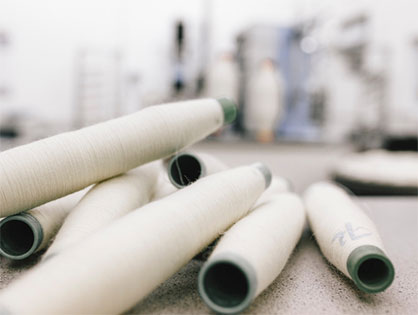
The United States Department of Agriculture (USDA) and Cotton Outlook, a prominent industry news organization, released their first estimates of world 2023/24 cotton production in February. USDA forecasts a crop of 25 million tonnes, while Cotton Outlook is a little more optimistic at 25.4 million. Lower prices for cotton compared to one year ago are expected to result in a decline in area, but the severe weather events that occurred in 2022, including floods in Pakistan and drought in United States, are not expected to repeat, resulting in higher production.
© 2023 IWTO
© 2023 IWTO


Jute

In a major boost to jute production and use, India is mandating the use of jute as the packing material for 100% of grain sacks and 20% of sugar sacks effective this year. The policy is expected to benefit 370,000 workers in jute mills plus additional hundreds of thousands of farm families. The policy will also help protect the environment because jute is biodegradable and fulfils all sustainability parameters.

Sisal

Exports of sisal climbed to more than 100,000 tonnes during 2021 and 2022, up from less than 90,000 tonnes prior to the Covid pndemic. The growth has come from increased production and exports from Kenya and Tanzania. Applications in the construction industry are the most important uses of sisal exports.

Wool

World production of wool in 2022 is estimated at 1.1 million tonnes, up 5% from 2021. The estimate is unchanged since December 2022. The first estimate of world 2023 wool production will be issued by the Australian Wool Production Forecasting Committee in April.

China is still the largest importer of wool fibre in the world, but demand for wool in the United States is rising. Over the 12-month period ending in November 2022, wool apparel imports into the United States were up by 47% compared with imports ending in November 2021. Much of the growth is in the active/outdoor category, rather than suiting fabrics which drove demand for merino wools (fine wools) in the past.

For more on wool market statistics…


The new edition of IWTO’s annual Market Information will be out soon. See https://iwto.org/resources/statistics for more information.

More News from International Wool Textile Organisation

More News on Raw Materials

#Natural Fibers

Human Rights Day: Cotton made in Africa reinforces its commitment to ensuring respect for human rights in cotton production

The sustainable cotton standard Cotton made in Africa (CmiA) has always focussed on respect for human rights, including by prohibiting child labour and discrimination. With the new version of the CmiA standard coming into force, AbTF raises requirements for due diligence in the areas of human rights and risk management.

#Research & Development

How innovations drive BASF’s success

“Innovation has always been part of BASF’s DNA. Especially in these volatile times, it is crucial to leverage our innovative strength to develop competitive solutions that differentiate us as a company in our markets and give us a competitive edge,” said Dr. Stephan Kothrade, Member of the Board of Executive Directors of BASF and Chief Technology Officer, at the company’s Research Press Briefing held today. To achieve this, BASF implemented its “Winning Ways” strategy about a year ago with the clear goal of becoming the preferred chemical company to enable its customers’ green transformation.

#Natural Fibers

38th International Cotton Conference Bremen launches registration and unveils key topics

Participants can now register online for the 38th International Cotton Conference Bremen, which will be held on 25-27 March 2026 at the Haus der Bürgerschaft parliament building on market square. All visitors can look forward to a high-calibre conference programme, numerous additional meetings and a valuable exchange of knowledge and information. The comprehensive range of topics covering the entire value chain will provide practical expertise, address current developments, answer key industry questions, and provide new impetus for the future.

#Natural Fibers

ICAC to collaborate with Uzbekistan and Bizpando on regenerative agriculture

The Government of Uzbekistan has allocated 55,000 hectares of land to implement a regenerative agriculture program for cotton as part of a collaborative project with the International Cotton Advisory Committee (ICAC) and Bizpando, a company with a a blockchain-based internet platform designed to ensure supply chain compliance.

Latest News

#Spinning

First PA66 spinning plant with EvoQuench successfully commissioned

With the successful commissioning of a multi-digit PA66 spinning line for microfiber yarns, Chinese textile company Shandong Nanshan Fashion Technology Co., Ltd. has added yarn production to its textile value chain.

#Knitting & Hosiery

SHIMA SEIKI returns to ShanghaiTex

Leading flat knitting solutions provider SHIMA SEIKI MFG., LTD. of Wakayama, Japan, together with its Hong Kong and Chinese market subsidiary SHIMA SEIKI (HONG KONG) LTD., will exhibit at the ShanghaiTex 2025 exhibition (Booth No.: Hall N3, Booth A20) held in Shanghai, China this month. This marks the return of SHIMA SEIKI to ShanghaiTex after a 14-year hiatus, its last exhibit at the show having been in 2011.

#Research & Development

Fraunhofer CCPE presents the “Monomaterial Design Set” – Innovative solutions for circular product design

Composite materials made from different types of plastic often extend the lifetime of products but make recycling more difficult in the circular economy. That is why Fraunhofer CCPE has developed the “Monomaterial Design Set”. This new approach helps to reduce the variety of plastics used in durable products and offers circular solutions for designers and product developers.

#Man-Made Fibers

arena introduces renewable LYCRA® EcoMade fiber in its latest swimwear collection

Italian swimwear specialist arena has unveiled a new collection that brings sustainability and performance even closer together. Launched on December 4, the line features swimsuits made from recycled nylon and renewable LYCRA® EcoMade fiber — the first time the bio-based spandex has been used commercially in swimwear.

TOP