[pageLogInLogOut]

#Raw Materials

Sustainability scorecard for sheep farming
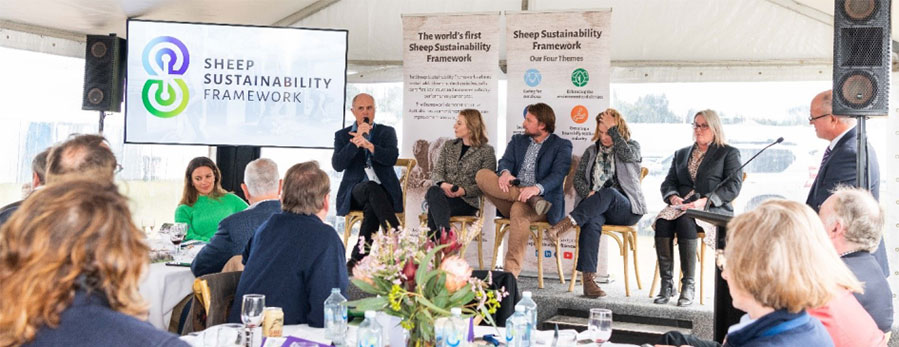
IWTO discuss Sustainability scorecard for sheep farming (c) 2022 IWTO
On 15 July 2022, the first ever Annual Report of the Sheep Sustainability Framework was unveiled at the Australian Sheep and Wool Show in Bendigo. The report was the first fruit of the Australian sheep and wool industry’s commitment to creating a data-driven yearly snapshot of its performance in matters relating to sustainability. International Wool Textile Organisation explores some of the most important points revealed in the report.

A World First

The report is the first of its kind and will go a long way towards improving sustainability in the sheep industry. It emerged from the Sheep Sustainability Framework (SSF), led by Sheep Producers Australia (SPA) and Wool Producers Australia (WPA). The SSF focuses on four themes: caring for sheep, enhancing the environment and climate, taking care of all stakeholders in the industry, and ensuring financial resilience for the industry. The report measures the extent to which the industry is meeting these goals, in light of a nine focus areas and 21 priorities.

Key Findings from The Report

The first annual report of the SSF revealed the following important points, among others:

  • The Australian sheep industry is climate neutral as of 2021, and has held steady on net emissions. Gains in productivity have driven emissions intensity down by nine per cent between 2005 and 2020.
  • Rates of ground cover have improved, with 63.4pc of sheep grazing land over 50pc ground cover since summer 2019.
  • Worms and breech flystrike are among the biggest health challenges for the industry. Genetic improvement is one of the measures being used to prevent disease.
  • The industry is rapidly shifting away from the practice of mulesing. Non-mulesed and ceased-mulesed wool has increased as a proportion of the total clip (exact figures to be released in the mid-year update report).


Lucinda Corrigan, Independent Chair of the SSF Board says the report is an evolving document with more indicators under development. “In order to be able to create the data needed for the Annual Report, we undertook a Life Cycle Assessment of the entire Australian flock to determine the carbon footprint of our industry,” she explained. “We also harnessed satellite imagery to measure and display vegetation changes across our sheep-grazing regions. The deep insights generated from these projects represent an important development in our understanding of the impacts on and of our 234-year-old industry.”


The report is available to download on the SSF website:

https://www.sheepsustainabilityframework.com.au/


More News from TEXDATA International

#ITM 2026

ITM 2026: The new geography of textile production

New production hubs are emerging across North Africa and Central Asia, while Türkiye is accelerating its transformation toward higher-value, technology-driven and more sustainable textile manufacturing.

#Research & Development

“Production is a product”

From technical textiles and AI-driven robotics to the limitations of textile circularity: Professor Dr Thomas Gries looks back on more than two decades of development at ITA Aachen. In the interview, he explains why production technology remains a decisive success factor, discusses international collaborations and innovation ecosystems, and shares his views on the transformation of production landscapes and the challenges facing an increasingly regulated industry.

#Knitting & Hosiery

“We need to move away from the price trap and return to a value-driven mindset.”

With its new Textile Innovation Center, KARL MAYER is sending a strong signal for innovation, collaboration, and the future of textile applications. In this interview, Karl Josef Mayer discusses new opportunities in warp knitting, the processing of staple fibres, recycling, the changing role of machinery manufacturers, and why the textile industry must once again focus more strongly on the value of textiles. by Oliver Schmidt

#Associations

“Innovation, resilience and international experience remain the great strengths of the Swiss textile machinery industry”

Geopolitical uncertainty, growing competitive pressure from China, new free trade agreements and the shift towards a circular economy are currently reshaping the global textile industry. In this interview, Cornelia Buchwalder discusses the current mood within the Swiss textile machinery sector, the industry’s distinctive innovative strength, new market opportunities in India and Asia, and the technological trends that could shape the upcoming trade fair cycle leading up to ITMA 2027.

More News on Raw Materials

#Raw Materials

New Cotton Review examines competitiveness, market risk, and opportunities

From moving record volumes of Brazilian cotton to market, to managing price volatility, unlocking Ethiopia’s production potential, and strengthening African textile trade, the latest edition of Cotton: Review of the World Situation examines some of the most consequential opportunities and challenges facing the global cotton industry.

#Raw Materials

Kraig Labs ships first commercial spider silk yarn

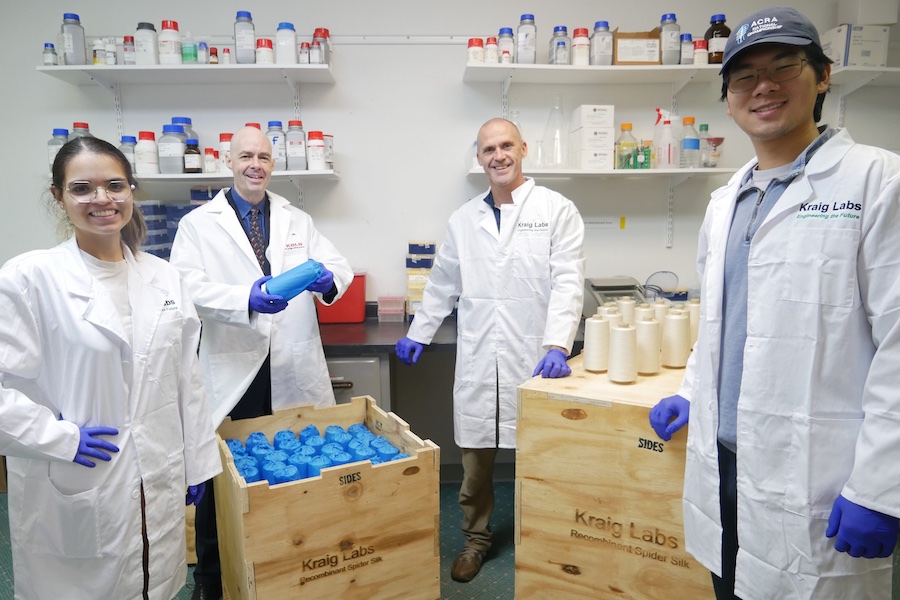
Kraig Biocraft Laboratories, Inc. (OTCQB: KBLB) (“the Company”, “Kraig Labs”, or “Kraig’s”), a world leader in spider silk technology*, today announced the shipment of its first commercial order of recombinant spider silk yarn. The custom-engineered yarn was produced to fulfill a purchase commitment from a globally recognized performance sports brand and is slated for development into a first-of-its-kind performance textile.

#Raw Materials

ALLIED expands down traceability with lot-level carbon footprint data

ALLIED Feather + Down has expanded its TrackMyDown traceability platform to include validated cradle-to-gate carbon footprint data linked to individual down lots. The initiative is designed to provide brands and consumers with more detailed environmental information on the materials used in finished products and could also support future data requirements associated with Digital Product Passports.

#Raw Materials

Cotton made in Africa puts farmer dialogue at the heart of agricultural training

A new manual created by the Aid by Trade Foundation and African People & Wildlife shows how Cotton made in Africa aims to transform cotton cultivation through dialogue rather than directives.

Latest News

#Recycling / Circular Economy

ReHubs names Béatrice Moureaux CEO to advance textile recycling in Europe

ReHubs has appointed Béatrice Moureaux as Chief Executive Officer, marking a new chapter for the European alliance as it continues to strengthen its work to scale textile-to-textile recycling across Europe. Béatrice has served as Board Advisor to ReHubs since December 2025, working closely with its Board, team and members on the organisation’s strategy and projects. She brings more than 25 years of experience across technical textiles, advanced fibres, nonwovens and circular innovation.

#Textiles & Apparel / Garment

YKK subsidiary Golden Hill Tower Limited marks 25 years of operations in Myanmar

Golden Hill Tower Limited, a subsidiary of YKK Corporation, celebrated its 25th anniversary with a ceremony in Myanmar on September 21, 2026. The event brought together approximately 230 guests, including senior executives from the YKK Group, to commemorate the company's development since the launch of its serviced apartment business in November 2000.

#Knitting & Hosiery

SHIMA SEIKI to showcase digital product creation at Apparel Sourcing Week

Leading digital textile solutions provider SHIMA SEIKI MFG., LTD. of Wakayama, Japan will exhibit at Apparel Sourcing Week 2026 in Bengaluru, India next month. The exhibition provides a platform for the entire apparel value chain, bringing together manufacturers, brands, suppliers and solution providers in one location.

#Digital Printing

SNA GZ accelerates its on-demand production strategy with Kornit Digital

SNA GZ is leveraging the Kornit Atlas MAX PLUS to expand its music merchandise production, streamline e-commerce order fulfillment, and grow its print-on-demand business across Europe. This investment increases SNA GZ's textile production capacity by 150% (2.5×), enabling the company to meet growing demand and support its continued expansion.

TOP