[pageLogInLogOut]

#Raw Materials

Opportunities for the EU cotton textile industry in international competition
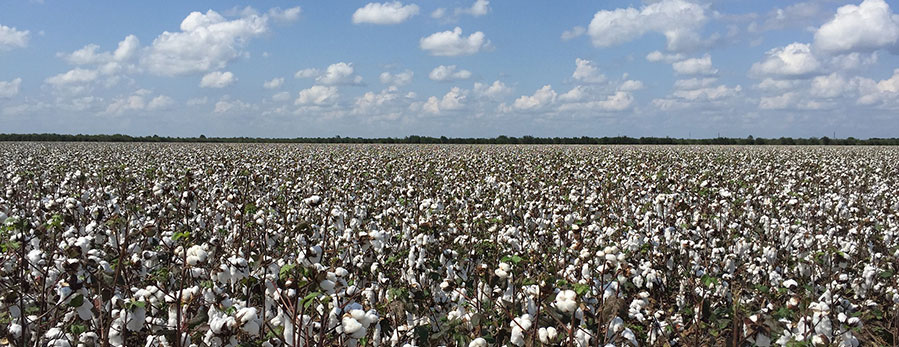
© 2022 Bremen Cotton Exchange
The Bremen Cotton Exchange and the Fibre Institute Bremen e.V. invites people to the 36th International Cotton Conference Bremen on 29 and 30 September. Under the motto "Cotton Decoded", conference participants will be offered an ambitious programme with up-to-date lectures and lively discussions, both on site in Bremen and via an online conference platform. The day's events will be rounded off by an exciting evening program.


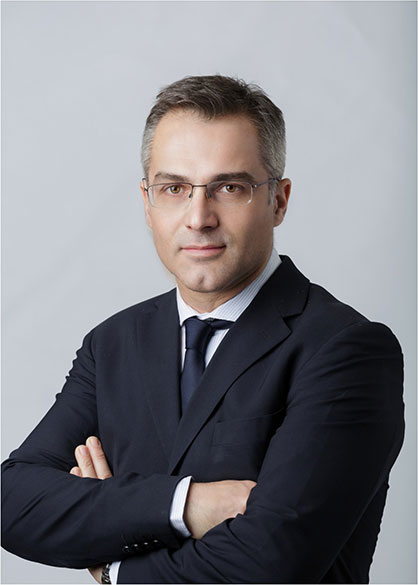
Antonios Siarkos © 2022 Bremen Cotton Exchange


Premiere: EU cotton textile industry in focus

A special feature: On Friday 29 September, the conference will highlight the high- quality cotton production within the European Union in the network and the downstream, highly specialised textile and clothing industry, under the headline ‘Region in Focus’. “The three-part session will show and discuss opportunities for stronger positioning and assertiveness in international competition” explains Axel Drieling (FIBRE e.V.) from the conference planning team.

The countries of the European Union, such as Greece and Spain, are among the largest cotton exporters in the world. Europe is the world's second largest importer of textiles and clothing. This includes the raw material cotton with a share of around 50 percent, only a small part of which comes from Europe. In addition, Europe is one of the world's leading suppliers of innovative technical textiles, for example in the health sector, automotive engineering or interior design. Here, too, natural fibres such as cotton are increasingly being used as renewable raw materials and, because of their biodegradability, as part of the drive towards a circular economy.

The first part of the session will not only present the cotton textile industry in facts and figures, but also discuss its strengths and weaknesses. The predominant market structures within the framework of EU agricultural policy will be made transparent.

This will be followed by a discussion about new possibilities in the EU textile chain, embedded in the European Commission’s strategy to build a resource-saving circular economy. The background here is changing consumer behaviour towards sustainably manufactured textiles. The aim is to make it clear what the competitive advantages of the EU textile chain are against this background, with which the demanding wishes of European consumers can be satisfied more quickly and flexibly. This could result in opportunities for the development of locally or regionally structured value chains.

Last but not least, the 'EU cotton' initiative of the European Cotton Alliance, an association of European cotton organizations, will be presented. It enables European cotton farmers and their affiliated companies to provide their cotton with an EU cotton label, which can also be found in processed cotton textile products. The associated licensing program could make market- oriented textile production in Europe more lucrative through transparency and traceability.


Additional highlights of the anniversary week

This year’s International Cotton Conference takes place in a year of celebration for the Bremen Cotton Exchange. The association was founded in 1872 and is celebrating its 150th anniversary. The event is therefore embedded in an entire anniversary week.

The first association and working group meetings will take place in Bremen on 27 and 28 September. These include the International Textile Manufacturers Federation (ITMF), the Discover Natural Fibres Initiative (DNFI), the Industry Association for Finishing - Yarns - Fabrics - Technical Textiles (IVGT), the ICAC Task Force on Commercial Standardisation of Instrument Testing of Cotton (CSITC), a spinning mill and textile seminar given by the Fibre Institute, Cotton Exchange, IVGT and ITMF, and an ICA Bremen Board Meeting. A further highlight is certainly the meeting of the ICAC's Social, Environmental and Economic Performance of Cotton Production (SEEP) expert working group.

Bremen Cotton Night

On the evening of 29 September, the Bremen Cotton Exchange and the Fibre Institute Bremen invite participants to the popular and well-known Bremen Cotton Night. This year, the event is all about the 150th anniversary of the Bremen Cotton Exchange and is taking place in the Bremen Übersee-Museum (Overseas Museum) for a good reason: At the same time, the gates will open to an attractive exhibition on the cultural history of cotton. Conference participants can celebrate in the large atrium of the museum and also take a guided tour of the exhibition. With good music and good food, it will finally be possible to spin personal networks again and at the same time review the multifaceted world of cotton in an exquisite exhibition.

Venue

This year’s conference is not taking place in the historic town hall of the Hanseatic City of Bremen, but at the Bremen Chamber of Commerce in the immediate vicinity of the Cotton Exchange. The Chamber of Commerce has represented the interests of Bremen's trade since 1451 and is closely connected to the Bremen Cotton Exchange.

Early-bird registration until 31 August

Registration for the International Cotton Conference has already started and can be made at any time on the conference website www.cotton-conference-bremen.de, where you will also find regularly updated information about the conference.

We will continue to provide information about the International Cotton Conference on 29 and 30 September and the complete programme of the Cotton Week in the form of further press releases and target group-specific newsletters, as well as via our social media channels.

Of course, we cordially invite all interested media representatives to visit the 36th International Cotton Conference. We are happy to support you with accreditation or the selection of suitable discussion and interview partners. We look forward to any form of reporting in the run-up to the conference. We are available for further questions and interviews.

Images from this press release may be used for reporting provided the source is acknowledged.




More News from Bremer Baumwollbörse

#Natural Fibers

Bremen Cotton Exchange: Fritz A. Grobien re-elected as President

The members of the Bremen Cotton Exchange have re-elected Fritz A. Grobien as President during the association’s 152nd General Assembly on June 18, 2026. The election confirms the organization’s commitment to maintaining its role as a leading international platform for the cotton and fiber industry amid a period of geopolitical and economic uncertainty.

#Raw Materials

Fiber traceability - A vehicle to ensure sustainability or injustice?

The Bremen Cotton Exchange is making a new paper available for download. In this paper, analyst Veronica Bates Kassatly and statistician Terry Townsend examine the justifications behind this approach and assess the consequences for textile and apparel sustainability claims and global legislation.

#Raw Materials

A Powerful Opening: Global thought leaders launch the International Cotton Conference Bremen

The International Cotton Conference Bremen will open on 25 March 2026 in the Parliament building of the Free Hanseatic City of Bremen with a keynote session of exceptional calibre. Distinguished international experts will set the stage for the conference by offering incisive perspectives on the most pressing challenges and the defining trends shaping the future of the global cotton trade. Their insights will span a broad spectrum — from geopolitically driven disruptions affecting global supply chains to the opportunities emerging from innovation-led agriculture capable of supporting a growing world population. Together, these opening keynotes will frame the dialogue of the conference, highlighting both the complexity of today’s market environment and the pathways toward a resilient and forward-looking cotton sector.

#Natural Fibers

Beyond Cotton: Natural Fibres in the Spotlight at the Bremen Cotton Conference - Branded by DNFI

Climate targets, fragile supply chains, and rising regulatory requirements are fundamentally changing the perspective of the textile industry - the focus is increasingly shifting toward the base material. Not only cotton, but natural fibres are gaining significant importance: they stand out not only because of their outstanding functional properties, but also because they make a valuable contribution to the bioeconomy and responsible product development.

More News on Raw Materials

#Raw Materials

Redesigned World Cotton Day website offers tools, ideas and inspiration

With World Cotton Day just one month away, the International Cotton Advisory Committee (ICAC) has launched a completely redesigned www.WorldCottonDay.com, creating a new global home for everyone who wants to learn about, celebrate, and support cotton.

#Raw Materials

ICAC’s 84th Plenary Meeting to be held March 24-26, 2027, in Alexandria, Egypt

Registration will soon be open for the International Cotton Advisory Committee’s 84th Plenary Meeting, to be held March 24-26, 2027, in Alexandria, Egypt. The local Organizing Committee in Egypt has chosen “Building a Resilient and Competitive Future for Cotton and Textiles” as the theme for the event, which will be held at the Rixos Montaza Alexandria Resort.

#Raw Materials

Cotton Brazil Dialogues 2026 concludes with 50 international participants immersed in Brazilian cotton production

The Cotton Brazil Dialogues concludes its 2026 edition after a series of technical visits to farms, cotton gins and reference centers, as well as workshops focused on Brazilian cotton production. A total of 50 participants from 14 countries took part in the field trips. The initiative is led by the Brazilian Association of Cotton Growers (Abrapa) and the National Association of Cotton Exporters (Anea), with support from the Brazilian Trade and Investment Promotion Agency (ApexBrasil).

#Raw Materials

Global cotton production projected to outpace consumption, but risks remain

Global cotton production is projected to reach 26.2 million tonnes in the 2026/27 season, marginally outpacing estimated consumption of 25.9 million tonnes. However, early-season production risks — including weather volatility and pest pressures — could narrow that buffer as the crop progresses, according to the September 2026 issue of Cotton This Month, published by the International Cotton Advisory Committee (ICAC).

Latest News

#Industry 4.0 / Digitalization

Coats Digital launches AI-powered GSD RealMotion for motion analysis

Coats Digital has launched GSD RealMotion, an AI-powered solution designed to provide apparel manufacturers with greater visibility into factory-floor operations. By analysing shop-floor video and applying Coats Digital’s GSD methodology, the solution turns video recordings into structured, motion-by-motion method studies.

#Textile chemistry

Archroma and Lameirinho partner in pioneering deployment of InOneGO single-step dyeing

Archroma, a global leader in specialty chemicals, and Lameirinho, a leading home textiles manufacturer based in Portugal, are collaborating to bring InOneGO by Archroma, a new single-step dyeing process, into commercial production. Lameirinho’s first InOneGo bedlinens collection is now available worldwide.

#Knitting & Hosiery

KARL MAYER launches extra-wide HKS 3-M EL for increased productivity

KARL MAYER has launched a new extra-wide version of its HKS 3-M EL tricot machine, designed to increase productivity particularly in the manufacture of textiles for sports, activewear and athleisure applications.

#Research & Development

Reducing development times for technical textiles by accelerated thermo-oxidative aging in a high-pressure autoclave

Synthetic polymers used in technical textiles can be effectively protected against degradation caused by heat, oxygen, and water through the use of stabilizer systems. This enables service lives of several decades, extending to more than 50 years. As the use of durable technical textiles continues to grow, so does the demand for reliable methods to predict their service life within economically feasible testing periods. For the first time the German Institutes of Textile and Fiber Research Denkendorf (DITF) developed methods for robust service life prediction for textiles in an IGF research project.

TOP