[pageLogInLogOut]

#Raw Materials

U.S. Cotton Trust Protocol recognized and published in ITC Standards Map

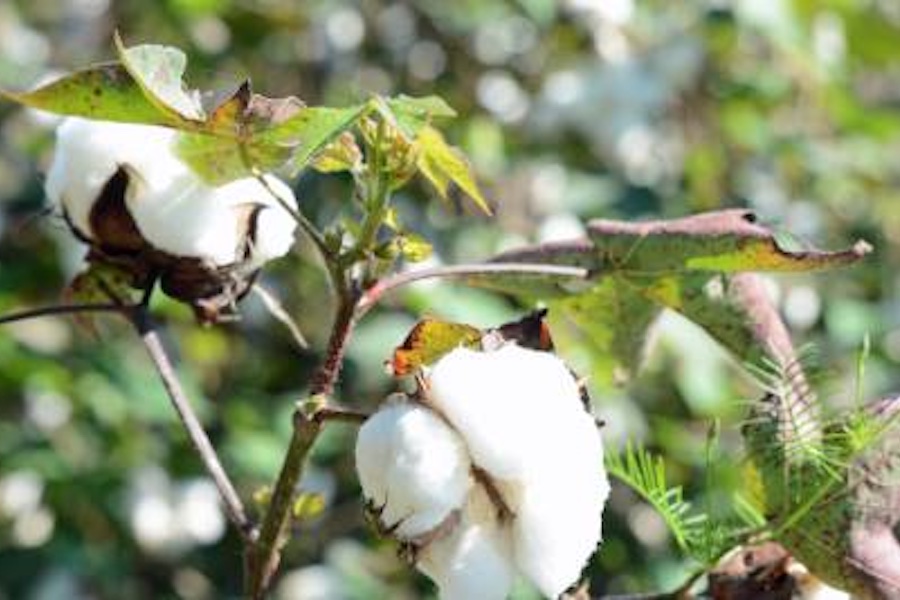
The U.S. Cotton Trust Protocol has been recognized and published in the standard mapping process by the International Trade Centre, giving brands and retailers around the world greater choice when it comes to sourcing sustainably grown cotton.

To be included in the Standards Map, an organization must address at least one pillar of sustainable development (economics, environment, social), and/or focus on ethics or quality management. As part of its core program, the Trust Protocol is focused on continuous improvement of six key sustainability metrics including land use, soil carbon, water management, soil loss, greenhouse gas emissions and energy efficiency.

By joining the U.S. Cotton Trust Protocol, members can be sure they are sourcing responsibly produced, quality fiber, and reducing environmental and social risk in their field-to-mill supply chain.

“The Trust Protocol aims to set a new standard for more sustainably grown cotton that provides brands and retailers the critical assurances that the cotton fiber used in their supply chain is more sustainably grown with lower environmental and social risk,” said Dr. Gary Adams, president of the U.S. Cotton Trust Protocol. “Inclusion in the ITC Standards Map signals to businesses and consumers that a trusted independent organization has verified this information.”

“During a time of increased supply chain scrutiny, brands and retailers face challenges in keeping track of sustainability initiatives and meeting requirements,” said Mathieu Lamolle, Senior Advisor at ITC. “We appreciate that organizations such as the Trust Protocol voluntarily submit their sustainability metrics for verification and mapping in our Standards Map database, so that companies can make better-informed decisions about certification and involvement in sustainable production of their raw materials.”


The U.S. Cotton Trust Protocol is aligned with the UN Sustainable Development Goals, recognized by Textile Exchange and Forum for the Future, and part of the Sustainable Apparel Coalition, Cotton 2025 Sustainable Cotton Challenge, Cotton 2040 and Cotton Up initiatives. To learn more about the U.S. Cotton Trust Protocol visit TrustUSCotton.org.

To learn more about ITC Standards Map visit:

https://www.standardsmap.org



More News from TEXDATA International

#ITM 2026

ITM 2026: The new geography of textile production

New production hubs are emerging across North Africa and Central Asia, while Türkiye is accelerating its transformation toward higher-value, technology-driven and more sustainable textile manufacturing.

#Research & Development

“Production is a product”

From technical textiles and AI-driven robotics to the limitations of textile circularity: Professor Dr Thomas Gries looks back on more than two decades of development at ITA Aachen. In the interview, he explains why production technology remains a decisive success factor, discusses international collaborations and innovation ecosystems, and shares his views on the transformation of production landscapes and the challenges facing an increasingly regulated industry.

#Knitting & Hosiery

“We need to move away from the price trap and return to a value-driven mindset.”

With its new Textile Innovation Center, KARL MAYER is sending a strong signal for innovation, collaboration, and the future of textile applications. In this interview, Karl Josef Mayer discusses new opportunities in warp knitting, the processing of staple fibres, recycling, the changing role of machinery manufacturers, and why the textile industry must once again focus more strongly on the value of textiles. by Oliver Schmidt

#Associations

“Innovation, resilience and international experience remain the great strengths of the Swiss textile machinery industry”

Geopolitical uncertainty, growing competitive pressure from China, new free trade agreements and the shift towards a circular economy are currently reshaping the global textile industry. In this interview, Cornelia Buchwalder discusses the current mood within the Swiss textile machinery sector, the industry’s distinctive innovative strength, new market opportunities in India and Asia, and the technological trends that could shape the upcoming trade fair cycle leading up to ITMA 2027.

More News on Raw Materials

#Natural Fibers

Cotton made in Africa partners receive top marks in independent verifications

Cotton made in Africa® (CmiA) and CmiA Organic are two internationally recognised standards that aim to promote sustainable development in the African cotton sector south of the Sahara. To ensure the standards’ credibility among brands, retailers, and consumers, independent verifiers evaluate compliance on the ground. The verification results for 2025, now published in the Aggregated Verification & Implementation Report, were very strong: The verifiers awarded consistently very good remarks regarding management, people, prosperity, and the environment.

#Natural Fibers

Cotton ConneXions Insight to Impact brings supply chain leaders together around cotton innovation

Cotton Incorporated’s Cotton ConneXions Insight to Impact brought together more than 300 industry leaders from 140 companies across 10 countries, including more than 45 top global brands and sourcing organizations, underscoring strong global interest in cotton-rich product development, sourcing and supply chain collaboration.

#Natural Fibers

Bremen Cotton Exchange: Fritz A. Grobien re-elected as President

The members of the Bremen Cotton Exchange have re-elected Fritz A. Grobien as President during the association’s 152nd General Assembly on June 18, 2026. The election confirms the organization’s commitment to maintaining its role as a leading international platform for the cotton and fiber industry amid a period of geopolitical and economic uncertainty.

#Natural Fibers

Organic cotton at the crossroads: Ideology, evidence, and the road ahead

Organic cotton occupies one of the most contentious spaces in global agriculture. While praised by brands and consumers for its environmental ideals, it also faces persistent questions about yield stability, certification integrity, and scalability. The current edition of The ICAC Recorder cuts through the ideology to deliver a rigorous, evidence-based assessment of both sides of the debate.

Latest News

#Nonwovens

EDANA announces five new board members following 2026 Annual General Meeting

The EDANA Board of Governors is elected or re-elected at the Annual General Meeting by the member companies. The Governors are senior executives (business leaders) from member companies, based in different countries and representing different sectors of the nonwovens industry. The Board has central responsibility for guiding EDANA's overall strategy and approving its policies and priorities. It meets three times a year.

#Nonwoven machines

DiloGroup - Complete nonwoven needling line for hygiene materials in the United States

DiloGroup has received an order for a complete needling line designed for the production of hygiene materials in the United States. This project further strengthens our position in the American hygiene sector and reflects the continued demand for reliable, high-performance nonwoven equipment.

#Associations

Bangladesh: Italian textile machinery mission stops in Dhaka and Chittagong

Technological upgrading and the transition toward higher value-added production are driving the new Italian industrial mission to Bangladesh. This year, the mission will split between the country’s two main manufacturing hubs, where Italian manufacturers will meet the leaders of the local textile supply chain in two strategic stages: July 7th in Dhaka and July 9th in Chittagong.

#Recycling / Circular Economy

RE&UP establishes Fiber Club consortium to scale Next-Gen material sourcing

Originally developed as an umbrella framework by innovation platform Fashion for Good, the RE&UP Fiber Club aims to accelerate the commercial adoption of circular Next-Gen materials across the global fashion ecosystem.

TOP