[pageLogInLogOut]

#Raw Materials

Fluorescent cotton, magnetic cotton, cotton as a perfect functional textile at ICC Bremen

The International Cotton Conference Bremen takes place from 25-27 March in the Hanseatic city’s historic Town Hall on the Market Square. The conference presents trade visitors from all major continents with the most up-to-date and promising topics of the cotton textile supply chain and discusses the resulting challenges for the market. Science and industry are equally represented.

Already on the opening day, Wednesday 25 March, a highly exciting session deals with alternative and previously little-known uses of the natural, renewable and biodegradable raw material cotton in highly innovative and useful products. In the session ‘Innovative Textile and Technical Products’, four examples show that the use of cotton goes far beyond household textiles and clothing. In fact, thanks to its intelligent properties, cotton can also be found in technical products or in smart textiles.

Michael Jänecke, Director of Brand Management Technical Textiles & Textile Processing at Messe Frankfurt, will lead the session with his extensive market experience. Among other things, he has been responsible for the organisation of the leading international trade fairs ‘Techtextil’ and ‘Texprocess’ for many years.


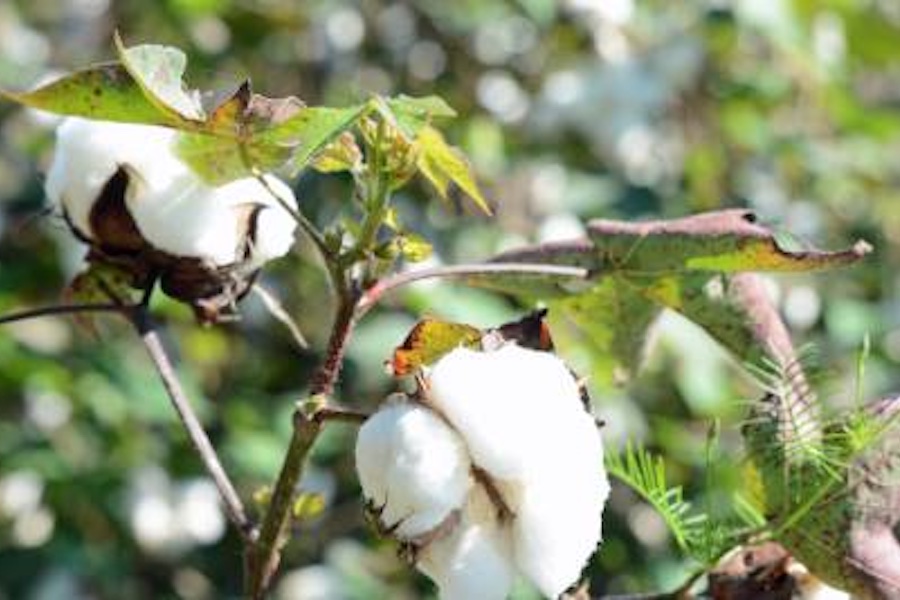
Banknotes are made from cotton fibres – Image: pixabay (c) 2020 Bremen Cotton Exchange


Case Study 1:

Sustainable Cotton for Forgery-Proof Banknotes

Bernadette O’Brian from the Directorate of Banknotes at the European Central Bank in Frankfurt (ECB), is responsible for the environmentally friendly and healthy, as well as forgery-proof production of banknotes. In her lecture, ‘The Use of Sustainable Cotton Fibres in Euro Banknotes’, she examines the Europe-wide banknote paper manufacturing practices, including the supervision of the manufacturing processes, as part of the ECB’s global sustainability strategy.


Case Study 2:

Fluorescent, Super Magnetic and Water Repellent Cotton

Dr Filipe Natalio is a senior staff member and researcher at the Weizmann Institute for Science in Rehovot, Israel, working for the Plant and Environmental Research Department, affiliated with the Kimmel Centre for Archaeological Science. He presents the results of his work under the theme of ‘Material Farming: Growing Cotton with Unique Functions’, in which cotton can be equipped with fluorescent, super-magnetic and water-repellent properties. This is not brought about by a chemical change, but biologically through the implementation of a specially developed glucose molecule in cotton. The development has the potential to be used in large formats in cotton-based functional materials and textiles.

Case Study 3:

Innovative Padding and Fabrics for Furnishings and Outdoors

In a double lecture, Matthias Boehme and Daniel Odermatt present innovative textiles for the interior design and outdoor sectors. Matthias Boehme is the owner of the Bremen agency Textile Solutions & Consulting. He presents product ideas for padding for use in furniture from the German nonwoven and composite manufacturer Norafin Industries in Mildenau. These are not made from oil-based synthetic fibres, but from cotton and other bio-based natural fibres and are used in the area of home textiles (e.g. wallpaper) or for functional components for technical textiles and for clothing development.

Daniel Odermatt is Division Manager at fabric manufacturer Stotz & Co. AG, Zurich, Switzerland. The company is known for developing highly functional cotton fabrics. For example, extra-long staple fibres are softly spun and twisted and then woven in the highest possible density. The result is a dense all-weather fabric with natural properties and maximum comfort. The material is rainproof, completely windproof and equipped with a breathability that can only be achieved using natural materials.

Case Study 4:

3D Cotton / Linen Fabric for the Treatment of Skin Diseases

Dr Iwona Frydrych from the University of Technology in ?ód?, Poland, is a professor at the Faculty of Material Development and Textile Design. Her topic is the support of the medical treatment of skin diseases using a 3D design for clothing made of cotton-linen blends. Microcapsules with proven skin-soothing plant substances are applied to the material. The material treated in this way has direct contact with the skin. The content of the microcapsules is released by body heat and moisture. According to studies, this leads to relief from skin complaints.
More News from Bremer Baumwollbörse

#Natural Fibers

38th International Cotton Conference Bremen launches registration and unveils key topics

Participants can now register online for the 38th International Cotton Conference Bremen, which will be held on 25-27 March 2026 at the Haus der Bürgerschaft parliament building on market square. All visitors can look forward to a high-calibre conference programme, numerous additional meetings and a valuable exchange of knowledge and information. The comprehensive range of topics covering the entire value chain will provide practical expertise, address current developments, answer key industry questions, and provide new impetus for the future.

#Natural Fibers

151st General Assembly of the Bremen Cotton Exchange

Economic change and personnel decisions were the dominant themes on the agenda of the Annual General Assembly of the Bremen Cotton Exchange on 26 June 2025. During the meeting, the new Executive Committee and Board of Directors of the raw material association, which is now almost 153 years old, were elected. Fritz. A. Grobien will take over as President.

#Natural Fibers

The 151st General Meeting of the Bremen Cotton Exchange on 26 June 2025

The General Assembly of the Bremen Cotton Exchange will take place in Bremen and online on 26 June 2025. All members, partners and friends of the association are cordially invited to attend this important event.

#Raw Materials

Cotton-supported study highlights potential dangers of microplastics in synthetic fibers

Microplastics are ubiquitous and evidence of serious harm is increasing. Studies have linked microplastics and nanoplastics to heart attacks, strokes and deaths, and microplastics have been found in the bone marrow of leukaemia patients and in the brains of dementia patients.

More News on Raw Materials

#Natural Fibers

ICAC to collaborate with Uzbekistan and Bizpando on regenerative agriculture

The Government of Uzbekistan has allocated 55,000 hectares of land to implement a regenerative agriculture program for cotton as part of a collaborative project with the International Cotton Advisory Committee (ICAC) and Bizpando, a company with a a blockchain-based internet platform designed to ensure supply chain compliance.

#Natural Fibers

World Cotton Trade declined 4.1% in 2024/25, according to ICAC's 2025 World Cotton Trade Report

Washington, DC — The International Cotton Advisory Committee (ICAC) has released the 2025 World Cotton Trade Report, which covers trade developments in raw cotton since 1980. An annual publication, it provides analysis of world trade by region; import/export projections by country; matrices of trade flows; and seasonal estimates of export commitments to date.

#Natural Fibers

BCI warns against ‘dangerous dilution’ of EU corporate directives

The approval of the European Commission’s Omnibus I proposal by the European Parliament’s Committee on Legal Affairs, accepting controversial changes to key sustainability directives is of great concern. These changes, namely to the Corporate Sustainability Reporting Directive (CSRD) and the Corporate Sustainability Due Diligence Directive (CSDDD), threaten to significantly dilute business reporting and due diligence obligations.

#Natural Fibers

ICAC releases 2025 edition of the Specialty Cotton Report

The ICAC has released the newest edition of the Specialty Cotton Report, a free publication that was created in 2023 to highlight the many new "identity cotton programs" that have been emerging around the world, in addition to covering long-staple (LS) and extra-long staple (ELS) cotton. For the ICAC's purposes, "specialty cotton" refers to any cotton that is remarkable in some way — LS, ELS, or falls under a specific identity program.

Latest News

#Recycling / Circular Economy

Advanced Recycling Conference 2025 fuels innovation across key waste streams

The Advanced Recycling Conference (ARC) 2025 brought together nearly 220 experts from 28 countries to spotlight pioneering advancements and foster industry collaboration in recycling across diverse waste streams including plastics, textiles, automotive and other materials.

#Dyeing, Drying, Finishing

Navis TubeTex announces U.S. partnership with Icomatex

Navis TubeTex, a global leader in advanced dyeing and finishing machinery solutions, is pleased to announce a new partnership with Icomatex (www.icomatex.com), a respected European manufacturer of high-quality stenters and textile finishing equipment. Under this agreement, Navis TubeTex will exclusively represent the Icomatex stenter line in the United States.

#Recycling / Circular Economy

ADVANSA launches ADVA®tex: A new step toward textile-to-textile recycling

ADVANSA has introduced ADVA®tex, a new filling fibre made entirely from recycled pre-consumer textile waste, positioning the material as a significant step forward in textile-to-textile (T2T) recycling. The fibre is designed for use in duvets, pillows, mattresses, and furniture applications and is available in three versions.

#Knitting & Hosiery

KARL MAYER celebrates 35 years of EL pattern drive

KARL MAYER is celebrating an anniversary this year: on 30 November 1990, the first warp knitting machine with electronic guide bar control, the KS 4 EL, was delivered – another milestone for patterning. As early as 1980, the SU gearbox with the MRS42SU had initiated the transition from mechanical chains to digital data.

TOP