[pageLogInLogOut]

#Nonwovens / Technical Textiles

New absorber systems improve the quality of laser welded seams on technical textiles
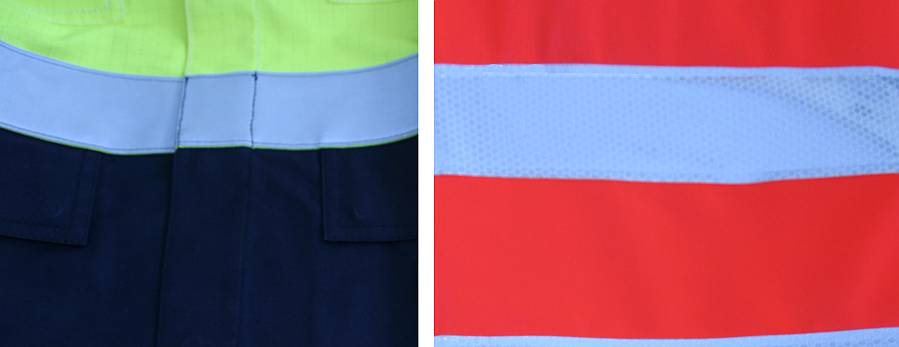
Safety jacket left - all seams stitched conventionally. Safety jacket right - all seams produced by laser welding. © Hohenstein Institute
As part of the research project (AiF No. 17031 N) "Absorber systems for the laser welding of textiles", scientists at the Hohenstein Institute (Bönnigheim) and the DWI Leibnitz Institute for Interactive Materials (Aachen) have developed new absorber systems for laser welding technical textiles in the infrared spectrum. The researchers have already used them to weld all kinds of different textile materials.

With the results of their research, the scientists have overcome one of the main challenges of laser welding: only a few textiles absorb laser radiation in the near-infrared light spectrum and are therefore intrinsically suitable for laser welding. To join other textiles successfully, you have to apply absorber materials to the proposed locations of the seams which absorb the near-infrared light, melt and so join themselves together. However, the absorbers that were commercially available until now caused discolouring around the seams on light-coloured materials and so their potential applications were limited.

The new absorbers, on the other hand, produce a technically high-quality bond between textile materials. The seams are resistant to liquids, mechanically strong, flexible and free of any discoloration. The way is therefore open for laser welding to be used as an alternative, highly effective and promising technology for bonding textiles.

Especially when it comes to producing technical and medical textiles, laser welding offers a number of advantages over traditional joining methods. The seams can be made watertight in a single process. This means that, in contrast to traditional seams, the subsequent "taping" of the seams, whereby special tapes are applied to seal the holes caused in the textile material by the stitching needles, is no longer necessary. Seams created by laser welding are also flat, stretchy, flexible and proof against liquids and gases and they have impressively high tensile strength.
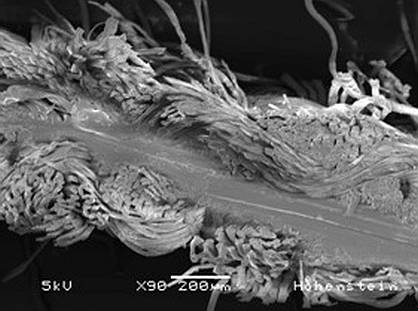
Pic: Cross-section of a laser-welded joint between two woven fabrics © Hohenstein  

Thanks to automatic in-line monitoring of the welding process, the quality of the joint is measured automatically. This means seam failures are avoided. The cost of checking seam quality is therefore minimised, which is especially important in the manufacture of high-quality products such as medical textiles, protective clothing, outdoor equipment and textiles used in vehicle manufacture and furniture-making.

During the project, the setting parameters for laser welding such as the temperature, speed and pressure were adjusted to suit various different absorbers and textiles. This will enable the manufacturing companies to use the process directly for their own materials and product range.

The new-formula absorbers are easy to use, economical and compatible with different textiles (woven, knitted and warp-knitted textiles, non-wovens, laminates etc.) and accessories (zips, reflectors etc.) . Especially on light and transparent textiles, they produce visually and mechanically perfect seams with excellent performance characteristics.
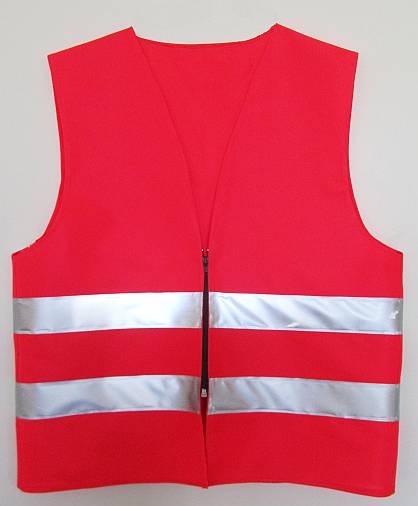
Pic: Safety jacket. All seams were produced by laser welding. ©Hohenstein Institute

Laser welding is suitable both for one-off manufacture and for manufacturing with a high degree of automation. Minimising the number of process stages and increasing the quality, together with the high flexibility of the process, will help small and medium-sized companies to increase their turnover and give them competitive advantages over the users of conventional textile joining Technologies.
More News from Hohenstein Institute

#Research & Development

A smarter way to verified Chemical Compliance

Hohenstein and GoBlu Drive Innovation in Sustainable Supply Chain Management As regulatory demands, customer expectations, and sustainability goals continue to grow, the ability to manage chemical compliance and data across complex supply chains has become critical. Hohenstein and The BHive® by GoBlu are initiating a strategic partnership to enhance chemical management in the textile sector. The collaboration delivers more than just a service – it provides an integrated, future-ready solution for brands, manufacturers and suppliers seeking trusted chemical management and credible sustainability.

#Research & Development

Hohenstein achieves GLP Certification for Medical Device Testing

Since the middle of July, the testing service provider Hohenstein has been certified to conduct medical device testing in accordance with the internationally recognised Good Laboratory Practice (GLP) standard. This certification comprehensively covers chemical, physical and biological safety testing of medical devices.

#Research & Development

Hohenstein supports Global Textile Scheme Initiative

Global testing and research provider Hohenstein has acquired shares in Global Textile Scheme GmbH (GTS). In this way, Hohenstein aims to support GTS in harmonizing and automating data exchange along the entire supply chain. The aim of the GTS initiative is to create an international standard for handling structured product data in the textile and apparel industry.

#Research & Development

Hohenstein releases 2024 sustainability report

Responsible action is a defining value for Hohenstein, a global testing and research provider. Their 2024 Sustainability Report provides transparency through documented progress and detailed insights into how sustainability is embedded. It covers both the existing sustainability measures at the German headquarters and the company's goals for 2025 and beyond. The direct and indirect greenhouse gas emissions (Scope 1, 2 and 3) of all its locations worldwide were recorded for the first time.

More News on Nonwovens / Technical Textiles

#ITMA Asia + CITME Singapore 2025

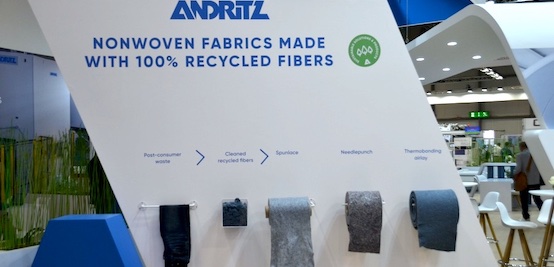
ANDRITZ sets focus on textile recycling and durable nonwoven production technologies at ITMA Asia 2025

International technology Group ANDRITZ will be presenting its innovative nonwovens production and textile solutions at ITMA ASIA + CITME 2025 in Singapore, from October 28 to 31, 2025 (Hall 2, D106). ANDRITZ will showcase its MMCF production plants, textile sorting and recycling, bast fiber processing, needlepunch, airlay, and life-cycle service technologies, with a focus on sustainable solutions. Discover how these innovations can grow your business opportunities and support a greener future.

#ITMA Asia + CITME Singapore 2025

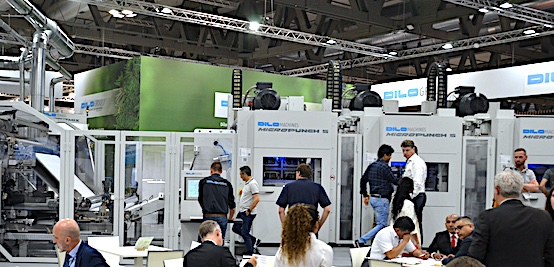
Dilo Group at ITMA ASIA Singapore 2025

At ITMA ASIA Singapore, the Dilo Group will exhibit at Booth No. H2 – D202. Together with Kansan Materials, Izmir, the company will present its latest developments and looks forward to welcoming visitors to exchange ideas and explore innovations in needling technology.

#Nonwovens

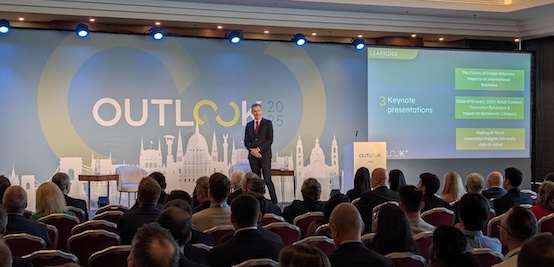
OUTLOOK™ 2025: Charting a sustainable and innovative future for the Nonwovens Industry

EDANA concluded its flagship event, OUTLOOK™ 2025, last week, marking it as a major success and addressing the biggest questions facing the industry. The three-day conference highlighted the urgent need for a unified approach to sustainability, regulation, and innovation in the absorbent hygiene and wipes sectors.

#Nonwovens

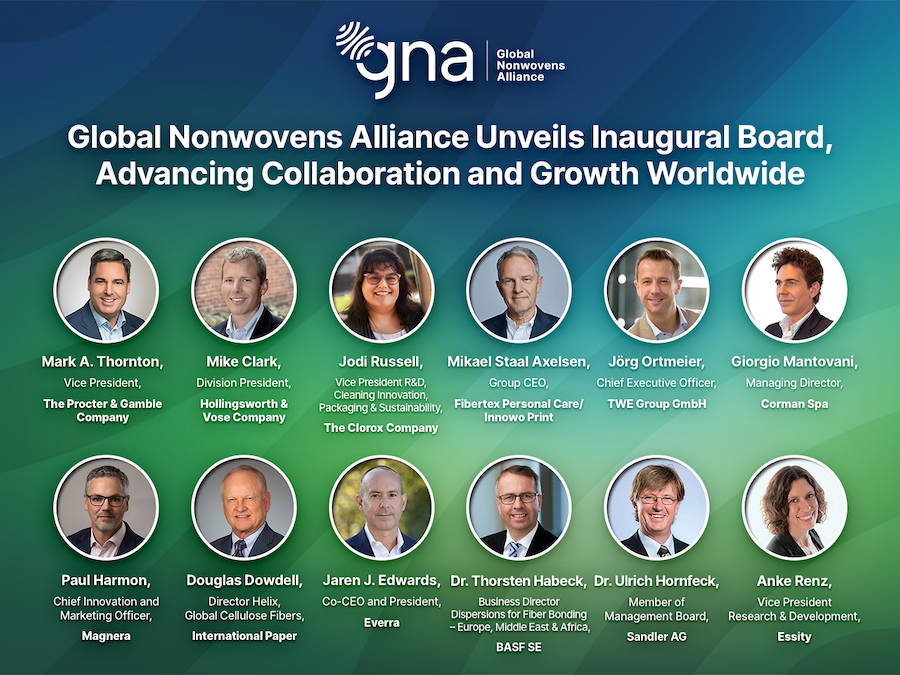
Global Nonwovens Alliance unveils Inaugural Board, advancing collaboration and growth worldwide

The Global Nonwovens Alliance (GNA), a tax-exempt federation jointly founded by INDA, the Association of the Nonwoven Fabrics Industry, and EDANA, the Voice of Nonwovens, announces the appointment of its founding Board of Directors. This group of leaders represents some of the most influential executives across the nonwovens value chain and reflects GNA’s mission to foster global collaboration, innovation, and growth in the industry.

Latest News

#Spinning

First PA66 spinning plant with EvoQuench successfully commissioned

With the successful commissioning of a multi-digit PA66 spinning line for microfiber yarns, Chinese textile company Shandong Nanshan Fashion Technology Co., Ltd. has added yarn production to its textile value chain.

#Knitting & Hosiery

SHIMA SEIKI returns to ShanghaiTex

Leading flat knitting solutions provider SHIMA SEIKI MFG., LTD. of Wakayama, Japan, together with its Hong Kong and Chinese market subsidiary SHIMA SEIKI (HONG KONG) LTD., will exhibit at the ShanghaiTex 2025 exhibition (Booth No.: Hall N3, Booth A20) held in Shanghai, China this month. This marks the return of SHIMA SEIKI to ShanghaiTex after a 14-year hiatus, its last exhibit at the show having been in 2011.

#Research & Development

Fraunhofer CCPE presents the “Monomaterial Design Set” – Innovative solutions for circular product design

Composite materials made from different types of plastic often extend the lifetime of products but make recycling more difficult in the circular economy. That is why Fraunhofer CCPE has developed the “Monomaterial Design Set”. This new approach helps to reduce the variety of plastics used in durable products and offers circular solutions for designers and product developers.

#Man-Made Fibers

arena introduces renewable LYCRA® EcoMade fiber in its latest swimwear collection

Italian swimwear specialist arena has unveiled a new collection that brings sustainability and performance even closer together. Launched on December 4, the line features swimsuits made from recycled nylon and renewable LYCRA® EcoMade fiber — the first time the bio-based spandex has been used commercially in swimwear.

TOP