[pageLogInLogOut]

#Nonwovens / Technical Textiles

Autoneum further optimizes environmental performance of sustainable Pure technologies for Renault Emblème
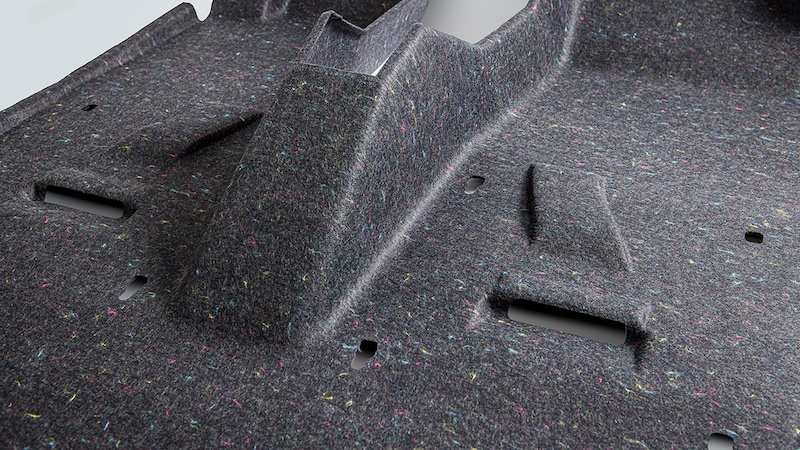
Autoneum has supported Renault Group in the development of Renault Emblème, a low-carbon demonstration car designed to reduce greenhouse gas emissions by 90 percent over its entire life cycle. As a key partner of the project, Autoneum further optimized the environmental performance of its sustainable Pure technologies, which were used for numerous components in the vehicle interior and exterior.
Renault Embleme Polyester carpet by Autoneum © 2025 Autoneum


Leveraging its proven expertise in the development of lightweight and fully recyclable monomaterials with a high recycled content, as well as in the areas of life cycle analysis (LCA) and product innovation, Autoneum was able to reduce the carbon footprint of its parts and contribute to a significant reduction in vehicle weight for Renault Emblème.

Increasingly stringent regulations to reduce greenhouse gas emissions on a global scale, new directives and the electrification of mobility require innovative approaches from the entire automotive industry. To support vehicle manufacturers in achieving their sustainability targets, Autoneum continuously optimizes the environmental performance of its products and processes: from further increasing the share of recycled content and the end-of-life recyclability of its lightweight technologies to reducing waste and shifting to renewable energy in its production facilities. In addition, the Company is working closely with customers and partners to validate data and products together. One of the most recent examples of such a successful collaboration is Autoneum’s contribution to Renault Emblème.

The Renault Emblème demonstration car emits 90% fewer greenhouse gases over its entire life cycle than a comparable vehicle produced today. To achieve these ambitious decarbonization targets, Renault Group assembled more than twenty suppliers from across the industry to participate in specialized projects in five different areas: eco-design, raw material selection, manufacturing, use and end of life. In addition to providing valuable expertise in the areas of LCA and product development, Autoneum’s contribution entailed the further optimization of its environmentally friendly Pure technologies, which already today are characterized by an excellent sustainability performance across the product life cycle and also include the Company’s growing portfolio of monomaterial technologies made of 100 percent polyester.

Autoneum’s innovative and lightweight materials were used for around thirty fiber-based components in the interior and exterior of Renault Emblème, including the carpet, the underbody panels and wheelhouse outer liners as well the front and rear trunk. Thanks to the high recycled content, the waste-free production process and the excellent recyclability of the materials at the end of their service life, Autoneum was able to reduce drastically the carbon footprint of the components. This outstanding achievement was made possible by further boosting the sustainability performance of existing technologies such as Ultra-Silent, Propylat PET, Hybrid-Acoustics and Autoneum’s monomaterial polyester carpet systems. In addition, the parts contributed to a weight reduction, which positively affected both the carbon footprint and the range of the electric car.

The collaboration with customers and other leading industry representatives in joint projects such as Renault Emblème enables Autoneum to explore new avenues and push the boundaries when it comes to finding innovative ways to further optimize the environmental performance of its products and manufacturing processes – today and in the future. The Renault Emblème demonstration car was first unveiled at the Paris Motor Show in October 2024. More in-depth information about the project, including further details on Autoneum’s contribution and innovation roadmap, will be provided in the first half of 2025.


More News from Autoneum

#Technical Textiles

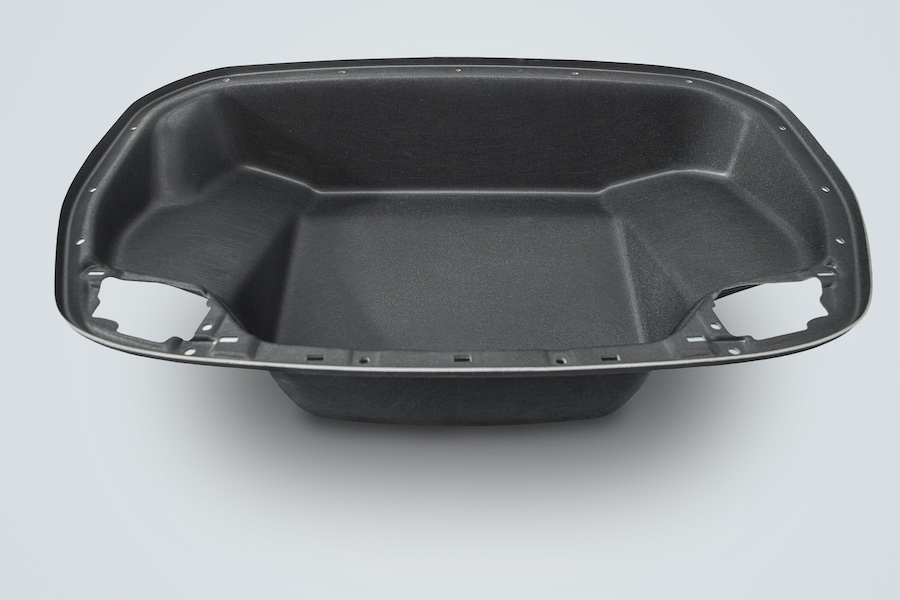
Sustainable, lightweight, and sound absorbing: Polyester-based front trunk solution for BEVs

As car manufacturers look to further reduce their carbon footprint, Autoneum has developed an innovative front trunk solution for battery electric vehicles (BEVs), made entirely from polyester-based textile. The Ultra-Silent Frunk offers significant weight reduction, improved acoustic and thermal insulation, and uses up to 70 percent recycled material, supporting sustainable and efficient vehicle design. Autoneum, global technology leader in acoustic and thermal management for vehicles, has already received orders for the new frunk from three major OEMs in Asia and Europe to be built in three BEV models. Series production for two BEVs has been underway in China and Germany since last year.

#Technical Textiles

Autoneum reports solid revenue, achieves strong EBIT margin of well above 5 percent in fiscal year 2025

Despite a challenging market environment, Autoneum reached key strategic milestones in fiscal year 2025. With two acquisitions in China, the Group significantly strengthened its position in the strategic growth market of Asia. Revenue consolidated in Swiss francs totaled CHF 2’290.6 million (2024: CHF 2’338.7 million). In local currencies, revenue increased to CHF 2’393.3 million.

#Technical Textiles

Autoneum and Polestar set new benchmarks for passenger experience and sustainability

As the global market leader in sustainable acoustic and thermal management, Autoneum is a key supplier of interior and exterior components for the highly anticipated Polestar 5 model. The successful collaboration between Autoneum and Polestar marks a significant milestone in sustainable automotive engineering: the electric grand tourer sports car features several innovations in lightweight, fully recyclable polyester-based components that ensure a superior driving experience. Polestar 5 was revealed at the IAA Mobility 2025 in Munich and is available in 24 markets.

#Nonwovens / Technical Textiles

N-Join1: an innovative, adhesive-free carpet that supports the circular economy

Vehicle manufacturers are increasingly looking for recycling solutions for end-of-life vehicles to meet sustainability targets and comply with new regulations that are accelerating the automotive industry’s transition toward a circular economy. In response, Autoneum has developed the N-Join1 carpet. This innovative, monomaterial carpet system, made from recycled materials, eliminates the need for latex and adhesives, thereby offering an eco-friendly solution for vehicle interiors.

More News on Nonwovens / Technical Textiles

#ITMA Asia + CITME Singapore 2025

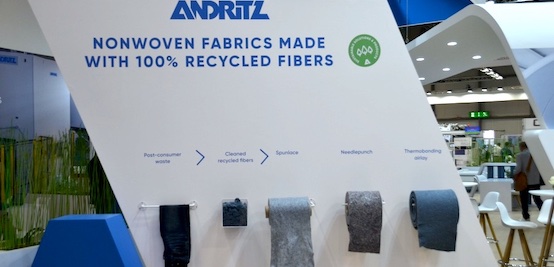
ANDRITZ sets focus on textile recycling and durable nonwoven production technologies at ITMA Asia 2025

International technology Group ANDRITZ will be presenting its innovative nonwovens production and textile solutions at ITMA ASIA + CITME 2025 in Singapore, from October 28 to 31, 2025 (Hall 2, D106). ANDRITZ will showcase its MMCF production plants, textile sorting and recycling, bast fiber processing, needlepunch, airlay, and life-cycle service technologies, with a focus on sustainable solutions. Discover how these innovations can grow your business opportunities and support a greener future.

#ITMA Asia + CITME Singapore 2025

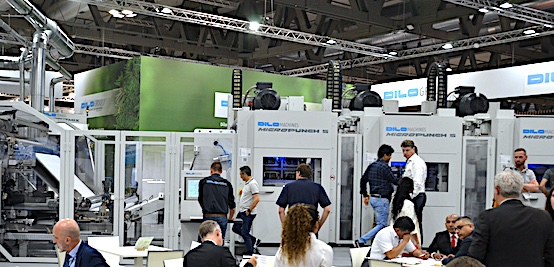
Dilo Group at ITMA ASIA Singapore 2025

At ITMA ASIA Singapore, the Dilo Group will exhibit at Booth No. H2 – D202. Together with Kansan Materials, Izmir, the company will present its latest developments and looks forward to welcoming visitors to exchange ideas and explore innovations in needling technology.

#Nonwovens

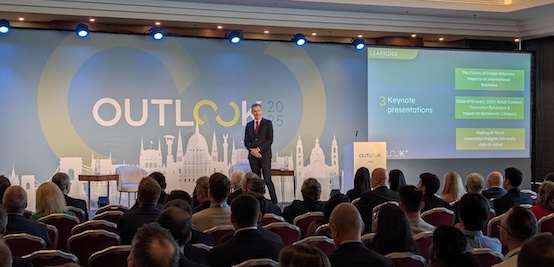
OUTLOOK™ 2025: Charting a sustainable and innovative future for the Nonwovens Industry

EDANA concluded its flagship event, OUTLOOK™ 2025, last week, marking it as a major success and addressing the biggest questions facing the industry. The three-day conference highlighted the urgent need for a unified approach to sustainability, regulation, and innovation in the absorbent hygiene and wipes sectors.

#Nonwovens

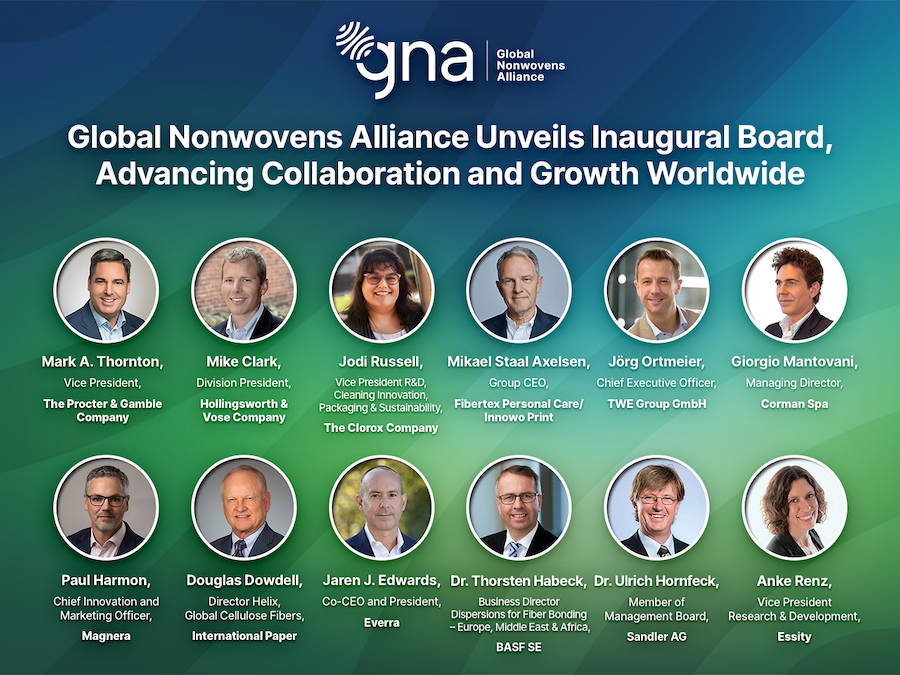
Global Nonwovens Alliance unveils Inaugural Board, advancing collaboration and growth worldwide

The Global Nonwovens Alliance (GNA), a tax-exempt federation jointly founded by INDA, the Association of the Nonwoven Fabrics Industry, and EDANA, the Voice of Nonwovens, announces the appointment of its founding Board of Directors. This group of leaders represents some of the most influential executives across the nonwovens value chain and reflects GNA’s mission to foster global collaboration, innovation, and growth in the industry.

Latest News

#Techtextil 2026

Modernizing Needling – DiloGroup at Techtextil & INDEX 2026

With the theme “Modernizing Needling”, the DiloGroup presents a comprehensively enhanced portfolio for needling technology. The objective is to further increase the performance and application range of needlefelt production lines in terms of productivity, flexibility, and the development of new products, thereby meeting the growing demands of modern technical textiles.

#Advertorial

New Gravimax MMX-R X-ray sensor platform opens up new application fields

The demands placed on quality control in web-based production processes are increasing: materials are becoming more complex, basis weights are varying more widely, and at the same time, pressure is growing to make processes more efficient and transparent. Precise measurement data across the entire web width has therefore become a key factor in ensuring stable production processes. With its new Gravimax MMX-R sensor platform, Mahlo introduces a radiometric measurement solution designed to set new standards in determining basis weight and material composition. The platform combines advanced X-ray technology with newly developed signal processing, enabling measurement tasks that previously often required multiple sensor technologies.

#Recycling / Circular Economy

Carbios confirms Longlaville plant in France following financing progress

Carbios has reaffirmed its plans to build its Longlaville plant in France within a project financing framework, targeting the start of production in the first half of 2028. The company also reports a solid cash position of around €60 million at the end of 2025 and has appointed Benoît Grenot as Deputy Chief Executive Officer to support the execution of its strategic projects.

#Composites

KARL MAYER strengthens partnerships in the composites industry at JEC World 2026

KARL MAYER further strengthened its role as a reliable and competent partner to the composites industry at JEC World 2026. The global market leader in textile machinery manufacturing used the trade show to meet key customers, establish numerous new contacts, and engage in in-depth technical discussions.

TOP