[pageLogInLogOut]

#Nonwovens / Technical Textiles

Sustainable solutions at nonwovens - Reducing gas consumption at drying of spunlace production
© 2022 PLEVA
Energy management and efficiency have never been more important than nowadays. This applies especially to energy intensive processes such as the nonwoven production. To address this topic, the Center of Excellence in Nonwovens at the STFI (Sächsisches Textilforschungsinstitut e.V., in Chemnitz, Germany aimed to design an energy efficient spunlace production.

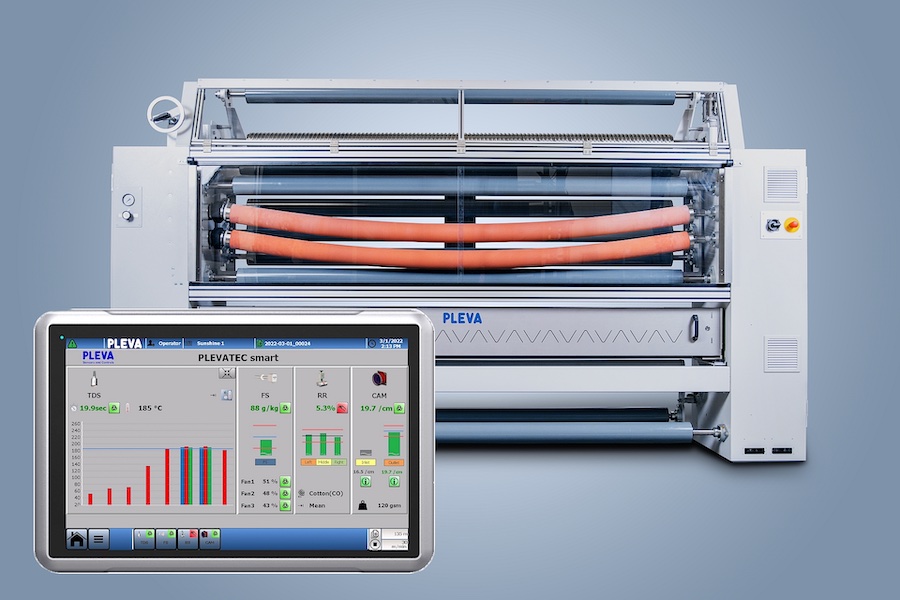
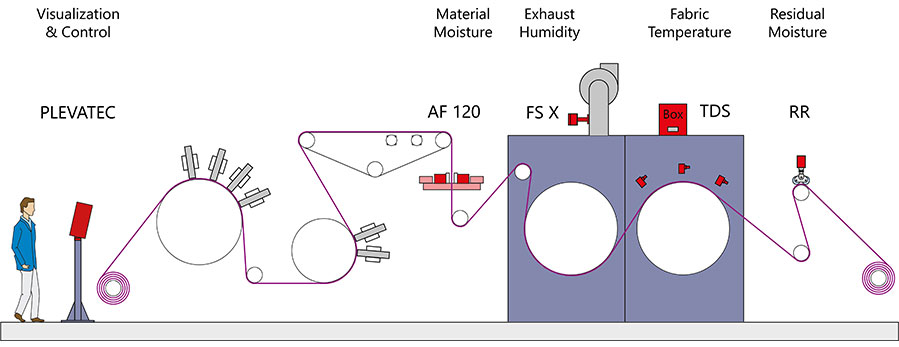
Thus, at their spunlace laboratory facility a measurement and control concept by PLEVA was implemented to optimize the process to highest energy efficiency. This includes sensors for residual moisture, fabric temperature, exhaust humidity, and a process control system.

Solutions installed at spunlace production line of STFI

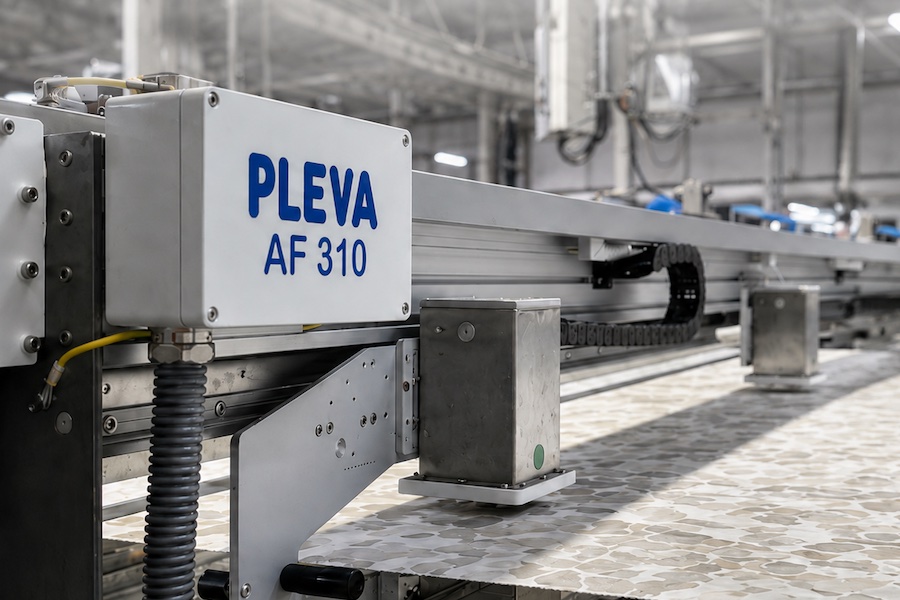
AF 120 After the spunlace process, a contactless microwave moisture measurement with the sensor AF 120 is used due to the conditionally high residual moisture content. The sensor consist of 2 measuring heads, the transmitter and the receiver. The measuring principle is based on microwave absorption by the water content of the nonwoven. The more water there is in the nonwoven, the lower the signal at the receiver. The magnitude of the absorption is a measure of the absolute residual moisture content of the nonwoven.

This determination of the water content is used to optimize the subsequent dryer.

TDS Inside of the drum dryer, the nonwoven temperature is monitored with 3 TDS infrared sensors. This ensures that the quality of the spunlace nonwoven is not affected by overheating. The used infrared measurement is based on heat radiation exchange between the spunlace nonwoven and the infrared sensor. The measuring range of the TDS sensor is 0 - 250°C.

FS X The exhaust air humidity in the screen drum dryer is monitored by the FS X air humidity sensor and can be regulated in the production process via a exhaust flap control. The absolute air humidity (water vapor) in the exhaust exit tube of the drum dryer is measured. The setting of the optimum air humidity value should be e.g. 90 g water/kg air under production conditions for textile dryers.

RR For measuring the low residual moisture after the drum dryer and thus for controlling the fiber-dependent drying temperature, an RR sensor is used. It is used in applications of up to max. 30 % residual moisture. This sensor is a tandem roller sensor which monitors the residual moisture measurement in the center of the nonwoven. The active principle is the contact measurement of very low residual moisture based on electrical conductivity. The defined contact pressure and perfect alignment to the nonwoven with the tandem roller sensor ensure the highest accuracy. Another advantage is the compensation of electrostatic charge at low residual moisture levels and for fabrics with synthetics.


PLEVATEC With the process visualization, the fabric temperature, residual moisture and exhaust air moisture measured by the corresponding sensors are monitored and the process values are adjusted on the spunlace system. Andreas Nestler, Research Associate at STFI highlights the newly achieved possibilities: “The profile of the residual moisture after the AquaJet and the drying temperature (fabric temperature) allow new optimization possibilities in the drying process. Gentle heating curves become possible, which prevent nonwoven surface damage. Also, the process and tolerance monitoring enables the improvement of the nonwoven quality, as it is not exposed to unnecessarily high drying temperatures.” This is also an important aspect in terms of sustainability, as there are no more second choice goods or rejects, which implies savings of valuable resources.

Furthermore, a comprehensive 10-day trend display/history and recipe management is possible. The drying process is carried out with highest energy efficiency and continuous data monitoring. The process visualization is a modular visualization and control system for the material moisture and for the drying process. At various customer trials with this implemented system of sensors and process control, the goal of achiving an energy efficient nonwoven production line was achieved. With the used technology it was possible to lower the drying temperature by 40°C (from 100°C to 60°C) running on target moisture. For viscose the residual moisture was set to 5-7%. In sum with this optimizations a used gas volume reduction of 20% was achieved with a given full transferability to industrial dryers.

More information about sustainable solutions and PLEVA can be found on

http://www.pleva.org

https://www.stfi.de/en/research/nonwovens
More News from Pleva GmbH

#Techtextil 2026

Smart sensors, smart savings - Reducing energy and cost in textile finishing

As energy prices, sustainability requirements and quality expectations continue to rise, manufacturers of technical textiles face increasing pressure to optimize efficiency while ensuring process reliability. At the same time, skilled labor shortages require production systems that are intuitive, automated and easy to manage. PLEVA addresses these challenges with robust, maintenance-friendly sensor technologies combined with intelligent process control.

#ITMA Asia + CITME Singapore 2025

Smart automation to fix gaps of skilled staff

Advanced technology for high quality and efficiency at textile finishing - ITMA Asia 2025, Singapore As customer expectations rise and skilled labor becomes increasingly scarce, smart sensor technology and automated control systems have become essential in modern textile finishing. PLEVA meets these challenges with its renowned, robust and reliable sensors, specifically designed for the demanding conditions of textile production.

#Dyeing, Drying, Finishing

Generation change at Pleva: Kathrin and Stephan Pleva join the Management Team

PLEVA GmbH, a leading manufacturer of sensors, measurement and control technology for various industries, announces that Kathrin Pleva and Stephan Pleva have been appointed as Managing Directors of the family-owned company. Together with their father, Dr. Ralf Pleva, they will shape the future of the company.

#Dyeing, Drying, Finishing

SL Smart Weft-Straightener success at Harris Tweed Hebrides, UK

High quality fabric is essential for any finisher who wants to ensure consistent quality and resource efficiency. A particularly important quality criterion is straight weft and straight course fabric. The Scottish tweed manufacturer Harris Tweed Hebrides finishes 100% woolen, handwoven cloth and stands as a world class leader in British luxury cloth with an extensive, high quality product range. The company was looking for a weft-straightening system which, in contrast to the previously used pinwheel system, could not damage the wool.

More News on Nonwovens / Technical Textiles

#ITMA Asia + CITME Singapore 2025

ANDRITZ sets focus on textile recycling and durable nonwoven production technologies at ITMA Asia 2025

International technology Group ANDRITZ will be presenting its innovative nonwovens production and textile solutions at ITMA ASIA + CITME 2025 in Singapore, from October 28 to 31, 2025 (Hall 2, D106). ANDRITZ will showcase its MMCF production plants, textile sorting and recycling, bast fiber processing, needlepunch, airlay, and life-cycle service technologies, with a focus on sustainable solutions. Discover how these innovations can grow your business opportunities and support a greener future.

#ITMA Asia + CITME Singapore 2025

Dilo Group at ITMA ASIA Singapore 2025

At ITMA ASIA Singapore, the Dilo Group will exhibit at Booth No. H2 – D202. Together with Kansan Materials, Izmir, the company will present its latest developments and looks forward to welcoming visitors to exchange ideas and explore innovations in needling technology.

#Nonwovens

OUTLOOK™ 2025: Charting a sustainable and innovative future for the Nonwovens Industry

EDANA concluded its flagship event, OUTLOOK™ 2025, last week, marking it as a major success and addressing the biggest questions facing the industry. The three-day conference highlighted the urgent need for a unified approach to sustainability, regulation, and innovation in the absorbent hygiene and wipes sectors.

#Nonwovens

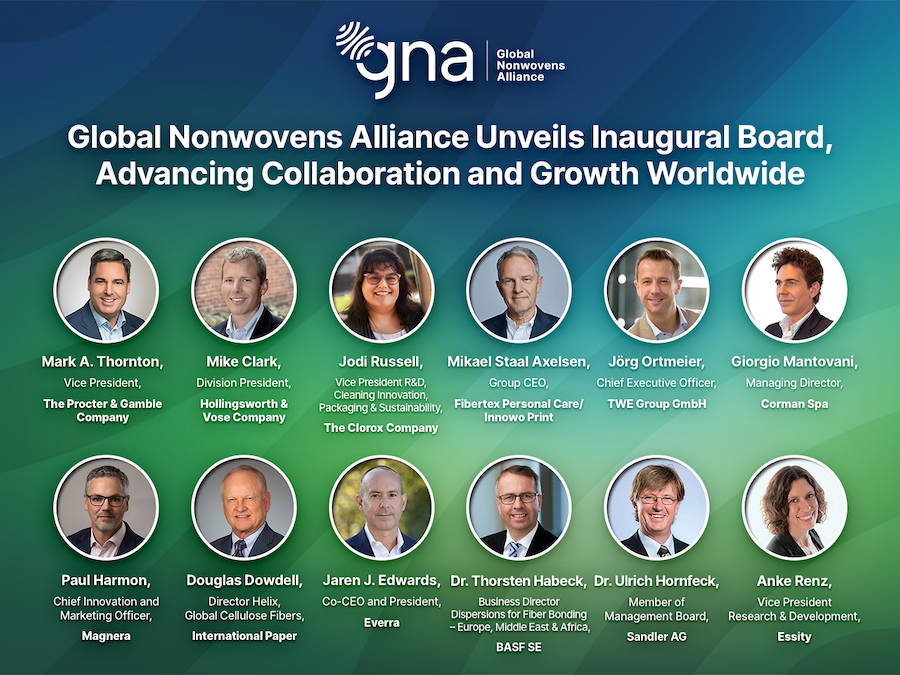
Global Nonwovens Alliance unveils Inaugural Board, advancing collaboration and growth worldwide

The Global Nonwovens Alliance (GNA), a tax-exempt federation jointly founded by INDA, the Association of the Nonwoven Fabrics Industry, and EDANA, the Voice of Nonwovens, announces the appointment of its founding Board of Directors. This group of leaders represents some of the most influential executives across the nonwovens value chain and reflects GNA’s mission to foster global collaboration, innovation, and growth in the industry.

Latest News

#Techtextil 2026

Modernizing Needling – DiloGroup at Techtextil & INDEX 2026

With the theme “Modernizing Needling”, the DiloGroup presents a comprehensively enhanced portfolio for needling technology. The objective is to further increase the performance and application range of needlefelt production lines in terms of productivity, flexibility, and the development of new products, thereby meeting the growing demands of modern technical textiles.

#Advertorial

New Gravimax MMX-R X-ray sensor platform opens up new application fields

The demands placed on quality control in web-based production processes are increasing: materials are becoming more complex, basis weights are varying more widely, and at the same time, pressure is growing to make processes more efficient and transparent. Precise measurement data across the entire web width has therefore become a key factor in ensuring stable production processes. With its new Gravimax MMX-R sensor platform, Mahlo introduces a radiometric measurement solution designed to set new standards in determining basis weight and material composition. The platform combines advanced X-ray technology with newly developed signal processing, enabling measurement tasks that previously often required multiple sensor technologies.

#Recycling / Circular Economy

Carbios confirms Longlaville plant in France following financing progress

Carbios has reaffirmed its plans to build its Longlaville plant in France within a project financing framework, targeting the start of production in the first half of 2028. The company also reports a solid cash position of around €60 million at the end of 2025 and has appointed Benoît Grenot as Deputy Chief Executive Officer to support the execution of its strategic projects.

#Composites

KARL MAYER strengthens partnerships in the composites industry at JEC World 2026

KARL MAYER further strengthened its role as a reliable and competent partner to the composites industry at JEC World 2026. The global market leader in textile machinery manufacturing used the trade show to meet key customers, establish numerous new contacts, and engage in in-depth technical discussions.

TOP