[pageLogInLogOut]

#Nonwovens / Technical Textiles

Non-nuclear measurement for spunlaced nonwovens
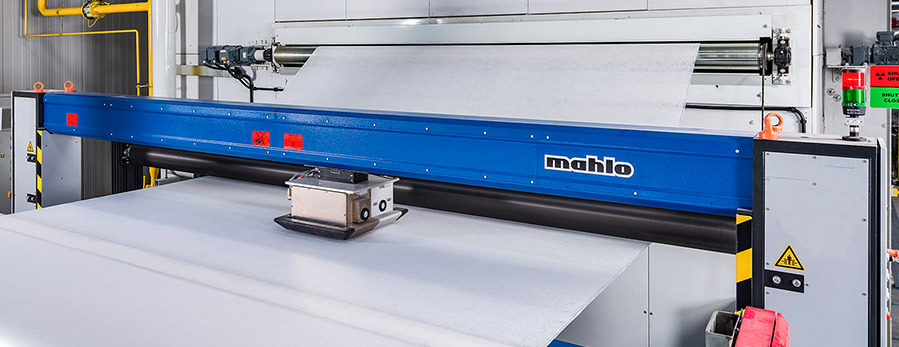
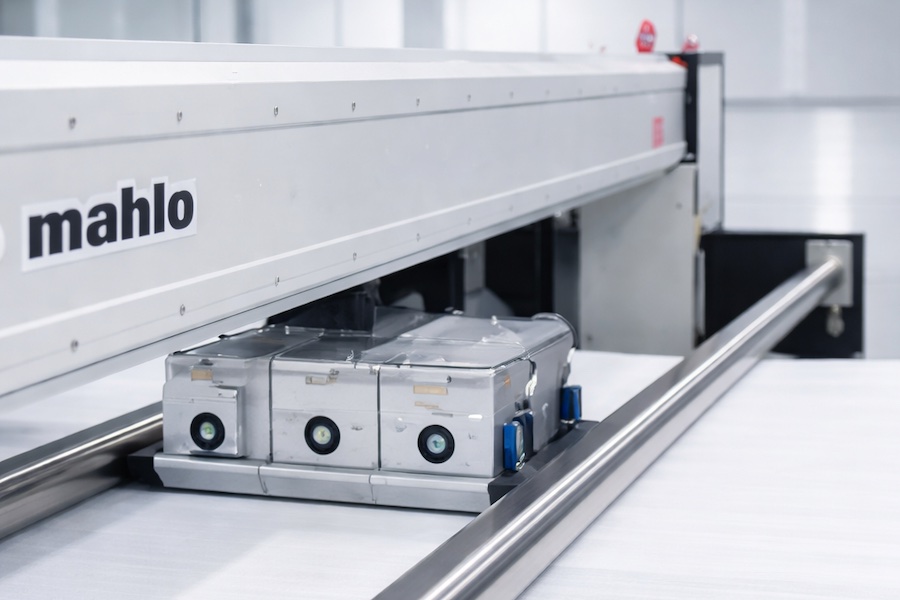
Measuring Spunlace Nonwovens with Infrared Sensor Infralot IMF (c) 2020 Mahlo
Mouth and nose protection, disposable protective gowns and gloves are currently among the most important articles in the corona crisis. Above all, medical personnel and first-aiders such as the fire brigade and police are dependent on them - and must be able to rely 100 percent on their functionality. With its systems for process control and quality measurement, Mahlo GmbH + Co. KG has been supporting manufacturers in the reliable production of high-quality nonwoven articles for decades.

Mahlo infrared technology for the most accurate results

In a nonwovens line, the moisture content after spunlacing and the basis weight and residual moisture profile after drying are important parameters for ensuring quality and optimizing the production process. The production process has to run in such a way that the product is guaranteed to have the desired functions, but still be as cost-effective as possible for the manufacturer. The key to success is automated measurement and control of these essential parameters.

For example, if the weight does not correspond to the specifications, this can lead to errors in functionality, but also to unnecessarily high raw material consumption. A fleece that is too light for medical masks may no longer be able to meet all safety standards and thus become a health hazard. Nonwoven webs that are used as supports for operating tables are also typical spunlaced nonwovens. If this type of product is too heavy, it does not affect function and safety. However, more resources are wasted than actually needed. The result: rising costs and a higher burden on the environment. The same applies to the residual moisture in the product. If the product is too moist, there is a risk of mold growth, and if the fleece is too dry, the energy consumption in the line is too high.

The advantages of quality control are obvious: If critical parameters are systematically controlled and regulated, this is reflected in higher fabric quality. This means less rejects and less consumption of raw materials. This not only saves manufacturers time, but also money.
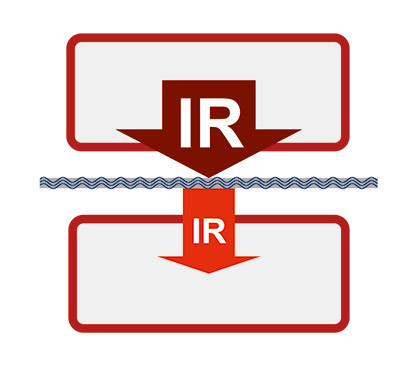
Principle of Infrared Measuring with Transmission (c) 2020 Mahlo


Basis weight and moisture analysis with non-nuclear measurement

A conventional method for determining both values is to measure the moisture with a simple infrared or microwave sensor in combination with a beta or X-ray sensor for the basis weight. Because of the radiation and the safety requirements associated with it, the user would like to avoid nuclear measurement if possible. This is easily possible with Mahlo's sensor technology. For spunlace products, mainly fibres such as cotton, PE, PET or rayon are used. These have the pleasant characteristic that they absorb light in the near infrared range.


Water and the other materials have different spectral ranges and can thus be distinguished. By measuring the attenuated radiation, the moisture content and the weight per unit area of different materials can be determined. Therefore, only one Mahlo infrared sensor, calibrated for the respective fibre types, is required to determine and evaluate the values. The measuring process is contactless, non-destructive and without unwanted influence on the product properties.
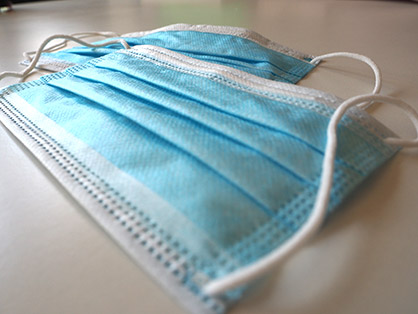
Face masks made from nonwovens (c) 2020 Mahlo


This method is particularly useful when a manageable quantity of different goods is produced. The calibration is adapted to the products and stored in the article memory.

Mahlo has already successfully implemented many such applications and offers the user a perfect tool with high measuring accuracy and easy handling. Our technical service ensures that the desired measures are implemented 100%. Not only can products with "zero defects" be manufactured continuously, but quality, efficiency and profit can also be increased in the long term.

More detailed information about the products, brochures for download as well as topic-related technical articles can be found on the website of Mahlo GmbH + Co KG at:

http://www.mahlo.com.


More News from Mahlo GmbH + Co. KG

#Dyeing, Drying, Finishing

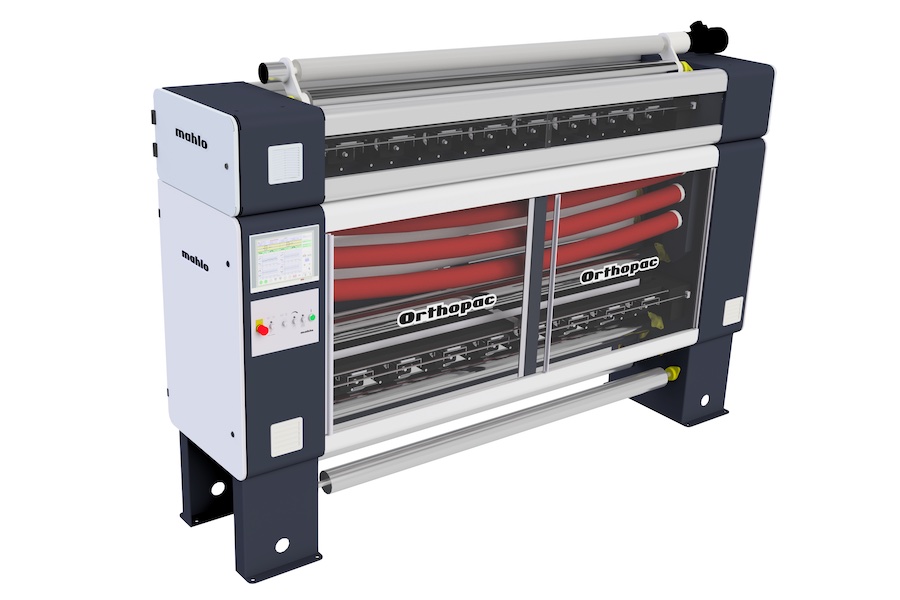
Orthopac RVMC-20 plus: German Engineering for Smarter Weft Straightening

In times of rising cost pressure and growing quality demands, textile producers worldwide are searching for solutions that combine precision, efficiency, and sustainability. With its latest innovation, the Orthopac RVMC-20 plus, Mahlo once again demonstrates the strength of German engineering: improving proven technology to meet today’s challenges.

#Dyeing, Drying, Finishing

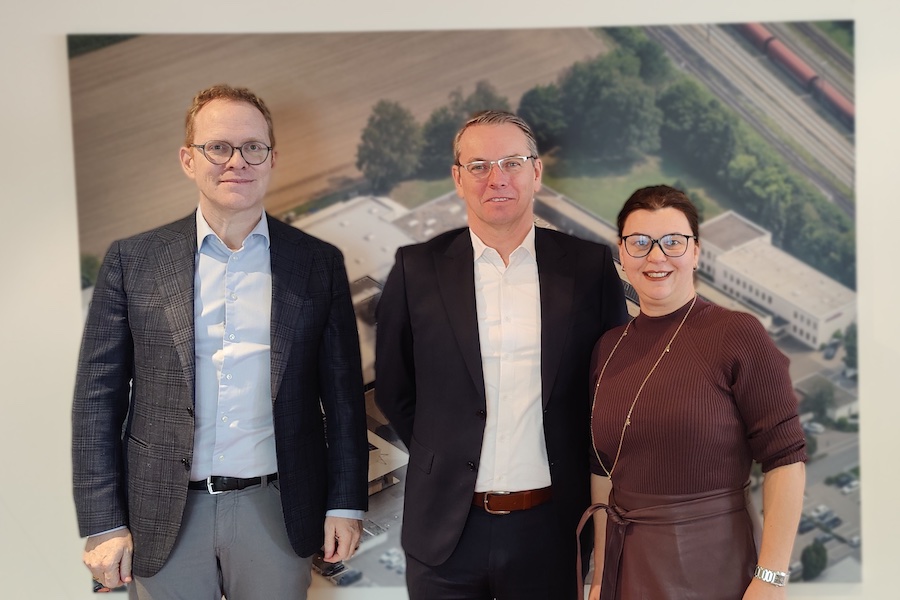
Stefan Moll becomes new CEO of the machinery manufacturer

Starting January 1, 2026, Stefan Moll will take over the management of Mahlo GmbH + Co. KG, the world’s leading provider of measurement and control technology for web-shaped materials. With this move, Mahlo is focusing on the long-term safeguarding of its market position and technological leadership. The current CEO, Rainer Mestermann, will leave the company after 14 years as part of a planned succession arrangement.

#Dyeing, Drying, Finishing

Knitex Industries Ltd. (Mondol Group) invests in advanced Mahlo technology

Bangladesh’s Knittex Industries Ltd. is known for its commitment to top-quality knitwear and responsible produc-tion. To further enhance fabric quality, the company has invested in a Mahlo Orthopac RVMC-15 weft straightener. Installed by Tootal Quality Resources, the system ensures perfect fabric alignment and supports Knittex’s goal of continuous improvement.

#ITMA Asia + CITME Singapore 2025

Intelligent technologies for sustainable textile production

From October 28 to 31, 2025, the international textile industry will gather at ITMA Asia in Singapore – and Mahlo will be present as part of the "German Pavilion Finishing" with innovative solutions for process optimization. Under the motto “More efficient. More precise. More sustainable.”, the Bavarian family-owned company will present forward-looking technologies for resource-efficient and quality-oriented textile production at booth H7-A103.

More News on Nonwovens / Technical Textiles

#ITMA Asia + CITME Singapore 2025

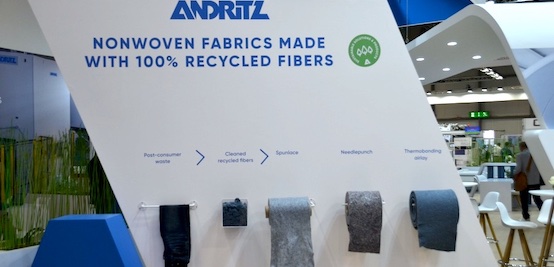
ANDRITZ sets focus on textile recycling and durable nonwoven production technologies at ITMA Asia 2025

International technology Group ANDRITZ will be presenting its innovative nonwovens production and textile solutions at ITMA ASIA + CITME 2025 in Singapore, from October 28 to 31, 2025 (Hall 2, D106). ANDRITZ will showcase its MMCF production plants, textile sorting and recycling, bast fiber processing, needlepunch, airlay, and life-cycle service technologies, with a focus on sustainable solutions. Discover how these innovations can grow your business opportunities and support a greener future.

#ITMA Asia + CITME Singapore 2025

Dilo Group at ITMA ASIA Singapore 2025

At ITMA ASIA Singapore, the Dilo Group will exhibit at Booth No. H2 – D202. Together with Kansan Materials, Izmir, the company will present its latest developments and looks forward to welcoming visitors to exchange ideas and explore innovations in needling technology.

#Nonwovens

OUTLOOK™ 2025: Charting a sustainable and innovative future for the Nonwovens Industry

EDANA concluded its flagship event, OUTLOOK™ 2025, last week, marking it as a major success and addressing the biggest questions facing the industry. The three-day conference highlighted the urgent need for a unified approach to sustainability, regulation, and innovation in the absorbent hygiene and wipes sectors.

#Nonwovens

Global Nonwovens Alliance unveils Inaugural Board, advancing collaboration and growth worldwide

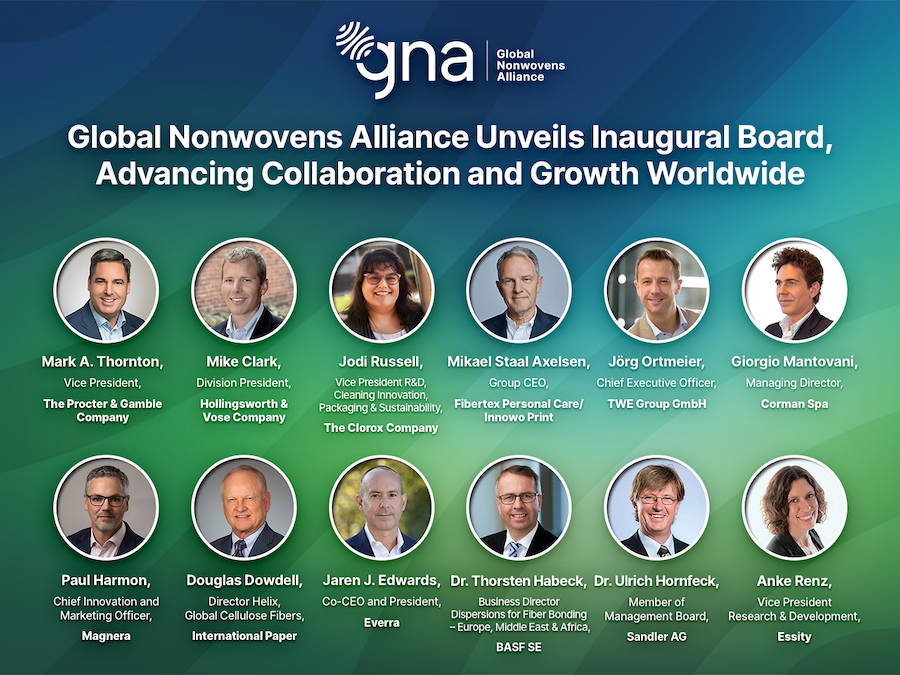
The Global Nonwovens Alliance (GNA), a tax-exempt federation jointly founded by INDA, the Association of the Nonwoven Fabrics Industry, and EDANA, the Voice of Nonwovens, announces the appointment of its founding Board of Directors. This group of leaders represents some of the most influential executives across the nonwovens value chain and reflects GNA’s mission to foster global collaboration, innovation, and growth in the industry.

Latest News

#Sustainability

Ying McGuire becomes new CEO of Cascale

Cascale today announced the appointment of Ying McGuire as Chief Executive Officer, effective June 1, 2026.

#Technical Textiles

Sustainable, lightweight, and sound absorbing: Polyester-based front trunk solution for BEVs

As car manufacturers look to further reduce their carbon footprint, Autoneum has developed an innovative front trunk solution for battery electric vehicles (BEVs), made entirely from polyester-based textile. The Ultra-Silent Frunk offers significant weight reduction, improved acoustic and thermal insulation, and uses up to 70 percent recycled material, supporting sustainable and efficient vehicle design. Autoneum, global technology leader in acoustic and thermal management for vehicles, has already received orders for the new frunk from three major OEMs in Asia and Europe to be built in three BEV models. Series production for two BEVs has been underway in China and Germany since last year.

#Raw Materials

Modern testing methods for raw cotton

The 38th International Cotton Conference Bremen will take place from 25 to 27 March 2026 at the Bremen Parliament. This conference has traditionally stood for in-depth expertise and international exchange. The program will focus on technical innovations, market trends, and regulatory frameworks across the entire value chain – from agriculture to the circular economy. With high-profile speakers, the conference is regarded as the key meeting point for the global cotton industry. Today’s focus: Cotton quality and testing methods.

#Spinning

Rieter responds to higher raw material prices

Global political and economic developments have been leading to rising raw material and energy costs for some time. The textile machinery industry is also affected by this trend. Rieter machines and components consist to a large extent of steel, copper, aluminum and electronics. These materials in particular have seen higher demand and higher prices in recent months.

TOP