[pageLogInLogOut]

#Nonwovens / Technical Textiles

Plaster grid warp knitted fabric for the billion-Euro market in China
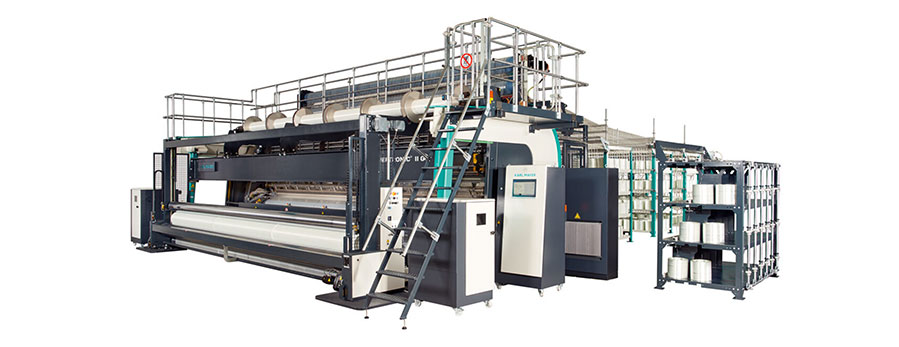
WEFTTRONIC II G (c) 2020 KARL MAYER
KARL MAYER Technische Textilien has developed a new warp knitting machine with weft-insertion and thus further differentiated its range offer in this field. The new model, the WEFTTRONIC® II G, is specifically designed to produce light to medium-heavy grid structures.

The WEFTTRONIC® II G for glass processing is now taking off in China, too

The stable grid textiles are used as plaster grids and geogrids, as well as carriers for grinding discs – and are produced extremely efficiently on the WEFTTRONIC® II G. Geogrid fabrication is now 60 % more productive compared to the previous version. In addition, less expensive yarns can be processed into high-quality textiles: the textile glass fibre material can cost up to 30 % less than leno fabric production. The machine handles technical yarns extremely gently. Its performance is also impressive. The first WEFTTRONIC® II G was ordered by the Polish manufacturer HALICO in early 2019, followed by orders from China in December. “During our most recent trip to China just before Christmas, we were able to win over two new customers for our company,” said Jan Stahr, Sales Manager of KARL MAYER Technische Textilien. Both companies, Shandong Qiyad and Zibo Glasstex (Shandong Fiberglass), are major players in the industry. After purchasing one machine each, they hinted that they may invest in further WEFTTRONIC® II G models.

An influential family company

Shandong Qiyad is a company privately owned by the Ma family. Mr Ma Xingwang Senior holds shares in two other companies, led by his son and nephew respectively. The companies use around 750 rapier looms in total for their production and thus offer efficiency potential: Depending on product quality, between 13 and 22 rapier looms can be replaced by just one WEFTTRONIC® II G. KARL MAYER Technische Textilien offers intensive service support to ensure a seamless changeover to new technology and to a stateof- the-art machine. The strong partnership led to further recommendations. “During our meetings, the Ma family also introduced us to other potential customers,” says Jan Stahr. The native region of Shandong Qiyad, Shanxian (Shandong Province), is well known for its plaster grid production. Around 5000 rapier looms are in operation here. The companies are all part of an association. Jan Stahr is already in the process of scheduling a pilot system with some of these companies.

A state-owned company with vertically integrated production

The state-run Zibo Glasstex is better known as Shandong Fiberglass. The company has made a name for itself internationally as a manufacturer of glass fibres, rovings and textiles. It is among the top 5 manufacturers of glass fibres in China. The company’s customers in this sector include manufacturers in Eastern Europe who are already operating machines by KARL MAYER Technische Textilien. Following the successful introduction of the technology with the first WEFTTRONIC® II G, Zibo Glasstex plans to invest in further machines. According to the company’s own information, it intends to work a market with an annual volume of 2 billion m² of textile glass fibre material and to achieve a significant market share. Zibo Glasstex therefore intends to invest in further machines in the mid-term.


Flexibility put to the test

In order to gain a better understanding of the possibilities relating to glass grid structure production, the new WEFTTRONIC® II G machine will be available for customer trials at KARL MAYER (CHINA) in Changzhou from June 2020. A wide range of equipment options and patterning possibilities will be available to suit a diverse manufacturing process. The different offers can be tested as part of these processing trials. While working on the machine, customers can get a feel for how the design of the fabric influences its properties and product output, and how this correlation can be used to achieve greater efficiency. If, for example, the square cells of a textile grid are formed with a low warpthread stitch density, the weft threads have a significant freedom of movement within the structure. The fabric is relatively unstable, but is manufactured with a high output. Glass grid manufacturers looking for greater efficiency can use the WEFTTRONIC® II G at KARL MAYER (CHINA) to produce warp knitted fabrics with the same properties as their existing products and thus investigate whether there are any advantages. The performance profiles of the textile products are verified by corresponding laboratory values. Companies with vertically integrated production particularly welcome the opportunity to test the machine out. In addition to textiles, they also produce textile glass fibre materials and can therefore test how their own yarns are processed. The trials are competently supervised by KARL MAYER’s trained technical staff. The WEFTTRONIC® II G is based on a technology unfamiliar to many glass grid manufacturers. During these trials, they can also discover how user-friendly the new machine is.
More News from KARL MAYER Textilmaschinenfabrik GmbH

#Knitting & Hosiery

The newcomers HKS 3-M EL ECO and HKS 4-M EL ECO set new standards in the tricot market

Short development cycles, frequent pattern changes, and maximum efficiency – even with small batch sizes: Today's global fashion and apparel market demands more flexibility than ever before. High-performance warp knitting machines with compound needles (HKS) and EL pattern drive are KARL MAYER's answer to this challenge.

#Knitting & Hosiery

KARL MAYER celebrates 35 years of EL pattern drive

KARL MAYER is celebrating an anniversary this year: on 30 November 1990, the first warp knitting machine with electronic guide bar control, the KS 4 EL, was delivered – another milestone for patterning. As early as 1980, the SU gearbox with the MRS42SU had initiated the transition from mechanical chains to digital data.

#ITMA Asia + CITME Singapore 2025

India becomes growth engine for the warp knitting industry

ITMA ASIA 2025 exceeded all expectations for KARL MAYER – above all thanks to the strong interest from India: around 30% of the qualified discussions were held with partners from this traditional textile country. The response underlines the growing importance of the Indian market, which could become the second largest sales region for KARL MAYER after China. The warp knitting industry in particular is developing dynamically.

#Weaving

Solution for lower energy consumption proves itself in practice

Getzner Textil is one of KARL MAYER’s first customers to use PROSIZE with CASCADE. The innovative weaving specialist has tested the steam and condensation system by KARL MAYER and determined the energy savings it achieves. Karl-Heinz Vaaßen, Head of Textile Drying at KARL MAYER, assisted Getzner Textil’s production specialists both with the tests and with all questions relating to CASCADE. In a conversation with Werner Egger, Head of Weaving, and Thomas Rossi, Head of Warp Preparation at Getzner Textil, he learnt more about the system’s benefits for his customer.

More News on Nonwovens / Technical Textiles

#ITMA Asia + CITME Singapore 2025

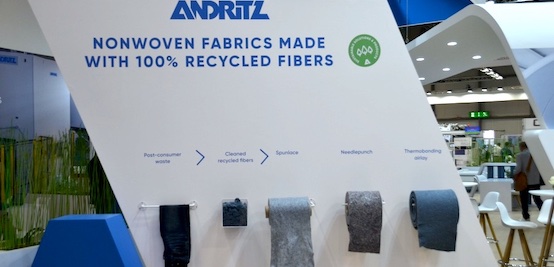
ANDRITZ sets focus on textile recycling and durable nonwoven production technologies at ITMA Asia 2025

International technology Group ANDRITZ will be presenting its innovative nonwovens production and textile solutions at ITMA ASIA + CITME 2025 in Singapore, from October 28 to 31, 2025 (Hall 2, D106). ANDRITZ will showcase its MMCF production plants, textile sorting and recycling, bast fiber processing, needlepunch, airlay, and life-cycle service technologies, with a focus on sustainable solutions. Discover how these innovations can grow your business opportunities and support a greener future.

#ITMA Asia + CITME Singapore 2025

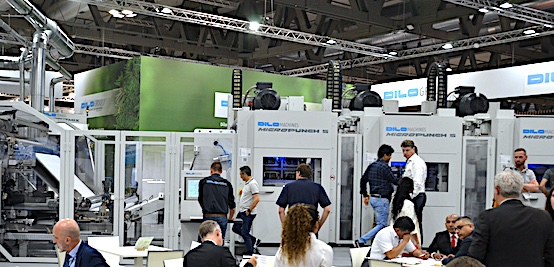
Dilo Group at ITMA ASIA Singapore 2025

At ITMA ASIA Singapore, the Dilo Group will exhibit at Booth No. H2 – D202. Together with Kansan Materials, Izmir, the company will present its latest developments and looks forward to welcoming visitors to exchange ideas and explore innovations in needling technology.

#Nonwovens

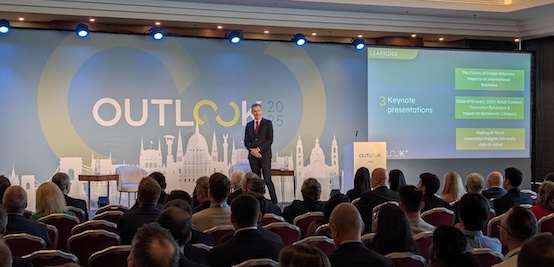
OUTLOOK™ 2025: Charting a sustainable and innovative future for the Nonwovens Industry

EDANA concluded its flagship event, OUTLOOK™ 2025, last week, marking it as a major success and addressing the biggest questions facing the industry. The three-day conference highlighted the urgent need for a unified approach to sustainability, regulation, and innovation in the absorbent hygiene and wipes sectors.

#Nonwovens

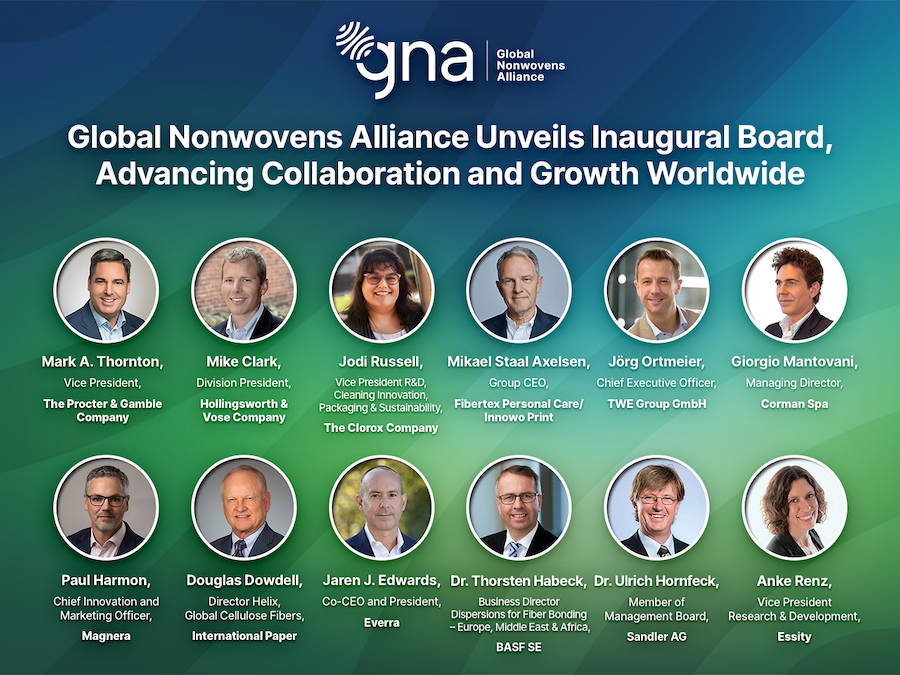
Global Nonwovens Alliance unveils Inaugural Board, advancing collaboration and growth worldwide

The Global Nonwovens Alliance (GNA), a tax-exempt federation jointly founded by INDA, the Association of the Nonwoven Fabrics Industry, and EDANA, the Voice of Nonwovens, announces the appointment of its founding Board of Directors. This group of leaders represents some of the most influential executives across the nonwovens value chain and reflects GNA’s mission to foster global collaboration, innovation, and growth in the industry.

Latest News

#Spinning

First PA66 spinning plant with EvoQuench successfully commissioned

With the successful commissioning of a multi-digit PA66 spinning line for microfiber yarns, Chinese textile company Shandong Nanshan Fashion Technology Co., Ltd. has added yarn production to its textile value chain.

#Knitting & Hosiery

SHIMA SEIKI returns to ShanghaiTex

Leading flat knitting solutions provider SHIMA SEIKI MFG., LTD. of Wakayama, Japan, together with its Hong Kong and Chinese market subsidiary SHIMA SEIKI (HONG KONG) LTD., will exhibit at the ShanghaiTex 2025 exhibition (Booth No.: Hall N3, Booth A20) held in Shanghai, China this month. This marks the return of SHIMA SEIKI to ShanghaiTex after a 14-year hiatus, its last exhibit at the show having been in 2011.

#Research & Development

Fraunhofer CCPE presents the “Monomaterial Design Set” – Innovative solutions for circular product design

Composite materials made from different types of plastic often extend the lifetime of products but make recycling more difficult in the circular economy. That is why Fraunhofer CCPE has developed the “Monomaterial Design Set”. This new approach helps to reduce the variety of plastics used in durable products and offers circular solutions for designers and product developers.

#Man-Made Fibers

arena introduces renewable LYCRA® EcoMade fiber in its latest swimwear collection

Italian swimwear specialist arena has unveiled a new collection that brings sustainability and performance even closer together. Launched on December 4, the line features swimsuits made from recycled nylon and renewable LYCRA® EcoMade fiber — the first time the bio-based spandex has been used commercially in swimwear.

TOP