[pageLogInLogOut]

#Market Analysis & Forecasts

Global Lyocell fiber market (2021 to 2026) - Industry trends, share, size, growth, opportunity and forecasts

The "Lyocell Fiber Market: Global Industry Trends, Share, Size, Growth, Opportunity and Forecast 2021-2026" report has been added to ResearchAndMarkets.com's offering.

The global lyocell fiber market exhibited moderate growth during 2015-2020. Looking forward, the publisher expects the global lyocell fiber market to reach a value of US$ 1.6 Billion by 2026.

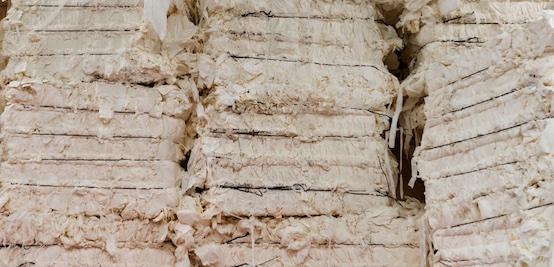
Lyocell fiber is a type of rayon produced from bleached wood pulp, also known as dissolving pulp, which contains cellulose. First developed in 1972, this fiber is manufactured using the process of dry jet-wet spinning. Lyocell fiber exhibits similar properties as other cellulose fibers, including ramie, linen, viscose rayon and cotton. It is lightweight, absorbent, breathable, soft, wrinkle-resistant, durable, capable of replicating a range of textures like silk, leather and suede, and can also be dyed in various colors. Nowadays, manufacturers are adopting natural practices to produce lyocell and eliminating the use of chemicals in the production to obtain organic certification.

Lyocell fabric is utilized in a wide range of industries, including fashion, textile, medical, and paper and pulp. Due to its versatility, lyocell fiber is used as a substitute for cotton and silk to make sportswear, shirts, bed linens, denim, T-shirts, trousers and towels. Its high absorbency profile makes it an ideal material for medical dressings. Apart from this, with the rising environmental concerns, the demand for lyocell fiber is escalating across the globe. Its main component, cellulose, is obtained from well-managed forests and its production does not generate by-products that are harmful to the health or the environment. Moreover, technological advancements have led to the manufacturing of lyocell fiber using advanced N-methyl morpholine-N-oxide (NMMO) technology, which is a simple, resource-conserving, and environment-friendly means of regenerating cellulose fiber.


Companies Mentioned

• Lenzing AG

• Acegreen Eco-Material Technology Co. Ltd

• Aditya Birla Group

• Baoding Swan Fiber Co. Ltd.

• Chonbang Co. Ltd

• Weiqiao Textile Company Limited

• Zhejiang Yaojiang Industrial Group Limited

• China Populus Textile Ltd.

• Great Duksan Corp.

• Qingdao Textiles Group Fiber Technology Co. Ltd

• Smartfiber AG

• Acelon Chemicals & Fiber Corp

Key Questions Answered in This Report:

• How has the global lyocell fiber market performed so far and how will it perform in the coming years?

• What are the key regional markets?

• What has been the impact of COVID-19 on the global lyocell fiber market?

• Which are the popular product types in the market?

• What are the key application segments in the market?

• What are the various stages in the value chain of the global lyocell fiber market?

• What are the key driving factors and challenges in the global lyocell fiber market?

• What is the structure of the global lyocell fiber market and who are the key players?

• What is the degree of competition in the global lyocell fiber market?

• How is lyocell fiber manufactured?


For more information about this report visit:

https://www.researchandmarkets.com/r/ejyjz2



More News from TEXDATA International

#Techtextil 2026

Performance Apparels: Functional textiles drive innovation at Techtextil 2026

From high-performance fibres and advanced membranes to smart textiles and sustainable material concepts – functional apparel is becoming one of the most dynamic innovation fields in technical textiles. At Techtextil 2026, exhibitors demonstrate how new materials, finishing technologies and digital functions are shaping the next generation of protective, workwear and outdoor systems.

#Texprocess 2026

Texprocess 2026: Automation, digitalisation and AI reshape textile processing

Investment decisions in textile processing have become increasingly complex. Rising energy prices, labour shortages and geopolitical uncertainties are forcing companies to prioritise technologies that deliver measurable improvements in efficiency and process stability. This applies not only to apparel production, but also to the processing of technical textiles and high-performance materials. Modernisation projects are therefore being evaluated more selectively – but the pressure to upgrade production systems continues to grow. Texprocess 2026 reflects this tension between cautious investment behaviour and increasing technological demand.

#Techtextil 2026

Textile Chemicals & Dyes: Innovation in Textile Chemistry moves into focus at Techtextil 2026

From PFAS-free finishes and water-saving dyeing technologies to advanced coatings and recycling-compatible formulations, innovation in textile chemistry is accelerating across the industry. Reflecting this development, Techtextil 2026 introduces Textile Chemicals & Dyes as a dedicated product segment, highlighting the growing role of chemical solutions in shaping the next generation of technical textiles.

#Recycling / Circular Economy

textile.4U publishes special edition “Top 100 Textile Recycling Companies 2025”

With a comprehensive 176-page special edition, textile.4U is dedicating its latest issue entirely to one of the most dynamic and influential topics in today’s textile industry: textile recycling. The new issue, published exclusively in high-quality print, presents the Top 100 textile recycling companies researched and selected by TexData – organizations that already play a key role in the transition to circular textiles or are expected to have a significant impact in the near future.

More News on Market Analysis & Forecasts

Latest News

#Techtextil 2026

SAHM Winding Solutions and Vandewiele Automation present integrated automation solution for winding processes

For the first time at the Techtextil trade fair in Frankfurt am Main, Germany (21 - 26 April), SAHM Winding Solutions (Hallo 12.0. / Booth 95) and Vandewiele Automation will be showcasing their combined automation expertise for industrial winding processes. Under the motto “Combining Automation. Maximizing Flow”, the two companies will demonstrate how automated package handling and robot-assisted yarn knotting can be integrated into a continuous production flow.

#Recycled Fibers

UNIFI celebrates recycled and circular Innovation with ninth annual REPREVE® Champions of Sustainability Awards

Unifi, Inc. (NYSE: UFI), the makers of REPREVE® and one of the world’s leading innovators in recycled and synthetic yarns, today announced the winners of its ninth annual REPREVE Champions of Sustainability Awards, recognizing brands and mills that are advancing circularity and responsible manufacturing across the global textile industry.

#Man-Made Fibers

Teijin Frontier announces new Stretch Polyester yarn offering exceptional compatibility with high-performance Polyester materials

Teijin Frontier Co., Ltd. announced today that it has developed a new stretch polyester yarn that offers new opportunities to create comfortable, all- polyester fabrics for sports and outdoor wear. The new polyester yarn demonstrates exceptional compatibility with high-performance polyester materials. Further, Teijin Frontier’s proprietary polymer design and spinning technology impart excellent elasticity to the new yarn. In turn, this yarn adds stretchability and recovery to the advanced functionality and excellent texture of high-performance polyester materials.

#Man-Made Fibers

Lenzing commissions 14 MW power‑to‑heat facility, strengthening grid stability and heat management

The Lenzing Group has successfully commissioned a new power‑to‑heat (P2H) facility with an electrical capacity of 14 megawatts. The installation converts renewable electricity directly into process heat, is fully integrated into the existing heat network at the industrial site, and represents a key building block for a fossil‑free heat supply. As project partner, VERBUND was responsible for the energy‑market integration and will operate the facility for balancing energy marketing, enabling it to respond flexibly to short‑term fluctuations in the power grid.

TOP