[pageLogInLogOut]

#Market Analysis & Forecasts

Global functional textile finishing agents industry (2019 to 2027) - market trajectory & analytics

The "Functional Textile Finishing Agents - Global Market Trajectory & Analytics" report has been added to ResearchAndMarkets.com's offering.

Amid the COVID-19 crisis and the looming economic recession, the Functional Textile Finishing Agents market worldwide will grow by a projected 564.3 Tons, during the analysis period, driven by a revised compounded annual growth rate (CAGR) of 5%. Antimicrobial/Anti-inflammatory, one of the segments analyzed and sized in this study, is forecast to grow at over 6.9% and reach a market size of 346 Tons by the end of the analysis period.

The global analysis and forecast periods covered within the report are 2020-2027 (Current & Future Analysis) and 2012-2019 (Historic Review). Research estimates are provided for 2020, while research projections cover the period 2021-2027.

An unusual period in history, the coronavirus pandemic has unleashed a series of unprecedented events affecting every industry. The Antimicrobial/Anti-inflammatory market will be reset to a new normal which going forwards in a post COVID-19 era will be continuously redefined and redesigned. Staying on top of trends and accurate analysis is paramount now more than ever to manage uncertainty, change and continuously adapt to new and evolving market conditions.

As part of the new emerging geographic scenario, the United States is forecast to readjust to a 3.9% CAGR. Within Europe, Germany will add over 16.9 Tons to the region's size over the next 7 to 8 years. In addition, over 16.5 Tons worth of projected demand in the region will come from Rest of European markets. In Japan, the Antimicrobial/Anti-inflammatory segment will reach a market size of 6.4 Tons by the close of the analysis period. Blamed for the pandemic, significant political and economic challenges confront China. Amid the growing push for decoupling and economic distancing, the changing relationship between China and the rest of the world will influence competition and opportunities in the Functional Textile Finishing Agents market.

Against this backdrop and the changing geopolitical, business and consumer sentiments, the world's second largest economy will grow at 8.7% over the next couple of years and add approximately 156.9 Tons in terms of addressable market opportunity. Continuous monitoring for emerging signs of a possible new world order post-COVID-19 crisis is a must for aspiring businesses and their astute leaders seeking to find success in the now changing Functional Textile Finishing Agents market landscape. All research viewpoints presented are based on validated engagements from influencers in the market, whose opinions supersede all other research methodologies. 

Competitors identified in this market include, among others,
  • Archroma Management LLC
  • BASF SE
  • Bayer AG
  • DowDupont Inc.
  • Ethox Chemicals, LLC
  • Evonik Industries AG
  • Huntsman International LLC
  • Kemira Oyj
  • Kiri Industries Ltd.
  • Omnova Solutions, Inc.
  • Organic Dyes and Pigments
  • Sumitomo Chemical Co., Ltd.
  • The Lubrizol Corporation


Key Topics Covered:

I. INTRODUCTION, METHODOLOGY & REPORT SCOPE

II. EXECUTIVE SUMMARY

1. MARKET OVERVIEW

  • Global Competitor Market Shares
  • Functional Textile Finishing Agents Competitor Market Share Scenario Worldwide (in %): 2019 & 2025
  • Impact of Covid-19 and a Looming Global Recession

2. FOCUS ON SELECT PLAYERS

3. MARKET TRENDS & DRIVERS

4. GLOBAL MARKET PERSPECTIVE

III. MARKET ANALYSIS

IV. COMPETITION

Total Companies Profiled: 41

For more information about this report visit:

https://www.researchandmarkets.com/r/jnh2jl


More News from TEXDATA International

#ITM 2026

ITM 2026: The new geography of textile production

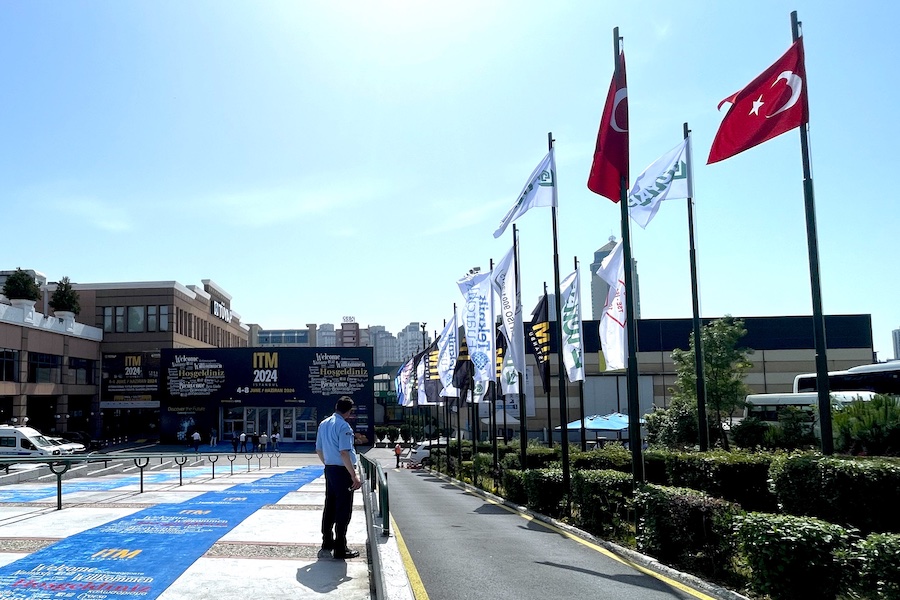
New production hubs are emerging across North Africa and Central Asia, while Türkiye is accelerating its transformation toward higher-value, technology-driven and more sustainable textile manufacturing.

#Research & Development

“Production is a product”

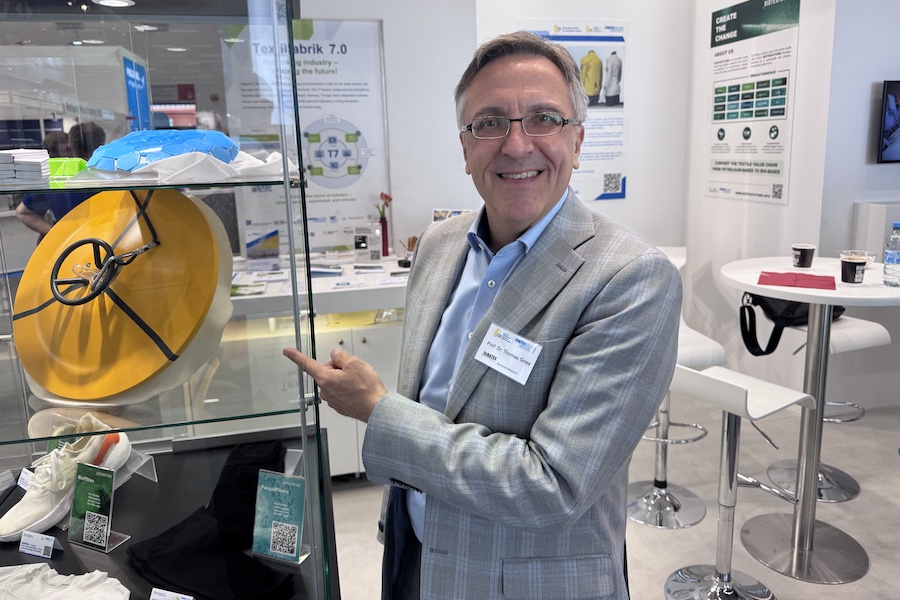
From technical textiles and AI-driven robotics to the limitations of textile circularity: Professor Dr Thomas Gries looks back on more than two decades of development at ITA Aachen. In the interview, he explains why production technology remains a decisive success factor, discusses international collaborations and innovation ecosystems, and shares his views on the transformation of production landscapes and the challenges facing an increasingly regulated industry.

#Knitting & Hosiery

“We need to move away from the price trap and return to a value-driven mindset.”

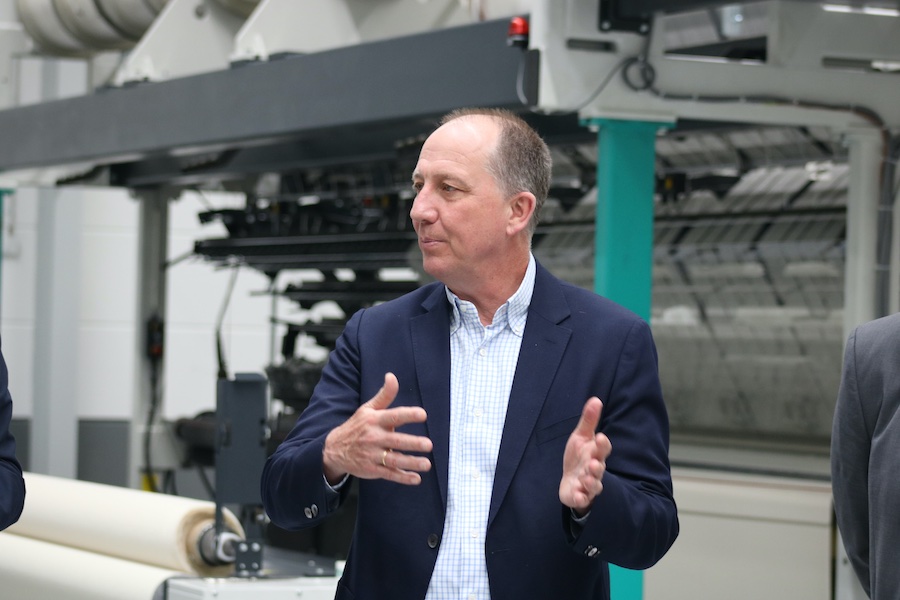
With its new Textile Innovation Center, KARL MAYER is sending a strong signal for innovation, collaboration, and the future of textile applications. In this interview, Karl Josef Mayer discusses new opportunities in warp knitting, the processing of staple fibres, recycling, the changing role of machinery manufacturers, and why the textile industry must once again focus more strongly on the value of textiles. by Oliver Schmidt

#Associations

“Innovation, resilience and international experience remain the great strengths of the Swiss textile machinery industry”

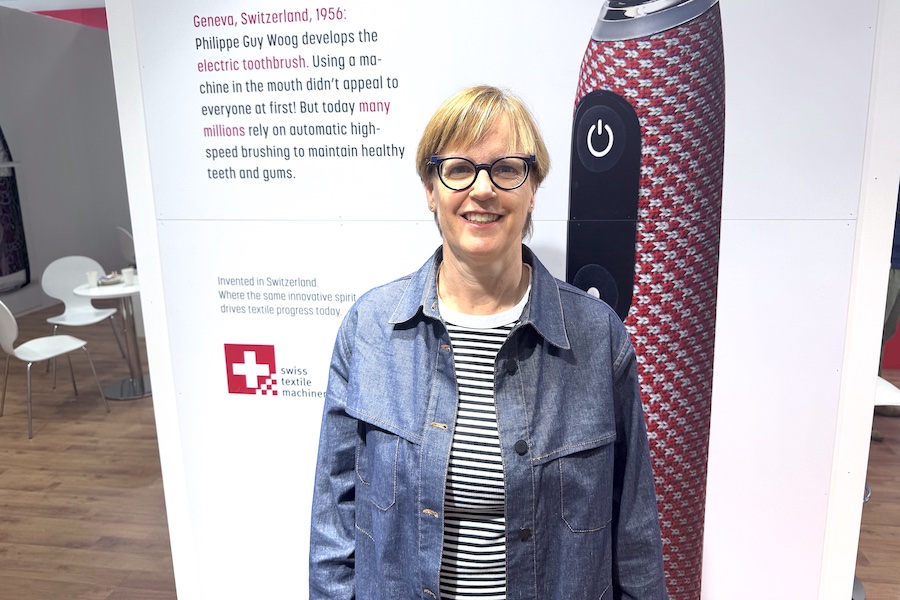
Geopolitical uncertainty, growing competitive pressure from China, new free trade agreements and the shift towards a circular economy are currently reshaping the global textile industry. In this interview, Cornelia Buchwalder discusses the current mood within the Swiss textile machinery sector, the industry’s distinctive innovative strength, new market opportunities in India and Asia, and the technological trends that could shape the upcoming trade fair cycle leading up to ITMA 2027.

More News on Market Analysis & Forecasts

Latest News

#Europe

European textile industry calls for €10 handling fee on ultra-fast-fashion imports

The introduction of the €3 customs duty on low-value imports marks an important milestone in Europe’s efforts to address the challenges created by the rapid growth of ultra-fast-fashion imports. Together with the abolition of the €150 customs duty exemption, it demonstrates that policymakers are willing to act when market distortions become impossible to ignore. However, the European textile and clothing industry considers this a first step rather than the final destination.

#Research & Development

From smart jackets to laser technology: Mona Neubaur explores Textile Factory 7.0

As part of her summer tour, North Rhine-Westphalia’s Minister for Economic Affairs and Climate Action, Mona Neubaur, visited Textilfabrik 7.0 in Mönchengladbach to experience the project’s innovations first-hand. Under the motto “smart and clean”, the visit focused on innovative technologies and sustainable alternatives for textile production - from smart jackets to the decolourisation of textiles using fungal cultures.

#CINTE Techtextil China 2026

Cinte Techtextil China 2026 has opened today, bringing global innovations and resources to Shanghai

As Asia’s premier platform catering to the evolving needs in technical textiles and nonwovens, Cinte Techtextil China has opened today at the Shanghai New International Expo Centre, gathering over 300 exhibitors from 15 countries and regions. Across Halls W3 to W5, this edition will create chances for fast-growing sectors and emerging trends – such as Mobiltech, Medtech & Protech, Indutech and more. The curated zones, pavilions, and fringe programme are designed to better connect exhibitors with targeted buyers from across China, Asia-Pacific, and further afield. Meanwhile, the Association Village will gather international industry associations to foster even more global collaboration.

#Textiles & Apparel / Garment

Texworld Apparel Sourcing Paris opens with focus on AI, circularity and new sourcing regions

More than 1,000 exhibitors from around the world are gathering at Paris-Le Bourget as Texworld Apparel Sourcing Paris opens its doors from August 31 to September 2. With around 500 textile manufacturers and a similar number of apparel and accessories suppliers, the trade fair reflects the ongoing transformation of global sourcing and the growing diversification of supply regions.

TOP