[pageLogInLogOut]

#Textile chemistry

Shima Seiki selects Archroma’s ‘Color Atlas’ library system for their new design software

(c) 2020 Shima Seiki
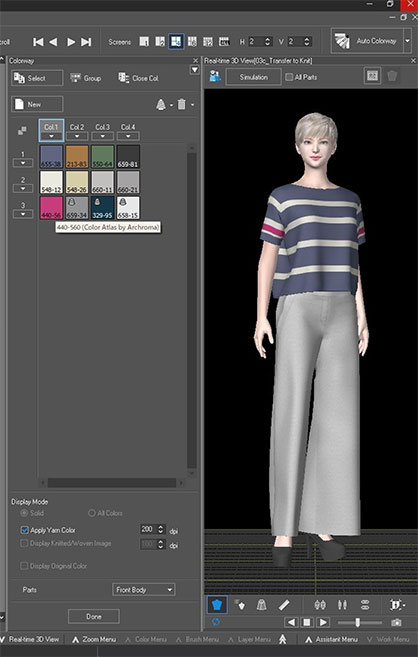
Archroma, a global leader in color and specialty chemicals towards sustainable solutions, today announced that the 4,320 color references of its Color Atlas library have been selected by Shima Seiki and integrated into their ‘SDS-ONE APEX’ series of software for the design, planning and virtual sampling of textile and apparel.

Shima Seiki is a leading provider of digitally optimized solutions for the fashion industry, who combines its on-demand ‘WHOLEGARMENT’ knitting machine with realistic virtual sampling. Based on actual yarn data, fabric simulations generated on the SDS-ONE APEX-series are unparalleled in quality and realism. Design and simulation are available for knits and various other textile applications, and smooth transition to machine programming is possible for quick and accurate design-to-manufacture interface.
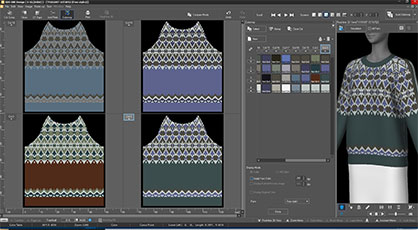
Shima Seiki’s new SDS-ONE APEX design software now features the 4,320 color references of Archroma’s Color Atlas library.<br />
(Photo: Shima Seiki)
Shima Seiki’s new SDS-ONE APEX design software now features the 4,320 color references of Archroma’s Color Atlas library. (Photo: Shima Seiki)


That is where the Color Atlas by Archroma® will considerably benefit to the users of Shima Seiki’s solutions.

The Color Atlas was launched in 2016 to provide fashion designers and stylists with off-the-shelf color inspiration that can be implemented in production with just a few clicks.

The Color Atlas continues to evolve in line with Archroma’s commitment to sustainability through innovation. The company describes it as “The Archroma Way to a sustainable world: safe, efficient, enhanced, it’s our nature”. All color references available in the Color Atlas have been formulated with products that comply with leading international eco-standards, and can be selected based on the desired sustainability profile.
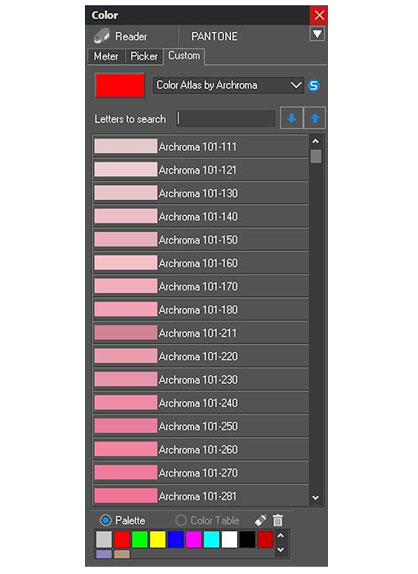
Shima Seiki’s new SDS-ONE APEX design software now features the 4,320 color references of Archroma’s Color Atlas library.<br />
(Photo: Shima Seiki)
Shima Seiki’s new SDS-ONE APEX design software now features the 4,320 color references of Archroma’s Color Atlas library. (Photo: Shima Seiki)


Today, the Color Atlas contains 4,320 colors applicable on cotton poplin, almost the double compared to similar tools available to textile and fashion specialists. Technical support is available to designer, manufacturers, as well as brands and retailers, through Archroma’s global offices - for every single color from its selection to its implementation in production. Engineered color standards empowered by NFC technology are also available for all colors and reproducible in production.


With this new collaboration, the users of the SDS-ONE APEX design software of Shima Seiki will have at their disposal 4320 colors that they can visualize, evaluate and implement, in a considerably accelerated process from the first creative idea to the production to the final outlet, whether online or in brick-and-mortar shops.

“Accurate color evaluation and communication are very important issues for design work”, explains Hideya Ohtani, General Manager, Graphic System Development Division, at Shima Seiki. “We have high expectations for Archroma's Color Atlas to help our APEX series users develop their products in an even more smooth and accurate manner. “

“We are proud to bring our Color Atlas library to the users of Shima Seiki’s extremely advanced design software,” says Chris Hipps, Head of Color Management Services, at the Archroma Brand Studio. “Designers and users of the software will have at their disposal not only color options they never had before but also colors that they can trust will be implementable right away. That’s what we strive to do at Archroma: create a new way of working: safe, efficient and enhanced. It’s our nature!”
Shima Seiki’s new SDS-ONE APEX design software now features the 4,320 color references of Archroma’s Color Atlas library.<br />
(Photo: Shima Seiki)
Shima Seiki’s new SDS-ONE APEX design software now features the 4,320 color references of Archroma’s Color Atlas library. (Photo: Shima Seiki)


More News from Archroma Textile Specialties

#Textile chemistry

Archroma brings high-impact textile innovations to Colombiatex 2026

Archroma, a global leader in specialty chemicals towards sustainable solutions, is proud to announce its participation in Colombiatex 2026, one of the most influential textile and apparel industry events in the Americas. The event will take place in Medellín, Colombia, from January 27 to 29, where Archroma will welcome visitors at Booth PC006.

#Textile chemistry

Archroma and HeiQ partner to bring revolutionary antimicrobial and odor-control solutions to textile industry

Archroma, a global leader in specialty chemicals towards sustainable solutions, and HeiQ, a Swiss deeptech materials innovator active in functional textiles and sustainable fibers, have entered into a co-marketing agreement that combines their complementary strengths to deliver advanced, planet-conscious anti-odor and antimicrobial technologies to brands, retailers, and textile mills worldwide.

#Textile chemistry

Archroma and Lilienweiss join forces to deliver faster and localized color management services in Europe

Archroma, a global leader in specialty chemicals focused on sustainable solutions, today announced its partnership with Lilienweiss, who will begin offering Archroma Color Management solutions across Europe starting January 2026.

#Textile chemistry

Archroma funds development of sustainable textile laboratory at Mumbai’s Institute of Chemical Technology

Archroma, a global leader in specialty chemicals focused on sustainable solutions, has supported the Institute of Chemical Technology (ICT), Mumbai, India in the renovation and development of a sustainable laboratory facility as part of its Corporate Social Responsibility (CSR) program.

More News on Textile chemistry

#Textile chemistry

DyStar Group announces Board transition to drive innovation

DyStar, a leading specialty chemical company with a heritage of more than a century in product development and innovation, announced today the appointment of Ruan Cunfan to its Board of Directors, effective 20 February 2026.

#Textile chemistry

Jeanologia urges industry to accelerate PP Spray phase-out following ZDHC Watchlist update

Potassium permanganate has officially entered the Chemical Watchlist of the ZDHC Foundation, signaling increased scrutiny and potential phase-out of one of the most hazardous chemicals still used in denim finishing. The inclusion confirms an industry shift that Jeanologia anticipated more than a decade ago.

#Textile chemistry

RUDOLF gets the exclusive global distribution rights for Sanitized® textile technologies

With effect from today, RUDOLF officially assumes exclusive global distribution rights for Sanitized® textile technologies from SANITIZED AG. This is the next milestone in the strategic collaboration announced in 2025, with the partnership between the two companies now fully implemented and expanded worldwide.

#Denim

organIQ seek: smart alternative to potassium permanganate

CHT Group announces new technical findings within its organIQ seek platform that significantly advance the transition toward permanganate-free denim bleaching. Through extensive industrial testing and application research, CHT confirms that organIQ seek can now be used with remarkable effectiveness as a substitute for potassium permanganate in spray bleach, while remaining aligned with sustainability expectations and cost realities in the European market. At the COLOMBIATEX in Medellín as well as at the Exintex in Puebla and the Kingpins Show in Amsterdam the CHT Group will present organIQ seek as an alternative to potassium permanganate.

Latest News

#Techtextil 2026

DIENES at Techtextil 2026: Flexible pilot lines for bio-based fiber development

The growing relevance of bio-based materials in technical textiles is accompanied by increasing demands for reproducibility, high-quality data, and scalable process routes. Especially when working with cellulose and its derivatives, chitosan, lignin-based approaches, or bio-based PAN as a carbon-fiber precursor, R&D teams face variable feedstock quality, tighter process windows, and the need for reliable comparability across trials. This calls for flexible, data-driven experimental setups that can be reconfigured efficiently when recipes, solvents, and raw-material batches change.

#Texprocess 2026

Gunold showcases embroidery product range and services at Texprocess

At Texprocess 2026, GUNOLD will present numerous hands-on examples related to embroidery in Hall 8, Booth E20. The focus is on creative embroidery designs as well as the extensive product range of threads, nonwovens, and accessories for embroidery and embellishment. “Trade visitors can once again look forward to many new and creative embroidery designs. Of course, we will also showcase the matching products required to bring these ideas to life,” announces Marketing Manager Stephan Gunold.

#Nonwovens

EDANA and more than 70 industry organisations call for consistent exemptions in EU packaging regulation

EDANA, together with more than 70 industry associations and organisations, has issued a joint statement commenting on the European Commission’s Delegated Act under Article 29 of the Packaging and Packaging Waste Regulation (PPWR).

#Raw Materials

A Powerful Opening: Global thought leaders launch the International Cotton Conference Bremen

The International Cotton Conference Bremen will open on 25 March 2026 in the Parliament building of the Free Hanseatic City of Bremen with a keynote session of exceptional calibre. Distinguished international experts will set the stage for the conference by offering incisive perspectives on the most pressing challenges and the defining trends shaping the future of the global cotton trade. Their insights will span a broad spectrum — from geopolitically driven disruptions affecting global supply chains to the opportunities emerging from innovation-led agriculture capable of supporting a growing world population. Together, these opening keynotes will frame the dialogue of the conference, highlighting both the complexity of today’s market environment and the pathways toward a resilient and forward-looking cotton sector.

TOP