[pageLogInLogOut]

#Knitting & Hosiery

Huge interest in a “breath of nothing”
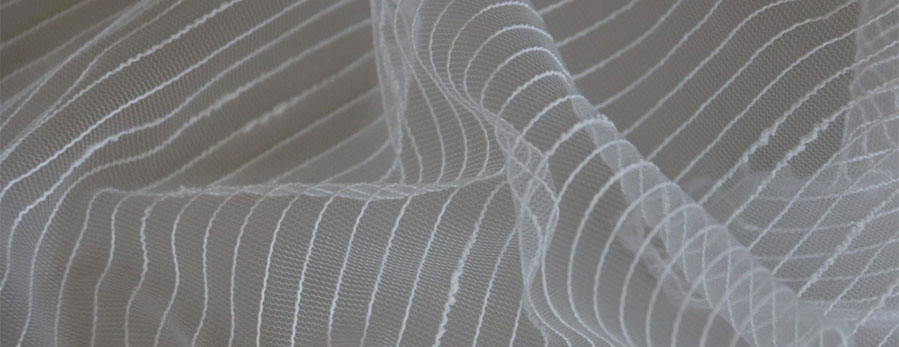
(c) 2019 KARL MAYER
Net curtains produced on warp knitting machines with magazine weft insertion are the perennial “evergreens” in the window fashion sector. KARL MAYER is now coming like a breath of fresh air onto this established market segment, and is offering some specific new developments. Its latest machine, the WEFT.FASHION TM 3, can produce articles having an on-trend look in the style of popular gauze-like fabrics made from monofilaments and fancy yarns, yet it enables fabrics to be produced without sizing at a production rate that is 10 to 11 times higher than that of comparable looms.

New developments in weft-inserted net curtains have ethereal grounds made from monofilament yarns in their sights

The nature of the technology also means that the lightweight, transparent, warp-knitted fabrics have a high slip resistance. These advantages impressed the visitors at the last ITMA fair in June 2019 in Barcelona. During this important trade fair, KARL MAYER was showing a collection of on-trend, weftinserted net curtains produced on the WEFT.FASHION TM 3, which generated a great deal of buying interest. The Turkish visitors in particular asked a great many questions. Encouraged by the positive feedback, the textile specialists at KARL MAYER carried on with their development work, and processed fine monofilament rather than multifilament yarns on the warp knitting machine with weft insertion. In the first stage, a lustrous yarn of dtex 22 was processed in all the yarn systems. A very delicate, extremely transparent, feather-light fabric with an organza ground was produced, which weighs just 20 g/m². Despite its ethereal look, the fabric is extremely stable and is suitable for embroidering.

The textile developer, Kay Burkhardt, is particularly pleased with the look of the fabric. “We processed a very dense structure at 35 stitches/cm to produce an extremely uniform appearance.” When hanging in front of the window, the net curtain creates a subtle interplay with the light to produce shimmering, glittering and moiré effects in all the colours of the rainbow. In subsequent development stages, a ground made from monofilament yarns was combined with a weft made from different fancy yarns. Yarns featuring knops, nodules and crimps were processed and – what was particularly ingenious – a relatively thick yarn was used, which was first formed into a cord-like structure by pillar stitches.
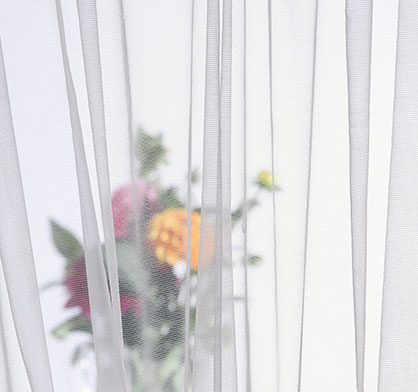
(c) 2019 KARL MAYER
(c) 2019 KARL MAYER


The optically dominant weft materials almost hide the ground. Completely new textile constructions are produced, which will stimulate the trend for net curtains with puristic-looking yet discreetly subtle patterns.
More News from KARL MAYER Textilmaschinenfabrik GmbH

#Knitting & Hosiery

Driving WARP KNIT Inspiration

KARL MAYER sees performance fabrics and next-level textile solutions in particular as potential growth drivers for its customers, as a motor for business development and as real game changers for the entire textile industry. Innovation does not happen by chance. It is the result of close exchange with customers & brands, textile expertise and competence in textile machine engineering. This is why KARL MAYER is investing in progress and collaborative development and opening its TEXTILE INNOVATION CEN-TER (TIC) – a place to be for the entire textile world.

#Knitting & Hosiery

KARL MAYER (China) celebrates its 30th anniversary

On February 6, KARL MAYER (China) celebrated the new year and its 30th anniversary. Employees and the management team at the Changzhou location, as well as representatives from management in Germany, Italy, and Hong Kong, were invited to the festivities. A special highlight was the visit by Lutz Wolf, CEO of KARL MAYER.

#Knitting & Hosiery

KARL MAYER at JEC: Multiaxial reinforced CFRP pultrusion profiles are picking up speed in the mobility sector

KARL MAYER Technical Textiles will be showcasing exciting new application potentials for multiaxial non-crimp fabrics in combination with the pultrusion process at the upcoming JEC in Hall 5, Booth C 46. The advancement of the tried-and-tested pultrusion process enables the cost-efficient production of complex CFRP multi-chamber profiles, which are used in the CETROVO high-speed metro. The world's first carbon-intensive lightweight rail vehicle of this type is designed for speeds of up to 140 km/h.

#Knitting & Hosiery

The new RE 6 EL from KARL MAYER shows what it can do

KARL MAYER’s new RE 6 EL from KARL MAYER brings a breath of fresh air to raschel fabric production. The latest samples from the textile product development department of this innovative textile machine manufacturer demonstrate the extensive design possibilities on offer.

More News on Knitting & Hosiery

#Techtextil 2026

Shima Seiki showcases WHOLEGARMENT® and 3D knitting solutions for technical textiles at Techtextil 2026

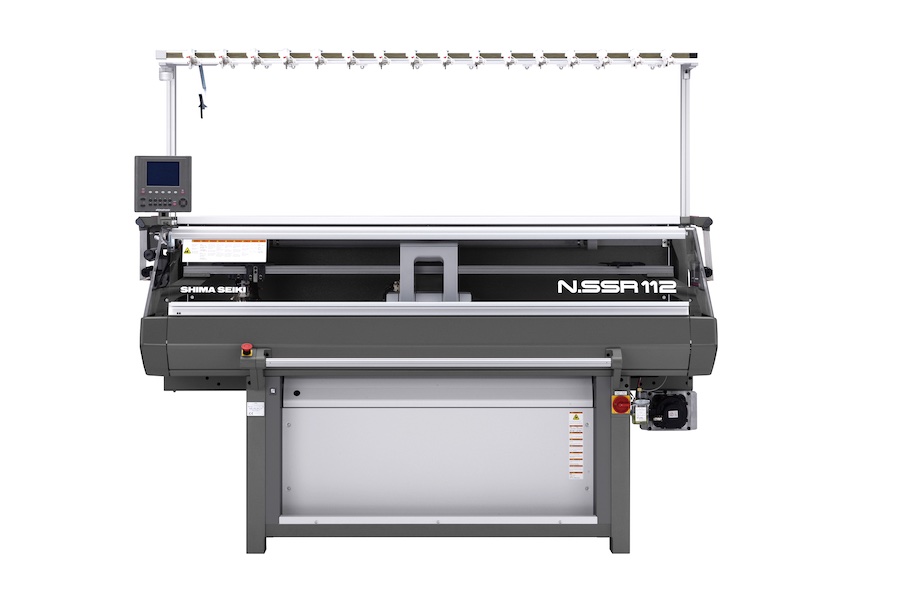
Leading textile technology solutions provider SHIMA SEIKI MFG., LTD. of Wakayama, Japan, along with its Italian subsidiary SHIMA SEIKI ITALIA S.p.A., will be participating in the Techtextil 2026 exhibition in Frankfurt, Germany next month. On display will be WHOLEGARMENT® and other advanced three-dimensional knitting applications across a wide range of industries besides fashion apparel that are not typically associated with knitting, such as technical textiles using industrial materials and advanced three-dimensional knitting.

#Knitting & Hosiery

SHIMA SEIKI announces partnership with CLO Virtual Fashion

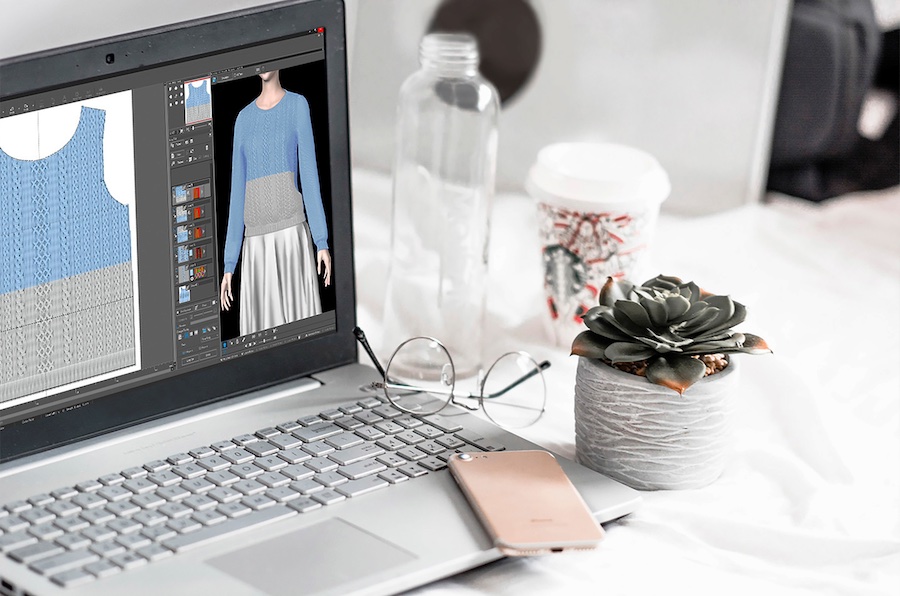
Leading computerized flat knitting innovator SHIMA SEIKI MFG., LTD. of Wakayama, Japan is partnering with digital garment solutions provider CLO Virtual Fashion of Seoul, South Korea for the integration of technology in garment design and simulation.

#Knitting & Hosiery

Huixing acquires insolvent Mayer & Cie.

Insolvency proceedings for the circular knitting and braiding machine manufacturer Mayer & Cie. were opened on December 1, 2025. Immediately following the opening of proceedings, the complete cessation of business operations was initiated. Most employees were subsequently given notice effective the end of February 2026. The production of the remaining orders in the circular knitting segment is expected to be completed by the end of the month. As early as December 2025, Mayer & Cie.’s braiding machine division was sold to an Italian investor.

#Knitting & Hosiery

KARL MAYER and Lenzing partner to advance warp knitting with scalable cellulose fiber solutions

The Lenzing Group, a leading supplier of regenerated cellulosic fibers for the textile and nonwovens industries, together with KARL MAYER, the global market leader in warp knitting machines and warp preparation systems, debut a joint innovation project during Premiere Vision, Paris.

Latest News

#Textile chemistry

A flagship for chemical production: BASF inaugurates world-scale Verbund site in China

BASF today (March 26, 2026) celebrated the official inauguration of its newly built, world-scale Verbund site in Zhanjiang, Guangdong Province in southern China. Covering an area of around four square kilometers, it is more than a major BASF project in the chemical growth market of China. “Zhanjiang shows what the future of chemistry looks like: efficient, digital and sustainable by design. The site showcases a smart integrated Verbund structure on an industrial scale,” said Dr. Markus Kamieth, CEO of BASF, at the ceremony attended by representatives from government, customers, business partners and employees.

#Nonwovens

VEOCEL™ Lyocell production expands to Asia – Launching a new chapter for nonwovens in the region

VEOCEL™, Lenzing's flagship specialty nonwovens brand, expands production at its Thai plant in Prachinburi. This is the first-ever production of its nonwoven-grade lyocell fibers in Asia. Built in 2022 with a 100,000-ton annual production capacity, the facility - previously focused on fibers for textile applications - now can directly meet the demand for VEOCEL™’s biodegradable¹, wood-based lyocell fibers for nonwovens products. These fibers are an essential ingredient for high-quality nonwovens products, ranging from baby wipes to facial sheet masks and everyday personal hygiene items.

#Research & Development

Hof University develops sustainable textile coating for the fashion of tomorrow from mushrooms

Clothing is often treated as disposable: T-shirts for events, general merchandise, or short-term campaigns frequently end up in the trash after only a few uses. This is particularly problematic given that their production still largely relies on fossil-based materials. This is precisely where a new research project at Hof University of Applied Sciences comes in.

#Raw Materials

Fashion for Good mobilises industry to adopt mass balance attribution and accelerate decarbonisation

Fashion for Good launches today the Mass Balance Demonstrator project, a collaborative industry initiative to implement and scale the mass balance attribution (MBA) chain-of-custody model for biomass-attributed PET in textile applications. The project represents a concrete step toward accelerating brand-driven decarbonisation across the apparel value chain.

TOP