[pageLogInLogOut]

#Industry 4.0 / Digitalization

Coats Digital uses Microsoft's Azure Open AI Service for cutting-edge AI technologies

Coats Digital launches new AI Assistant using Microsoft’s Azure OpenAI Service to enhance the customer experience and introduce next generation capabilities that deliver increased performance and efficiency.

Coats Digital, the leading digital transformation partner for the fashion supply chain is pleased to announce that it is propelling its technology solutions into the AI era with the launch of a new AI Assistant to improve customer service and open up innovative, new opportunities across the fashion supply chain. 

Taking just six weeks to develop the new AI service using Microsoft’s Azure AI solutions, Coats Digital’s developers have quickly introduced advanced capabilities for robust natural language queries across Coats Digital’s knowledge repositories. Customers worldwide can now access information instantly on any of Coats Digital’s solutions using natural language questions relating to product documentation, training materials, and more. Introducing an AI-powered knowledge base has greatly enhanced the customer experience, delivering a more seamless, user-friendly and productive experience to customers. 

John Powell, Senior Director of Software Engineering , Coats Digital, said: “The collaboration with Microsoft has helped Coats Digital to embark on a journey to ultimately shape AI solutions that specifically address fashion sector needs rather than conforming to a one-size-fits-all approach. Our priority is to deliver value to our customers so I am excited about the potential of AI. We have a powerful ecosystem of solutions that we can now look to elevate with the use of AI tooling, the Azure infrastructure, and with the support provided by the Microsoft team. 

“The most compelling thing is that the AI revolution is in full flight at the moment. By coupling the capabilities of Microsoft with Coats Digital’s knowledge and skills in the apparel industry, we’ve been able to bring AI’s benefits directly to shop floor workers across the globe. This is just the beginning and we look forward to pioneering innovation for the fashion supply chain in the years to come.”

Coats Digital maintains a vast knowledge base of product documentation and training materials, known as Docs. The company’s engineers saw a great opportunity to harness this information to enhance customer self-service and productivity, especially for new customers, with the use of AI. Drawing on its strong working relationship with Microsoft spanning numerous projects, Coats Digital explored innovative ways to tackle this development challenge. Microsoft proposed an eight-week innovation sprint focused on emerging Microsoft Azure capabilities, like Azure AI Services and Azure OpenAI Service. 

Jonathan McCormack, Director of Software Engineering, Coats Digital, said: “In a nutshell, we wanted to use AI to improve customer onboarding and offer an optimum navigation experience with regards our extensive database of product information and training materials. 

“With our new AI Assistant, a customer can now instantly discuss their needs conversationally with a customer-facing virtual assistant within Docs, which responds with the most applicable training materials or documentation from the company’s extensive catalogues. By understanding user intent, Docs delivers highly relevant results— which is a vast improvement over traditional keyword searches.”


Microsoft AI by Coats Digital ©


The AI-powered assistant has immediately benefited Coats Digital’s customers by making the company’s knowledge base more accessible and user-friendly. By simplifying exploration of its knowledge base, Coats Digital has increased engagement with its tools and features. Customers can, consequently, now fully use resources that they had underused before. The assistant has also unlocked capabilities that were easily missed in extensive documentation, guiding users to maximise Coats Digital’s reference materials. 

Steve Ede, Director of Customer Support, Coats Digital, notes: “Docs is our first port of call when dealing with customer inquiries. We can now input customer questions directly in the AI assistant to quickly access the wealth of knowledge available, while encouraging customers to do the same themselves. Azure AI will continue serving as the launchpad for rapid innovation at Coats Digital so we can build on robust, enterprise-grade AI services and explore bold new scenarios tailored for the apparel industry in the years to come.” 

Spurred by the overwhelmingly positive customer response to the AI assistant, Coats Digital plans to expand AI capabilities across the business. Next on the road map is employing similar strategies to enhance the internal experience from production systems and sales channels. 

“Microsoft’s commitment to working with partners and customers is helping to drive real digital transformation for people, organisations and industries across the globe”, said Eric Kalin, Chief Data Officer, Manufacturing at Microsoft. “Coats Digital is designing a future where productivity gains and customer delight are business as usual and where companies across the fashion industry can take advantage of aligned technology collaborations not as a bonus, but as an indispensable growth strategy.”




More News from TEXDATA International

#Techtextil 2026

Performance Apparels: Functional textiles drive innovation at Techtextil 2026

From high-performance fibres and advanced membranes to smart textiles and sustainable material concepts – functional apparel is becoming one of the most dynamic innovation fields in technical textiles. At Techtextil 2026, exhibitors demonstrate how new materials, finishing technologies and digital functions are shaping the next generation of protective, workwear and outdoor systems.

#Texprocess 2026

Texprocess 2026: Automation, digitalisation and AI reshape textile processing

Investment decisions in textile processing have become increasingly complex. Rising energy prices, labour shortages and geopolitical uncertainties are forcing companies to prioritise technologies that deliver measurable improvements in efficiency and process stability. This applies not only to apparel production, but also to the processing of technical textiles and high-performance materials. Modernisation projects are therefore being evaluated more selectively – but the pressure to upgrade production systems continues to grow. Texprocess 2026 reflects this tension between cautious investment behaviour and increasing technological demand.

#Techtextil 2026

Textile Chemicals & Dyes: Innovation in Textile Chemistry moves into focus at Techtextil 2026

From PFAS-free finishes and water-saving dyeing technologies to advanced coatings and recycling-compatible formulations, innovation in textile chemistry is accelerating across the industry. Reflecting this development, Techtextil 2026 introduces Textile Chemicals & Dyes as a dedicated product segment, highlighting the growing role of chemical solutions in shaping the next generation of technical textiles.

#Recycling / Circular Economy

textile.4U publishes special edition “Top 100 Textile Recycling Companies 2025”

With a comprehensive 176-page special edition, textile.4U is dedicating its latest issue entirely to one of the most dynamic and influential topics in today’s textile industry: textile recycling. The new issue, published exclusively in high-quality print, presents the Top 100 textile recycling companies researched and selected by TexData – organizations that already play a key role in the transition to circular textiles or are expected to have a significant impact in the near future.

More News on Industry 4.0 / Digitalization

#Research & Development

Textilfabrik 7.0 launched: Mönchengladbach becomes a real-world lab for sustainable textile production

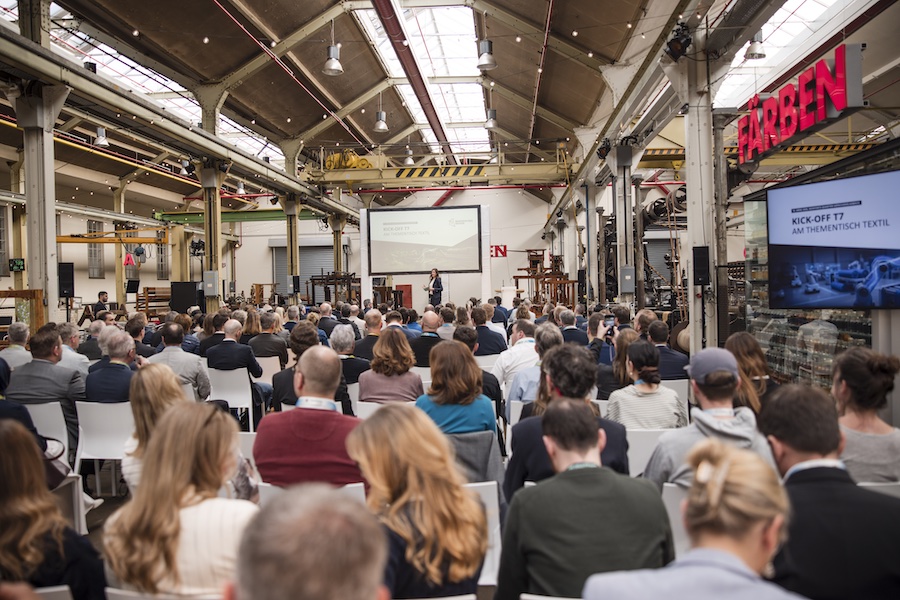
With the official kick-off event of the Textilfabrik 7.0 (T7), a major transformation project for the German textile and apparel industry has been launched in the Monforts Quarter in Mönchengladbach. At the “Textile Roundtable,” an event format organized by the Zukunftsagentur Rheinisches Revier, representatives from industry, research, politics, and the regional economy came together to jointly lay the foundation for CO₂-neutral, circular, and economically viable textile production in Germany.

#Man-Made Fibers

OnceMore® from Södra brings end-to-end traceability for circular Man-made Cellulosic Fibers (MMCF) using TextileGenesis

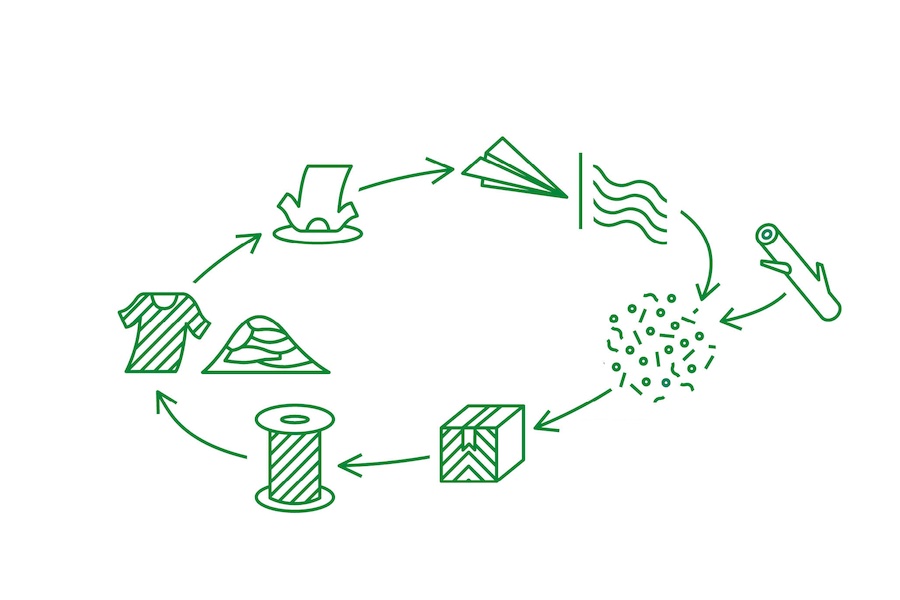
OnceMore® from Södra, the world’s first large-scale process for recycling blended fabrics into high‐quality dissolving pulp, will begin using TextileGenesis, a Lectra company, to strengthen traceability from raw material to retail across the value chain. OnceMore® produces dissolving pulp made from blended textile waste and wood sourced from responsibly managed Swedish forests. By integrating TextileGenesis, OnceMore® supports the growing need for verified data and secure, transparent tracking throughout increasingly complex supply chain.

#Denim

Jeanologia launches Billy

The new AI extracts precise laser designs from a garment image in minutes, transforming how vintage denim is recreated for production. If Jeanologia’s laser changed the way jeans were made at the end of the last century, its AI now takes the next step: moving from reproducing wear to designing it. / archive photo © 2026 Jeanologia

#Dyeing, Drying, Finishing

Monforts unveils interactive digital platform for textile finishers

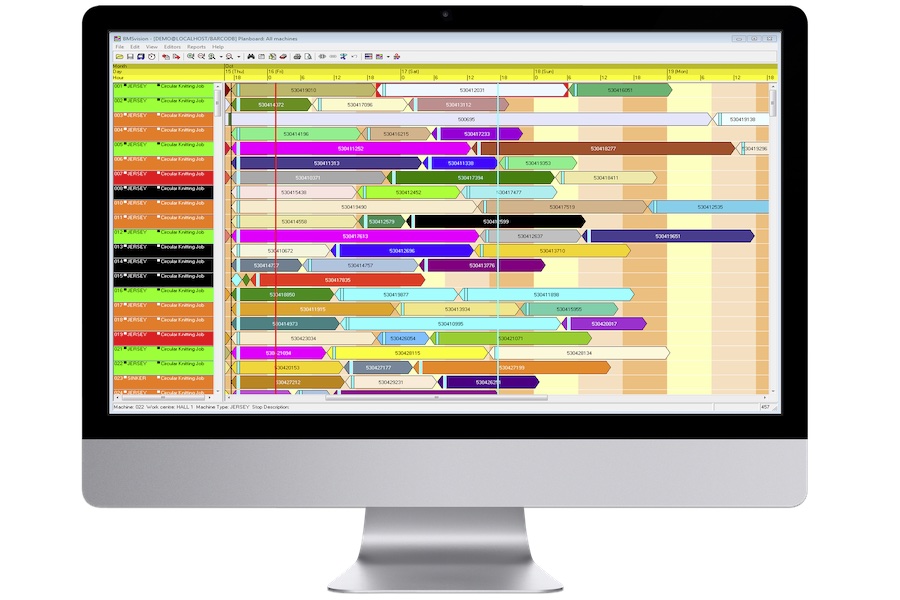
Monforts has launched a new digital platform designed to give textile manufacturers faster, more intuitive access to the company’s finishing technologies, technical expertise and aftersales support worldwide.

Latest News

#Techtextil 2026

SAHM Winding Solutions and Vandewiele Automation present integrated automation solution for winding processes

For the first time at the Techtextil trade fair in Frankfurt am Main, Germany (21 - 26 April), SAHM Winding Solutions (Hallo 12.0. / Booth 95) and Vandewiele Automation will be showcasing their combined automation expertise for industrial winding processes. Under the motto “Combining Automation. Maximizing Flow”, the two companies will demonstrate how automated package handling and robot-assisted yarn knotting can be integrated into a continuous production flow.

#Recycled Fibers

UNIFI celebrates recycled and circular Innovation with ninth annual REPREVE® Champions of Sustainability Awards

Unifi, Inc. (NYSE: UFI), the makers of REPREVE® and one of the world’s leading innovators in recycled and synthetic yarns, today announced the winners of its ninth annual REPREVE Champions of Sustainability Awards, recognizing brands and mills that are advancing circularity and responsible manufacturing across the global textile industry.

#Man-Made Fibers

Teijin Frontier announces new Stretch Polyester yarn offering exceptional compatibility with high-performance Polyester materials

Teijin Frontier Co., Ltd. announced today that it has developed a new stretch polyester yarn that offers new opportunities to create comfortable, all- polyester fabrics for sports and outdoor wear. The new polyester yarn demonstrates exceptional compatibility with high-performance polyester materials. Further, Teijin Frontier’s proprietary polymer design and spinning technology impart excellent elasticity to the new yarn. In turn, this yarn adds stretchability and recovery to the advanced functionality and excellent texture of high-performance polyester materials.

#Man-Made Fibers

Lenzing commissions 14 MW power‑to‑heat facility, strengthening grid stability and heat management

The Lenzing Group has successfully commissioned a new power‑to‑heat (P2H) facility with an electrical capacity of 14 megawatts. The installation converts renewable electricity directly into process heat, is fully integrated into the existing heat network at the industrial site, and represents a key building block for a fossil‑free heat supply. As project partner, VERBUND was responsible for the energy‑market integration and will operate the facility for balancing energy marketing, enabling it to respond flexibly to short‑term fluctuations in the power grid.

TOP