[pageLogInLogOut]

#Industry 4.0 / Digitalization

Smartex releases its first comprehensive report on "The modern textile factory: Charting the impact of a shifting textile supply chain landscape".

Smartex is at the forefront of transforming the textile industry through the integration of Artificial Intelligence, focusing specifically on achieving zero waste and traceability in Tier 2, the most impactful step of the textile supply chain.

They are part of a larger movement involving dynamic technology companies, forward-thinking factories, pioneering brands, and influential policy-makers all actively addressing challenges within the supply chain.

Currently, we are all witnessing a transformative shift in the textile industry, with a growing focus on commercial focuses (greater speed, more reliable quality & data-led pricing) and sustainability goals. The unregulated era of low-cost dominance is evolving, and the key to this transformation lies in the emergence of the Modern Textile Factory (MTF). Recognizing the power of collaboration, Smartex has established the first focus group dedicated to "The Modern Textile Factory." This global team of experts brings diverse perspectives to reshape the production landscape in response to the urgent need for change. This year, the focus group had four in-depth sessions convened by Smartex, delving into crucial topics that serve as the foundation for this comprehensive report. "The Modern Textile Factory" report is a synthesis of key findings that outline the transformative journey of the textile industry.

Smartex proudly introduces the members of "The Modern Textile Factory" for 2023, a collective force shaping the future of textile production. 
© 2023 Smartex
© 2023 Smartex


© 2023 Smartex
© 2023 Smartex


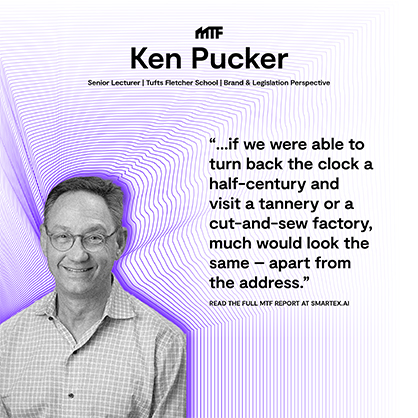
As regulations are being set in motion, from restricting excess stock destruction to supply chain product tracking, the MTF is positioned as a critical factor, since textile production accounts for 80% of the industry's environmental impact. The urgency for the supply chain to adapt to new reporting standards and invest in sustainable technology is evident.

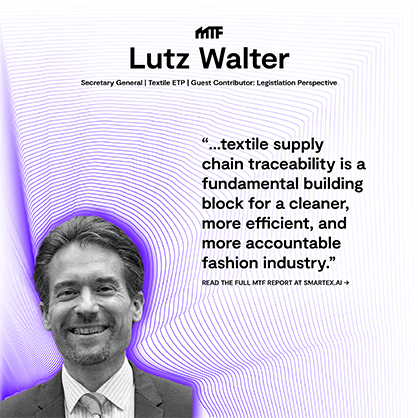
At the same time, commercial advantages are emerging for factories that embrace modernization, including the greater speed to market that aid brand revenue & deadstocks, improved quality control for greater factory control of their profits, and the ability to compete globally with data-led pricing strategies. The market is demanding competitive prices, increased speed, better quality, and rock-solid compliance at the same time, necessitating factories to accelerate their modernization efforts.

While challenges such as financing, macro trends susceptibility, and traditional mindsets exist, overcoming them is possible with collective support. Brands play a crucial role in providing financial assistance, technology companies must ensure a clear return on investment, and the industry must spotlight exemplary factories and their success stories. While sustainability is a powerful force, financial incentives are more developed and immediately compelling for factories and brands alike. By showcasing upcoming changes and illustrating the benefits for those adopting modernization, the Modern Textile Factory can emerge as the new standard, bringing about a win-win scenario for all stakeholders.

© 2023 Smartex
© 2023 Smartex


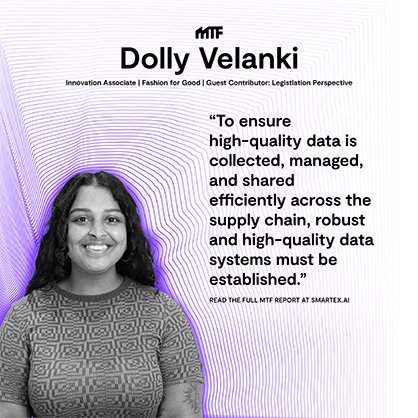
The report, authored by Max Easton, Global Innovation Director at Smartex, showcases a wealth of insights from this global team of experts. Easton, reflecting on the report, states, "After experiencing firsthand the benefits of collaboration during my time at Fashion for Good, an organization focused on sustainable innovation in textiles, I was excited to continue this at Smartex. The focus group has brought together a wide range of experts to delve into a vital topic: the modernization of the textile chain."

The report addresses critical questions surrounding supply chain modernization, factory data collection, communication systems between brands and their suppliers, and the need to elevate exemplary factories without penalizing their razor-thin margins. Easton expresses gratitude to the ten MTF group members, emphasizing the privilege of discussing their insights, concerns, and hopes. The report organizes key takeaways into a clear narrative, balancing member experience and real-life examples. While acknowledging that the report doesn't have all the answers, Easton believes it presents compelling ideas as economic and logical arguments for change in the textile supply chain. 
© 2023 Smartex
© 2023 Smartex


The full report can be downloaded here:

https://www.smartex.ai/the-modern-textile-factory-report-2023


More News from TEXDATA International

#Texprocess 2026

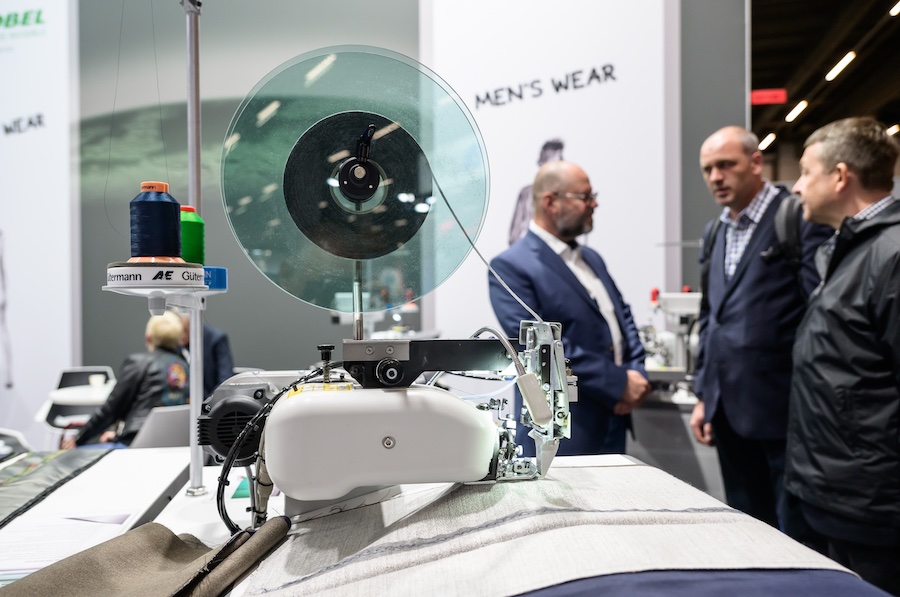
Texprocess 2026: Automation, digitalisation and AI redefine textile processing

Making investment decisions in textile processing has become significantly more demanding. Increasing energy costs, a shortage of skilled labour and ongoing geopolitical uncertainties are compelling companies to focus on technologies that deliver clear gains in efficiency and process reliability. This applies equally to apparel manufacturing and to the processing of technical textiles and high-performance materials. As a result, modernisation initiatives are assessed more carefully – even as the need to upgrade production systems continues to intensify.

#Techtextil 2026

Techtextil 2026: Between innovation pressure & market reality

From 21 to 24 April 2026, Techtextil in Frankfurt am Main will once again become the central meeting point for the international technical textiles and nonwovens industry. Running in parallel, Texprocess will focus on the industrial implementation of textile processing technologies as the leading platform in this field. Together, the two trade fairs form a closely integrated presentation and working platform along the entire textile value chain – from material development to finished applications.

#Techtextil 2026

Between geopolitical pressure and industrial resilience

In this interview, Dr. Janpeter Horn (VDMA) discusses the current challenges facing textile machinery manufacturers, shaped by geopolitical tensions, regulatory developments and subdued investment. He also outlines why innovation strength, integrated solutions and strategic positioning remain key to global competitiveness.

#Texprocess 2026

Between investment restraint and modernization pressure

Texprocess 2026 takes place in a complex market environment shaped by uncertainty and innovation pressure. In this interview, Elgar Straub (VDMA) explains why the trade fair is particularly relevant this year and which technologies are driving efficiency and competitiveness.

More News on Industry 4.0 / Digitalization

#Research & Development

Textilfabrik 7.0 launched: Mönchengladbach becomes a real-world lab for sustainable textile production

With the official kick-off event of the Textilfabrik 7.0 (T7), a major transformation project for the German textile and apparel industry has been launched in the Monforts Quarter in Mönchengladbach. At the “Textile Roundtable,” an event format organized by the Zukunftsagentur Rheinisches Revier, representatives from industry, research, politics, and the regional economy came together to jointly lay the foundation for CO₂-neutral, circular, and economically viable textile production in Germany.

#Man-Made Fibers

OnceMore® from Södra brings end-to-end traceability for circular Man-made Cellulosic Fibers (MMCF) using TextileGenesis

OnceMore® from Södra, the world’s first large-scale process for recycling blended fabrics into high‐quality dissolving pulp, will begin using TextileGenesis, a Lectra company, to strengthen traceability from raw material to retail across the value chain. OnceMore® produces dissolving pulp made from blended textile waste and wood sourced from responsibly managed Swedish forests. By integrating TextileGenesis, OnceMore® supports the growing need for verified data and secure, transparent tracking throughout increasingly complex supply chain.

#Denim

Jeanologia launches Billy

The new AI extracts precise laser designs from a garment image in minutes, transforming how vintage denim is recreated for production. If Jeanologia’s laser changed the way jeans were made at the end of the last century, its AI now takes the next step: moving from reproducing wear to designing it. / archive photo © 2026 Jeanologia

#Dyeing, Drying, Finishing

Monforts unveils interactive digital platform for textile finishers

Monforts has launched a new digital platform designed to give textile manufacturers faster, more intuitive access to the company’s finishing technologies, technical expertise and aftersales support worldwide.

Latest News

#Sustainability

Number of GOTS-certified facilities grow 15% globally as demand for credible sustainability standards continues to strengthen

Global Organic Textile Standard (GOTS) certification continued to grow in 2025, with nearly 18,000 certified facilities worldwide, despite ongoing geopolitical uncertainty and rapidly evolving regulatory requirements across global textile supply chains.

#Raw Materials

ECCO introduces first shoe featuring innovative protein-based fibre

ECCO, in partnership with Spinnova, announces the launch of the limited edition ECCO BIOM® 720, a first-of-its-kind shoe utilising an often overlooked leather by-product, transformed into a protein-based fibre. The fibres are produced using patented technology that advances material innovation while reducing waste and supporting full resource use across the leather and textile industry.

#Man-Made Fibers

The LYCRA Company strengthens sustainability leadership, appoints Alistair Williamson as VP of Product Sustainability

The LYCRA Company has appointed longtime executive Alistair Williamson as vice president of product sustainability, reaffirming its commitment to developing sustainable solutions for apparel and personal care products. In this role, he will guide the company’s next chapter of sustainability strategy and oversee all initiatives aimed at reducing environmental impact across products, operations, and innovation platforms.

#Raw Materials

Kraig Biocraft Laboratories reports major progress converting record-setting spider silk cocoon production into reeled silk

Kraig Biocraft Laboratories, Inc. (OTCQB: KBLB) (“the Company”, “Kraig Labs”, or “Kraig’s”), a world leader in spider silk technology*, today announced significant progress in the processing of its recently produced recombinant spider silk cocoons into reeled silk.

TOP