[pageLogInLogOut]

#ITMA 2023

Jeanologia launches the era of air in the textile industry at ITMA 2023, more eco-efficient, digital and automated
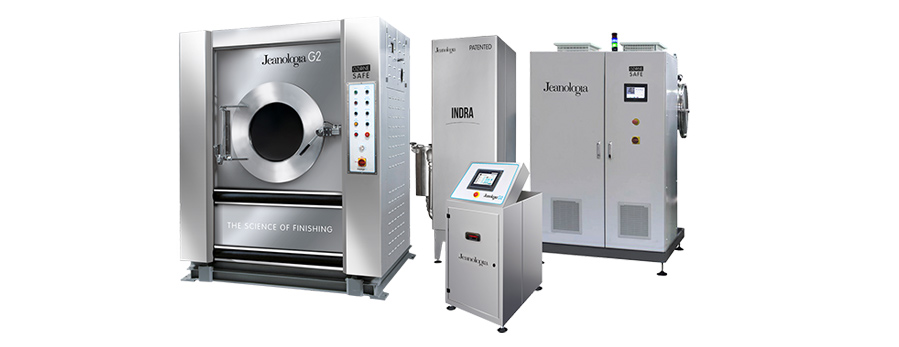
Jeanologia G2 © 2023 Jeanologia
Jeanologia, a leading Spanish company in the development of eco-efficient technologies, will present new technologies and operational models to accelerate the sustainable transformation of the textile industry, reducing costs, and improving agility and productivity, while preserving product authenticity and performance, 8-14 June at ITMA 2023. (Stand H14 C208)
  • The company will show how it minimizes the use of water to age garments through its revolutionary atmospheric washing that maximizes the use of air in the textile industry.
  • It will present its latest laser innovations which position it as the fastest technology on the market, with the lowest cost-per-garment, maximum productivity and reproducibility.
  • From design to production and from weaving to garment finishing, the firm accompanies the textile industry to the next level with the seamless integration of its technologies.


The company will launch the era of air in the textile industry at ITMA 2023. A new era with no water, no waste and zero discharge, that allows the production of an authentic product in an environmentally friendly way, aligning profit, people and planet while simultaneously being more eco-efficient, digital and automated.

Disruptive technologies driving a new roadmap

At ITMA 2023 Jeanologia will display the keys to enable a change of direction in the textile industry, moving from the era of water to the era of air through disruptive technologies.

From design to production and from the fabric to the finished garment, the company will enable a paradigm shift in garment finishing with the integration of its technologies, reducing the use of water to a minimum and enhancing the use of air in production processes.

Thus, at its stand it will demonstrate how it reduces the use of water to the minimum in order to age garments naturally using air with its revolutionary Atmos atmosphere washing. A new milestone achieved thanks to its G2 ozone technology and its INDRA patented system that eschews the use of water, chemicals and pumice stones to achieve an authentic vintage look.

It will also unveil its latest developments in advanced lasers for garment finishing which has positioned it as the fastest laser technology on the market.

Up to 40% faster than other lasers, it achieves maximum productivity, reduces operating costs and accelerates time-to-market to ensure the lowest cost-per-garment.

In addition, it enables more efficient energy management, simplifies processes and offers infinite design possibilities with high quality authenticity and perfect reproducibility.

For Enrique Silla, President of Jeanologia, cost reduction is essential to enable the sustainable transformation of the industry. In this regard, he highlighted the importance of hyper-automation to make sustainable production scalable and ensure the best possible return on investment.

Other technologies contributing to the paradigm shift in the textile industry are Jeanologia’s eco-efficient DancingBox 420 high-speed water washers. Thanks to its patented system, they attain better product abrasion in less time and with less water, achieving higher productivity, while improving the performance of e-Flow, its technology based on air nanobubbles to transport chemicals to the garment instead of water.

Finally, with H2Zero, the company comes full circle by repurposing the small amount of water needed for garment finishing. A closed-loop water treatment system treats water without chemicals, leaving it in optimal conditions for later reuse, thus completely eliminating discharge from the textile industry.


By integrating and connecting all of its technologies in Laundry5.Zero plants, the company facilitates new production models that bring about five benefits for a new era in the textile industry: eco-efficiency, cost-neutrality, scalability, agility and digitalization.

Jeanologia, finalist in the ITMA Awards and participation in Planet Textiles 2023

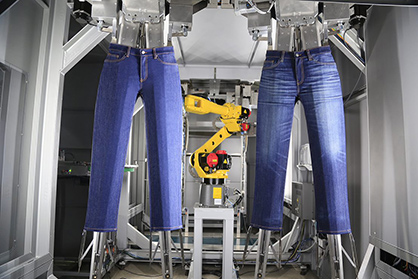
Jeanologia will attend ITMA 2023 as a finalist in the ITMA Sustainable Innovation Awards for Denim Moda's Urban Factory project. A success story of how sustainable and efficient on-demand production enables a shift in focus from "sell what you produce" to the ideal sourcing strategy of "produce what you sell". 
Handman © 2023 Jeanologia


In addition, Begoña Garcia, Product Manager at Jeanologia will participate in Planet Textiles 2023, the international conference on sustainability organized by SAC (Sustainable Apparel Coalition).

Specifically, Garcia will speak on Tuesday, 13 June from 2:05 to 2:50 p.m. on the "Life Cycle Assessment (LCA) Data Collection in the Supply Chain: Why it Matters and What it Means for Manufacturers" panel, focused on driving sustainability improvements in all supply chains.

Jeanologia: working for the world for over 25 years

Since 1994 their mission has been to create an ethical, sustainable and eco-efficient industry, marking a new era through sustainability, digitalization and automation.

The company is leading the transformation of the industry with its disruptive technologies: laser, G2 ozone, e-Flow, SmartBoxes, Colorbox and H2 Zero, capable of increasing productivity, reducing costs, water and energy consumption, and eliminating harmful emissions and discharges, thus guaranteeing zero pollution.





More News from TEXDATA International

#Techtextil 2026

Performance Apparels: Functional textiles drive innovation at Techtextil 2026

From high-performance fibres and advanced membranes to smart textiles and sustainable material concepts – functional apparel is becoming one of the most dynamic innovation fields in technical textiles. At Techtextil 2026, exhibitors demonstrate how new materials, finishing technologies and digital functions are shaping the next generation of protective, workwear and outdoor systems.

#Texprocess 2026

Texprocess 2026: Automation, digitalisation and AI reshape textile processing

Investment decisions in textile processing have become increasingly complex. Rising energy prices, labour shortages and geopolitical uncertainties are forcing companies to prioritise technologies that deliver measurable improvements in efficiency and process stability. This applies not only to apparel production, but also to the processing of technical textiles and high-performance materials. Modernisation projects are therefore being evaluated more selectively – but the pressure to upgrade production systems continues to grow. Texprocess 2026 reflects this tension between cautious investment behaviour and increasing technological demand.

#Techtextil 2026

Textile Chemicals & Dyes: Innovation in Textile Chemistry moves into focus at Techtextil 2026

From PFAS-free finishes and water-saving dyeing technologies to advanced coatings and recycling-compatible formulations, innovation in textile chemistry is accelerating across the industry. Reflecting this development, Techtextil 2026 introduces Textile Chemicals & Dyes as a dedicated product segment, highlighting the growing role of chemical solutions in shaping the next generation of technical textiles.

#Recycling / Circular Economy

textile.4U publishes special edition “Top 100 Textile Recycling Companies 2025”

With a comprehensive 176-page special edition, textile.4U is dedicating its latest issue entirely to one of the most dynamic and influential topics in today’s textile industry: textile recycling. The new issue, published exclusively in high-quality print, presents the Top 100 textile recycling companies researched and selected by TexData – organizations that already play a key role in the transition to circular textiles or are expected to have a significant impact in the near future.

More News on ITMA 2023

Latest News

#Techtextil 2026

AI, Start-ups, Research: Techtextil and Texprocess bring together players in the textile industry

From start-ups to universities and research institutes: at Techtextil and Texprocess, the world’s leading innovation trade fairs in Frankfurt am Main, exhibitors present future-oriented concepts for the global textile industry. With the international Campus & Research area, a strong participation from start-ups and the latest AI applications for textile processing, both trade fairs showcase current developments in the textile industry. By bringing together innovation, research and application, they enable new partnerships across the textile value chain.

#Techtextil 2026

IVGT joint stand brings innovation and networking to Techtextil 2026

At Techtextil 2026 and the parallel Texprocess 2026, key transformation topics such as artificial intelligence, digitalisation, sustainability, recycling and the circular economy will be reflected across the show. Against this backdrop, the IVGT, together with 16 member companies, will present its joint stand in Hall 12.1 (Stand D62) as a platform for exchange and networking.

#Man-Made Fibers

Indorama Ventures supports Southeast Asia’s textile customers with reliable regional supply and global innovative portfolio

Indorama Ventures, one of the leading global polyester fiber and filament yarn suppliers globally, will participate in Indo Intertex 2026 in Jakarta this April, making its diverse global portfolio available to apparel, home textile, and hygiene customers across Southeast Asia.

#Raw Materials

New study shows low environmental impact by Cotton made in Africa Organic Cotton from Tanzania

Today, the Aid by Trade Foundation (AbTF) is announcing the results of a comprehensive life-cycle analysis (LCA) for cotton produced in Tanzania under the Cotton made in Africa Organic (CmiA Organic) standard. The study emphasises the small ecological footprint of CmiA Organic verified cotton. This can largely be traced back to the absence of synthetic pesticides, artificial fertilisers, and artificial irrigation. Consequently, CmiA Organic cotton can help the textile industry meet regulatory requirements as well as science-based targets. The results also show that the consequences of climate change threaten the livelihoods of these cotton farmers, even though the type of agriculture they practise barely contributes to climate change.

TOP


