[pageLogInLogOut]

#ITMA 2023

LAIP, dyeing technology consistency with environmental and market needs.
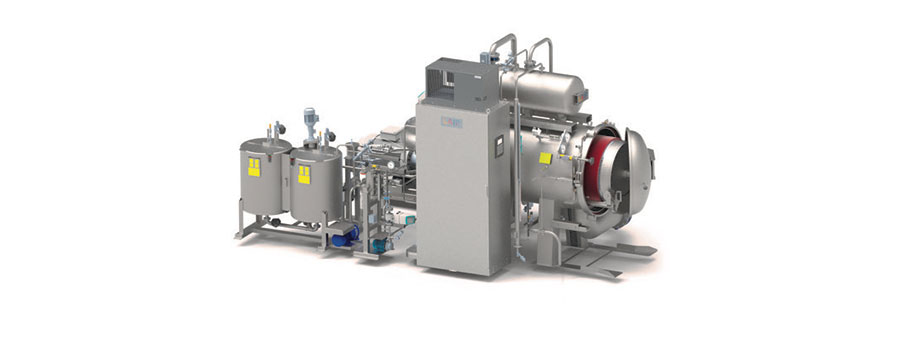
Beam dyeing © 2023 LAIP
LAIP was founded in 1958 with the intention ever since to supply the market of the textile dyeing industry with innovation and quality. The context in which the company lives is the Prato district, Italy, strongly characterized by unrivaled textile know-how. Therefore, the obvious need to work is quality without forgetting innovation, two fundamental production concepts. Thanks to this attitude the market globally recognizes the continuous evolution of LAIP.

The company is driven to always face new challenges and the interaction with customers stimulate the design and technology department to find suitable solutions to face the new and important needs of dyehouses. From this ability to dialogue, the innovations - that will then be globally disseminated - are born.
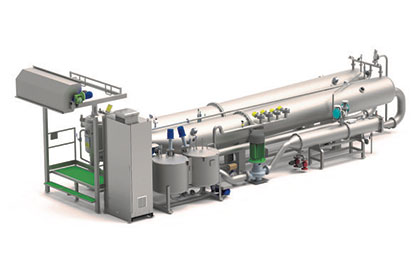
Jet 250 HT © 2023 LAIP


It is not easy in the world of dyeing to find eco-friendly solutions, as requested by many customers. Yet they must be faced and resolved. This is where innovation comes from: super-efficient pumps, low liquor ratio, ease of use, automated systems, efficiency improvement and industry 4.0 features. All aimed at creating ever more performing dyeing machines in terms of sustainability that goes towards an ecological transition that sees LAIP and its customers seriously committed.

At ITMA 2023, which will be held in Milan, Italy, LAIP will be showcasing its latest machines both for fabric yarn and fiber dyeing. Among them:

198 HT, the highly demanded machine for tow – packages and fibre dyeing, it allows the same liquor ratio to be maintained even with partial loads!

BID, (Bobbins Injection Dyeing) ensures absolute repeatability, productivity and reliability for multicolour printing and dyeing of yarn in bobbins.
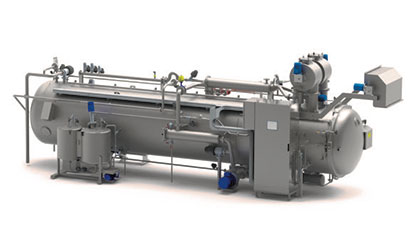
Nautilus © 2023 LAIP


Nautilus, the cutting-edge machine. Conceived with a double belt, it is suitable for dyeing delicate fabrics keeping the low liquor ratio constant by the maximum fabric load up to 40 %. The low water consumption means low electrical consumption and energy saving.
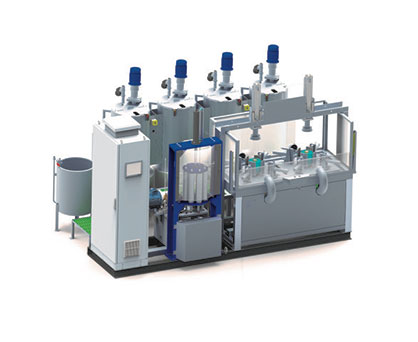
BID © 2023 LAIP
BID © 2023 LAIP


250 HT Jet, the easy machine that never stops to get perfectly dyed fabrics with no abrasions nor creases.

Beam, the ideal machine to dye high end silk and technical fabrics, tubular and warp knit for sportwear enabling the optimisation of production times and superlative technical performance.

Discover all at LAIP stand: HALL 11 BOOTH C105
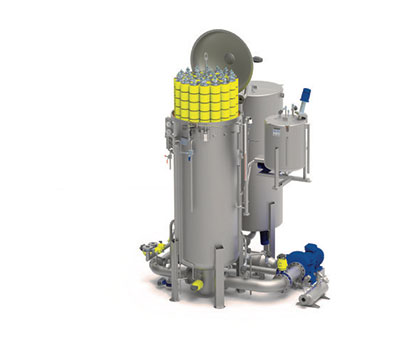
198 HT © 2023 LAIP
198 HT © 2023 LAIP


More News from TEXDATA International

#Texprocess 2026

Texprocess 2026: Automation, digitalisation and AI reshape textile processing

Investment decisions in textile processing have become increasingly complex. Rising energy prices, labour shortages and geopolitical uncertainties are forcing companies to prioritise technologies that deliver measurable improvements in efficiency and process stability. This applies not only to apparel production, but also to the processing of technical textiles and high-performance materials. Modernisation projects are therefore being evaluated more selectively – but the pressure to upgrade production systems continues to grow. Texprocess 2026 reflects this tension between cautious investment behaviour and increasing technological demand.

#Techtextil 2026

Textile Chemicals & Dyes: Innovation in Textile Chemistry moves into focus at Techtextil 2026

From PFAS-free finishes and water-saving dyeing technologies to advanced coatings and recycling-compatible formulations, innovation in textile chemistry is accelerating across the industry. Reflecting this development, Techtextil 2026 introduces Textile Chemicals & Dyes as a dedicated product segment, highlighting the growing role of chemical solutions in shaping the next generation of technical textiles.

#Recycling / Circular Economy

textile.4U publishes special edition “Top 100 Textile Recycling Companies 2025”

With a comprehensive 176-page special edition, textile.4U is dedicating its latest issue entirely to one of the most dynamic and influential topics in today’s textile industry: textile recycling. The new issue, published exclusively in high-quality print, presents the Top 100 textile recycling companies researched and selected by TexData – organizations that already play a key role in the transition to circular textiles or are expected to have a significant impact in the near future.

#Recycling / Circular Economy

Responsible Textile Recovery Act of 2024 signed by Governor

Senator Josh Newman (D-Fullerton) is proud to announce that Senate Bill 707 (SB 707), the Responsible Textile Recovery Act of 2024, has been signed into law by the Governor of California, Gavin Newsom. This groundbreaking legislation establishes the country’s first Extended Producer Responsibility (EPR) textile recycling program, marking a significant step forward in the state’s efforts to combat waste and promote sustainability.

More News on ITMA 2023

Latest News

#Textile chemistry

A flagship for chemical production: BASF inaugurates world-scale Verbund site in China

BASF today (March 26, 2026) celebrated the official inauguration of its newly built, world-scale Verbund site in Zhanjiang, Guangdong Province in southern China. Covering an area of around four square kilometers, it is more than a major BASF project in the chemical growth market of China. “Zhanjiang shows what the future of chemistry looks like: efficient, digital and sustainable by design. The site showcases a smart integrated Verbund structure on an industrial scale,” said Dr. Markus Kamieth, CEO of BASF, at the ceremony attended by representatives from government, customers, business partners and employees.

#Nonwovens

VEOCEL™ Lyocell production expands to Asia – Launching a new chapter for nonwovens in the region

VEOCEL™, Lenzing's flagship specialty nonwovens brand, expands production at its Thai plant in Prachinburi. This is the first-ever production of its nonwoven-grade lyocell fibers in Asia. Built in 2022 with a 100,000-ton annual production capacity, the facility - previously focused on fibers for textile applications - now can directly meet the demand for VEOCEL™’s biodegradable¹, wood-based lyocell fibers for nonwovens products. These fibers are an essential ingredient for high-quality nonwovens products, ranging from baby wipes to facial sheet masks and everyday personal hygiene items.

#Research & Development

Hof University develops sustainable textile coating for the fashion of tomorrow from mushrooms

Clothing is often treated as disposable: T-shirts for events, general merchandise, or short-term campaigns frequently end up in the trash after only a few uses. This is particularly problematic given that their production still largely relies on fossil-based materials. This is precisely where a new research project at Hof University of Applied Sciences comes in.

#Raw Materials

Fashion for Good mobilises industry to adopt mass balance attribution and accelerate decarbonisation

Fashion for Good launches today the Mass Balance Demonstrator project, a collaborative industry initiative to implement and scale the mass balance attribution (MBA) chain-of-custody model for biomass-attributed PET in textile applications. The project represents a concrete step toward accelerating brand-driven decarbonisation across the apparel value chain.

TOP







