[pageLogInLogOut]

#ITMA 2015

4th EURATEX Convention devoted to sustainable innovation
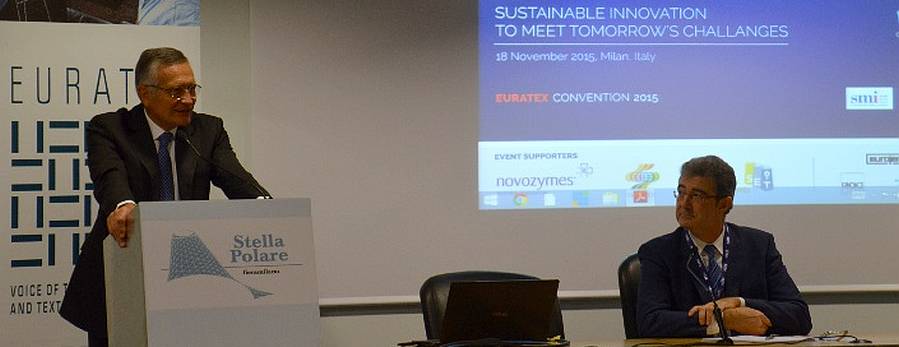
EURATEX President Serge Piolat opening the Convention (c) 2015 EURATEX
EURATEX, the European Apparel and Textile Confederation, held its 4th Convention on 18 November in Milan in conjunction with ITMA textile technology fair. This year the event was organised together with EURATEX’ Italian member federation Sistema Moda Italia and the Italian association for the technical textiles TexClubTec. The Convention was dedicated to sustainable innovation of the European textile and fashion sector.
The event held in the venues of ITMA fair had broad international participation – there were representatives of business, research centres, industry associations and media from more than 20 countries. In his welcome word, EURATEX President Serge Piolat underlined that “to remain competitive, the European companies have to be highly innovative in their products and processes. Nowadays, sustainable production becomes an integral part of the companies’ business strategy.”

The morning panel of the Convention was devoted to broad overview of the current developments in the textile and clothing industry. Gregorio De Felice, chief economist of the major Italian bank Intesa SanPaolo, provided a detailed analysis and latest forecast of the consumption trends in the global markets until 2020. Mr De Felice concluded that the main growth drivers for our sector will be domestic demand in advanced countries, favourable monetary policies globally and steadily low commodity prices.

Vladan Koncar (Ensait) and Guiseppe Gherzi (Gherzi Textile Organisation) spoke about new application fields and innovative production processes in textiles production. Both speakers demonstrated impressive examples of disruptive technologies of the future like 3D printing, merge between textiles and electronics and other wearable devices made of smart textiles.

Rapid transfer of innovative technologies from research centres to the market is increasingly significant, underlined in his speech the President of the European Textile Technology Platform Paolo Canonico. He highlighted the importance of networking between innovation partners and the need of regional support structure, especially for SMEs; for example, clusters, technology and transfer centres, education and training providers. To tackle this challenges, the Italian Textile Technology Platform was created this year.

Its President Alberto Paccanelli stated that the platform will establish an effective network involving industry, research organisations, public authorities and financial institutions to join forces and coordinate efforts in the field of research, development and innovation.

During the afternoon panel, three examples of successful sustainable initiatives were brought to the attention of the audience. Christian Wieth spoke about Novozymes’s enzyme solutions which support making better quality textiles in a more sustainable and cost effective manner. Enzymes allow producing clothes that look new for longer reducing water and energy usage and replacing harsh chemicals.

Jan Laperre from Centexbel technology centre proved by several examples that the textile sector is transforming into a sustainable industry – companies are applying biopolymers, natural fibres and new solutions for recycling. Resource efficiency is another major topic for the textiles and fashion producers. Stefan Schmidt from IVGT informed the Convention participants about the results of the SET project aimed to help textile SMEs all over Europe to improve their energy efficiency and cut production costs.

During the round table discussion, managers of the well-known European companies from various steps of textile and clothing value chain (Thuasne, Sympatex Technologies, Lakidain Group, Varteks and Fil Man Made Group) shared their solutions to maintain competitive manufacturing business in the EU. These successful entrepreneurs proved by their own example that the European industry’s focus on innovative production of highly qualitative goods remains the leading factor of our sector’ success.
More News from European Apparel and Textile Confederation (EURATEX)

#Europe

Level playing field at stake: Europe’s textile industry demands decisive action

Yesterday, the European Parliament took a welcomed and necessary step by voting a resolution calling for stronger market surveillance, reinforced customs controls and faster enforcement of the Digital Services Act in case of infringements. For Europe’s textile and clothing manufacturers, this is the first political acknowledgement that the system is broken — and that enforcement must finally match the scale of the problem.

#Recycling / Circular Economy

EURATEX calls for a competitive and harmonised Circular Economy Act For Textiles

EURATEX, representing Europe’s textile and clothing industry with over 200,000 companies and 1.3 million workers, has submitted its official position paper to the European Commission’s consultation on the upcoming Circular Economy Act (CEA). The association welcomes the Commission’s initiative to shape a framework that strengthens Europe’s circular economy while maintaining industrial competitiveness.

#Associations

European textile and clothing federations mobilize against ultra-fast fashion

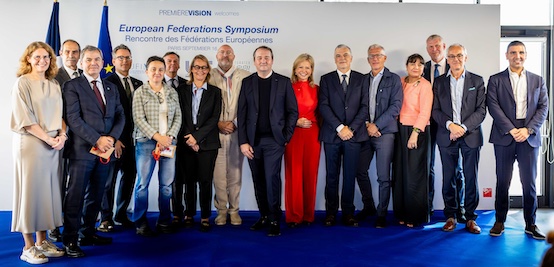
On the occasion of the Première Vision trade fair in Villepinte, the leading European textile and clothing federations issued a solemn call for urgent action against the rapid rise of ultra fast fashion. This model, driven by major non-European e-commerce platforms, already accounted for 4.5 billion imported parcels in the European Union in 2024—representing 5% of clothing sales (20% online)—and continues to grow at a staggering pace.

#Associations

Joint statement by EURATEX and Danish Fashion and Textiles

EURATEX and its Danish member Dansk Mode & Textil are calling upon the Danish Presidency of the EU to bring back stability and transparency to the European agenda. These last few months we have seen major upheavals and turbulence in global markets, as well as uncertainty surrounding a number of regulatory initiatives. All this creates a climate of uncertainty for European industry and anxiety with the consumers. As a result, demand for textile and garments is low, and entrepreneurs are hesitant to make any further investment decisions.

More News on ITMA 2015

Latest News

#Spinning

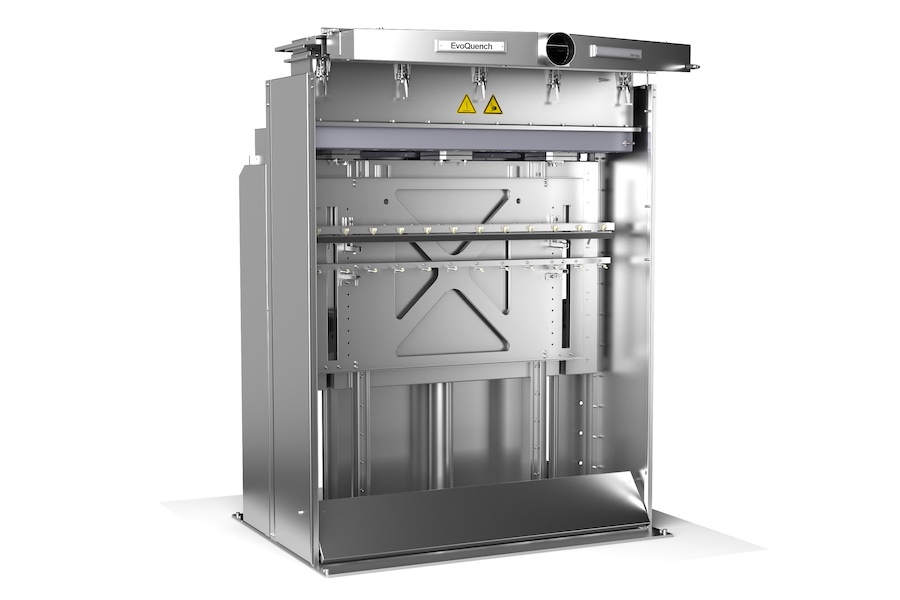
First PA66 spinning plant with EvoQuench successfully commissioned

With the successful commissioning of a multi-digit PA66 spinning line for microfiber yarns, Chinese textile company Shandong Nanshan Fashion Technology Co., Ltd. has added yarn production to its textile value chain.

#Knitting & Hosiery

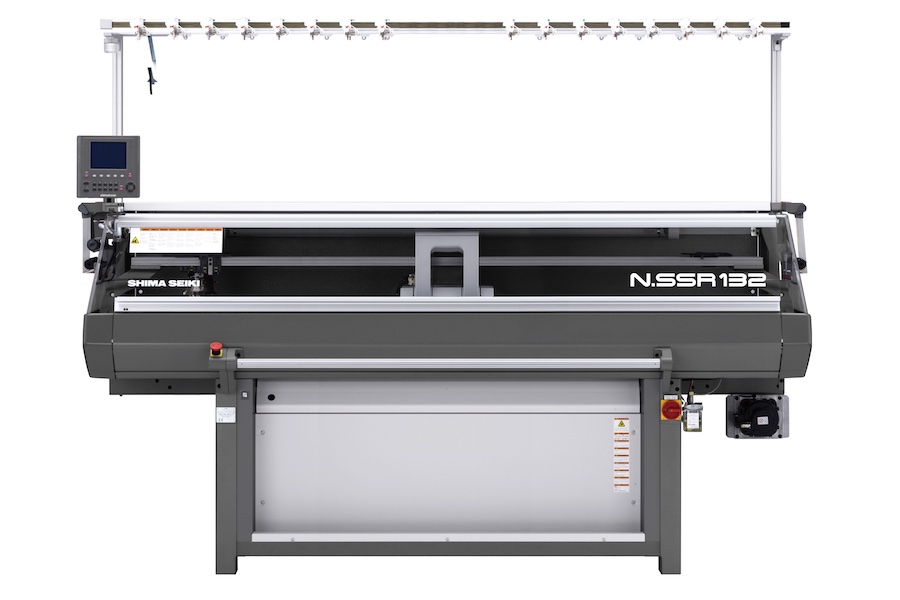
SHIMA SEIKI returns to ShanghaiTex

Leading flat knitting solutions provider SHIMA SEIKI MFG., LTD. of Wakayama, Japan, together with its Hong Kong and Chinese market subsidiary SHIMA SEIKI (HONG KONG) LTD., will exhibit at the ShanghaiTex 2025 exhibition (Booth No.: Hall N3, Booth A20) held in Shanghai, China this month. This marks the return of SHIMA SEIKI to ShanghaiTex after a 14-year hiatus, its last exhibit at the show having been in 2011.

#Research & Development

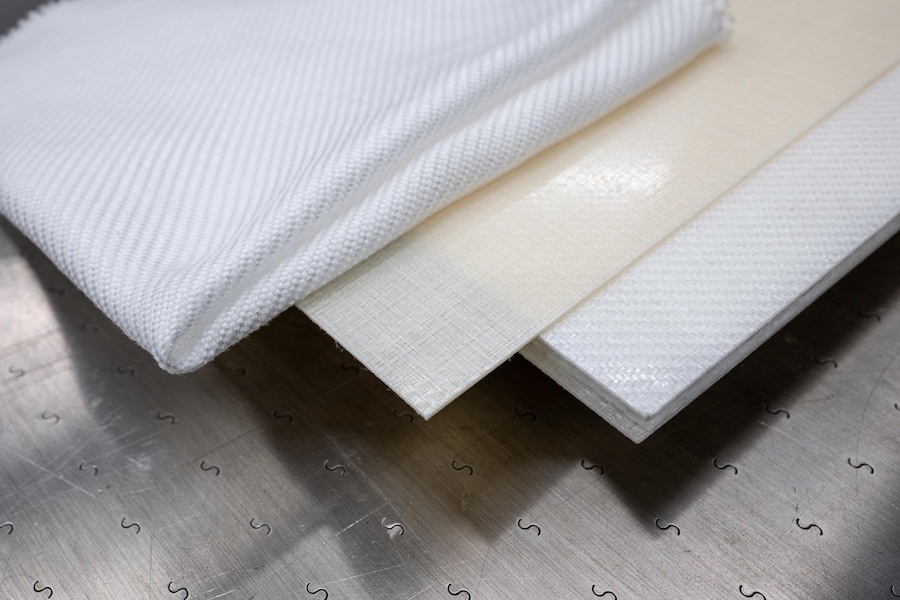
Fraunhofer CCPE presents the “Monomaterial Design Set” – Innovative solutions for circular product design

Composite materials made from different types of plastic often extend the lifetime of products but make recycling more difficult in the circular economy. That is why Fraunhofer CCPE has developed the “Monomaterial Design Set”. This new approach helps to reduce the variety of plastics used in durable products and offers circular solutions for designers and product developers.

#Man-Made Fibers

arena introduces renewable LYCRA® EcoMade fiber in its latest swimwear collection

Italian swimwear specialist arena has unveiled a new collection that brings sustainability and performance even closer together. Launched on December 4, the line features swimsuits made from recycled nylon and renewable LYCRA® EcoMade fiber — the first time the bio-based spandex has been used commercially in swimwear.

TOP